Home> Facts and Trivia > Stars > Stanley Kubrick
Stanley Kubrick Facts
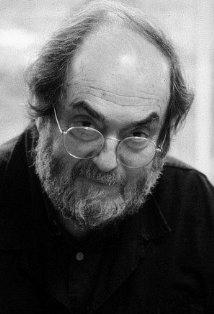
| Sign | Leo |
| Born |
Jul 26, 1928 New York City, NY |
| Died |
Mar 7, 1999 Harpenden, Hertfordshire |
| Age | Died at 70 |
| Total Facts | 76 |
"I want you to be big -- Lon Chaney big," Kubrick instructed Vincent D'Onofrio during the filming of Full Metal Jacket (1987).
Abigail Rosen, who co-starred with Viva in Andy Warhol's Tub Girls (1967), was the first door lady at Max's Kansas City, a nightclub in New York City. She claims she had the honor of throwing Kubrick out of the club. "At first Mickey [Ruskin] hired me as the coat-check girl, but it was on the second floor and we were schlepping coats from downstairs to upstairs, and taking them back down where the people wanted to leave. It was not a good plan, besides which people would go up and steal coats. So we abandoned the whole idea and I became the door lady with Bob Russell. The embarrassing times were when Mickey asked us to kick somebody out. The philosophy behind it was that no one would beat on or abuse a woman. I was asked one night to kick Stanley Kubrick out. He was drunk and obnoxious and neither Mickey or I knew who he was. I said, 'Sir, I think it's time for you to leave now, you're not going to be happy here.' And he left. Then Mickey found out the next day who we had kicked out, and he yelled at me for not recognizing him. 'That's why I have you here,' he said, 'you're supposed to know who these people are.'".
Carlo Fiore, who was credited as an assistant to the producer on One-Eyed Jacks (1961) and helped develop the picture, wrote that the firing of Kubrick by Marlon Brando (who went on to direct the film) was perhaps inevitable, as there was only room for one "genius" on the picture. Brando had originally intended to direct the film himself, but Paramount Pictures pressured him to hire a director. Both Kubrick and Brando, at the time, were represented by Music Corp. of America (MCA).
Daniel Waters wrote the original 180 page screenplay for Heathers (1988) intending for Kubrick to direct it, as he believed Kubrick was the only director who could get away with making a three-hour high school film. Kubrick wasn't interested, and when the film was made the screenplay was cut nearly in half, resulting in a 102-minute film.
A few days before his abrupt death, he revealed his least and most favorite personal films. He labeled Fear and Desire (1953) as his least favorite personal film, and Eyes Wide Shut (1999) as his most favorite personal film.
A heavy chain smoker in his youth, he mostly quit smoking in the 1970s (his forties), but would still smoke occasionally under the pressure of his shoots. On the other hand, he was said to rarely ever drink alcohol.
According to "The London Standard" (29 June 1999 edition), Kubrick left £66,000 in cash and his house, Childwickbury Manor in Hertfordshire, England, to his wife Christiane Kubrick in a 24-page will drawn up on 22 July 1974. He also left her £21,000 in personal property. Before his death, Kubrick established a minimum of two private trusts, the Stanley Kubrick Trust Number One and the Children's Trust, in which his wealth was collected. Proceeds from the trusts will be distributed among his two children and one stepchild.
According to Kirk Douglas, Kubrick allegedly wanted to take credit for the Spartacus (1960) screenplay that was primarily written by Dalton Trumbo. Trumbo, who was blacklisted at the time, originally was going to use the alias Sam Jackson. During the production of the film, Otto Preminger announced he had hired Trumbo to write the screenplay for Exodus (1960). Douglas, in turn, announced that he had been the first to hire Trumbo, who would be credited on his film. Preminger's film was released six months earlier than "Spartacus," which was released in October 1960. Douglas later said he decided to give Trumbo credit because he was appalled at Kubrick's attempt to hog the credit. This "recollection" likely was colored by the fact that Kubrick went on to become a great director, and the film was seen as a Kubrick film rather than as the product of Kirk Douglas, who produced it. Douglas viewed the film as a fulfillment of his personal vision. It is highly unlikely that Kubrick would try to take the credit, as Trumbo served as one of the members of the film's executive committee - screenwriter
According to a biography, Kubrick's wife finally convinced him once to take what she considered a long-overdue vacation. While vacationing, she noticed he was taking copious notes about something. When asked what he was writing, she discovered he was jotting some ideas down about a film project!
According to biographer Michael Herr, Kubrick was often noted for wanting to stick to each word of dialogue without changing it or an actor adding lines of his own. The two exceptions were Peter Sellers (with whom he worked on Lolita (1962) and Dr. Strangelove or: How I Learned to Stop Worrying and Love the Bomb (1964)) and R. Lee Ermey (from Full Metal Jacket (1987)).
According to his close friend Michael Herr, he watched The Godfather (1972) over ten times and said it was probably the greatest film ever made.
According to his daughter, Vivian Kubrick, the family name is pronounced like "Que-brick," rather than like "koo-brick".
According to his wife Christiane Kubrick, he would screen every movie he could get ahold of. One of his favorites was The Jerk (1979). He considered making Eyes Wide Shut (1999) a dark sex comedy with Steve Martin in the lead. He even met with Martin to discuss the project.
At the age of 16, he snapped a photograph of a news vendor in New York the day after President Franklin D. Roosevelt died. He sold the photograph to Look magazine, which printed it. The magazine eventually hired him as an apprentice photographer while he was still in high school.
Biography in: "American National Biography". Supplement 1, pp. 329-332. New York: Oxford University Press, 2002.
Biography in: John Wakeman, editor. "World Film Directors, Volume Two, 1945- 1985". Pages 544-552. New York: The H.W. Wilson Company, 1988.
By the age of thirteen, he had become passionate about photography, chess and jazz drumming.
Claims that his IQ is below average.
Died 66 days into the year 1999, also 666 days before 1 January 2001.
Due to his poor grades in high school (67% average) he was not accepted to a university. Although he never enrolled, he would sit in during classes at Columbia University.
Father-in-law of Philip Hobbs, stepfather of Katharina Kubrick, & brother-in-law of Jan Harlan.
First grew his famous beard during the making of "2001:A Space Odyssey". He kept the beard for the rest of his life and kept his hair long.
Grew up in the Bronx.
Had an extensive and rich friendship with Malcolm McDowell during the filming of A Clockwork Orange (1971). After filming ended, Kubrick never contacted him again.
Has directed two actors in Oscar-nominated roles: Peter Sellers (Dr. Strangelove or: How I Learned to Stop Worrying and Love the Bomb (1964)) and Peter Ustinov (Spartacus (1960)). Ustinov won his Oscar.
He considered Elia Kazan the best American director of all time. His list of favorite directors included at various times Federico Fellini, David Lean, Ingmar Bergman, Vittorio De Sica, François Truffaut, and Max Ophüls.
He directed four of the American Film Institute's 100 Most Greatest Movies: 2001: A Space Odyssey (1968) at #15, Dr. Strangelove or: How I Learned to Stop Worrying and Love the Bomb (1964) at #39, A Clockwork Orange (1971) at #70, and Spartacus (1960) at #81.
He had a well-known fear of flying, but he had to fly quite often early in his career. Because of his hysteria on planes, he simply tried to lessen the amount of times he flew. According to Malcolm McDowell, Kubrick listened to air traffic controllers at Heathrow Airport for long stretches of time, and he advised McDowell never to fly.
He had no intention of having Anthony Burgess' write the screenplay for A Clockwork Orange (1971), intending to do it himself. In fact, there is little that Kubrick added to Burgess' work except for editorial decisions such as eliminating the second murder Alex commits in prison and replacing Billy Boy with Georgie as police constable Dim's partner (the entire last chapter of the novel was jettisoned, but it had been in the American edition of the novel that Kubrick had first read. Americans, as Burgess reasoned, did not like to see their criminals reformed). The dialog was considered by many critics and cineastes as being lifted almost straight from the book (though there are enough differences to dismiss that as a valid criticism of Kubrick the screenwriter). This is the first of the two movies in which Kubrick has sole credit as screenwriter (Barry Lyndon (1975), which immediately followed A Clockwork Orange (1971) is the other). Kubrick was one of the first director-writers to actually take credit on a film. Going back to the beginnings of the film industry, directors had often participated in the writing of their films, but most did not take credi
He joined with directors Martin Scorsese, Woody Allen, Francis Ford Coppola, Steven Spielberg, Robert Redford, Sydney Pollack and George Lucas in forming the Film Foundation (promotes restoration and preservation of film - May 1990).
He once called Ken Russell in the early 1970s but ended the conversation abruptly because, according to Russell, he had been frightened by a bee. He then called several days later to ask Russell where he had found the lovely English locations for his period films. Russell told him and Kubrick used the locations in his next film, Barry Lyndon (1975). Russell said, "I felt quite chuffed.".
He reportedly briefly considered leaving England for either Vancouver, Canada or Sydney, Australia.
He wanted to make a film based on Umberto Eco's novel "Foucault's Pendulum" which appeared in 1988. Unfortunately, Eco refused, as he was dissatisfied with the filming of his earlier novel The Name of the Rose (1986) and also because Kubrick wasn't willing to let him write the screenplay himself.
He was a big fan of American sitcoms "Seinfeld" (1990), "Roseanne" (1988) and "The Simpsons" (1989). He was also a fan of American football and would have his friends in America tape games and send them to him. In addition to being a sports fan, he was fascinated by the craft of television commercials. He was particularly impressed by how they could effectively tell a story in 30 seconds.
He was a huge fan of the New York Yankees.
He was considered to be a well-read man with an extreme attention to detail. For his aborted film project on Napoléon Bonaparte, he had one of his assistants go to various bookstores to acquire every book he could find on the French emperor, and he returned with well in excess of 100. Kubrick read them all and astonished his associates with his level of retention. When working on a battlefield scene, he even examined an historical painting of the battle so he could note exactly what the weather was in the painting and make sure to film the battle on a day with similar weather patterns.
He was so reclusive that the press would make up wild stories about him. One such story was that he shot a fan on his property, and then shot him again for bleeding on the grass.
His dislike of his early film Fear and Desire (1953) is well known. He went out of his way to buy all the prints of it so no one else could see it.
His favorite cartoon character was Woody Woodpecker. Kubrick reportedly loved Woody Woodpecker so much that he wanted to feature him in every film he ever made (similar to what George Pal did) but Walter Lantz creator of Woody Woodpecker refused. In the final interview Lantz did he stated that he didn't regret his decision when he saw films like The Shining (1980) or A Clockwork Orange (1971), but he did regret the decision when he saw films like 2001: A Space Odyssey (1968) or Dr. Strangelove or: How I Learned to Stop Worrying and Love the Bomb (1964).
His next project after Eyes Wide Shut (1999) was to be A.I. Artificial Intelligence (2001), which was taken over by Steven Spielberg. It is dedicated to Kubrick's memory.
In 1950, after creating and publishing a photo essay for Look magazine on boxing, he used the proceeds from the sale to the magazine to make his first film, a 16-minute documentary on the same subject entitled Day of the Fight (1951).
In 1963 he was asked by the US publication Cinema to compile a list of his favorite films. They were: I Vitelloni (1953) (Federico Fellini, 1953), Wild Strawberries (1957) ("Wild Strawberries" USA title, Ingmar Bergman, 1958), Citizen Kane (1941) (Orson Welles, 1941), The Treasure of the Sierra Madre (1948) (John Huston, 1948), City Lights (1931) (Charles Chaplin, 1931), Henry V (1944) ("Henry V" USA title, Laurence Olivier, 1945), La Notte (1961) (Michelangelo Antonioni, 1961), The Bank Dick (1940) (W.C. Fields, 1940), Roxie Hart (1942) (William Wellman, 1942), Hell's Angels (1930) (Howard Hughes, 1930).
In 1969, after the success of 2001: A Space Odyssey (1968), Kubrick turned to one of his life-long obsessions into a motion picture screenplay - Napoleon. The script would have required an extremely large budget to be made into a film, and it was all on its way well into pre-production, when the studio suddenly decided to pull the plug after another big-budget biopic on the life of Napoleon, Waterloo (1970/I), failed financially. Kubrick, angry and depressed that his film was canceled, would later in his career (and even in the production of other films) attempt to get the project back on its feet with different companies over the years. The requirements needed would have been to write a completely new screenplay, and Kubrick, feeling he couldn't match the masterpiece that was his original draft, dropped the project.
In addition to The Seafarers (1953) (shot for the Seafarers International Union), he may have directed another commissioned project in the early fifties, "World Assembly of Youth," for the United Nations, documenting a UN-sponsored gathering in New York City of young people from throughout the world. No copy of the film has been found and it has never been conclusively proven that it even existed in the first place (as with "The Seafarers," Kubrick never publicly acknowledged it).
In his 1974 memoir "Bud: The Brando I Knew," 'Carlo Fiore' (I)-- writing of his experience developing and working on the movie One-Eyed Jacks (1961) with his friend Marlon Brando - said that Kubrick had wanted to hire Spencer Tracy to play the character of Dad Longworth in the film. The part had already been cast with Karl Malden, and Brando countered that Malden was a fine actor. Kubrick agreed, but said that Malden played "losers" and the part needed a heavyweight to balance Brando's character of Rio. Brando immediately vetoed the idea of Tracy and forbade any more discussion on the topic.
In interviews upon with the release of his highly controversial A Clockwork Orange (1971), Kubrick cited The Ox-Bow Incident (1943) as the kind of movie he did NOT want to make when defending the use of an "evil" protagonist (Alex). Kubrick reasoned that The Ox-Bow Incident (1943) was bad art, as it took the stand that lynching was evil because innocent people might be lynched, not the stand that lynching (i.e, extra-judicial murder) was itself evil. He wanted Alex explicitly evil (thus, the jettisoning of the last chapter of the original novel, in which Alex is reformed; this chapter was not in the American edition that Terry Southern had given to Kubrick). Kubrick felt that an explicitly evil Alex underscores the point that the state's invasion of the prisoner's soul (turning him into a mechanical man, a "clockwork orange") was evil whatever the guilt or innocent, and the level thereof, of the prisoner.
In the 5th edition of 1001 Movies You Must See Before You Die (edited by Steven Jay Schneider), 9 of Kubrick's films are listed. He is the director with the greatest percentage of films listed, since Kubrick made only 13 feature films. His listed films are Paths of Glory (1957), Spartacus (1960), Lolita (1962), Dr. Strangelove or: How I Learned to Stop Worrying and Love the Bomb (1964), 2001: A Space Odyssey (1968), A Clockwork Orange (1971), Barry Lyndon (1975), The Shining (1980) and Full Metal Jacket (1987).
Is portrayed by Stanley Tucci in The Life and Death of Peter Sellers (2004)
Kubrick and his partner James B. Harris, during the development of Lolita (1962), hired Marlon Brando's friend Carlo Fiore -- whom Kubrick had worked with on the development of One-Eyed Jacks (1961) -- to write a screenplay of Vladimir Nabokov's novel "Kamera obskura," which Fiore had optioned himself. Written in Russian in 1932, "Kamera obskura" was first translated into English around 1938 as "Camera Obscura" and again circa 1960 as "Laughter in the Dark.") The book had elements in common with "Lolita," and Kubrick -- who was worried he was being hustled when Fiore approached him with the rights to the novel -- tied up the production of a potential rival film by hiring Fiore. Nothing came of Fiore's foray into film development, although Tony Richardson later made a movie of the novel with Nicol Williamson starring.
Kubrick had started pre-production on Full Metal Jacket (1987) in 1980, a full seven years before it was theatrically released. The success of similar films during that time (particularly Oliver Stone's Platoon (1986) and John Irvin's Hamburger Hill (1987)) left him a bit jaded, feeling like he had been beaten at his own game. This sentiment stayed with him in the early 1990s when he decided to shelve Aryan Papers, his adaptation of the Louis Begley novel Wartime Lies. Kubrick had completed the script and had done a large amount of pre-production work on Aryan Papers; Johanna ter Steege and Joseph Mazzello had been cast in the lead roles and locations had been scouted in Denmark, Czech Republic and Slovakia. Warners officially announced the project as Kubrick's next film in April 1993 and it was scheduled for a December 1994 release. Around the same time Steven Spielberg was shooting Schindler's List