Home> Facts and Trivia > Stars > Marlon Brando
Marlon Brando Facts
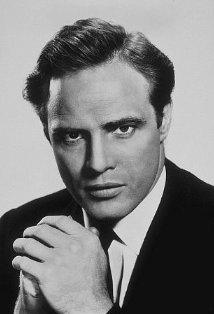
| Sign | Aries |
| Born |
Apr 3, 1924 Omaha, NE |
| Died |
Jul 1, 2004 Los Angeles, CA |
| Age | Died at 80 |
| Total Facts | 177 |
Elton John's song "Goodbye Marlon Brando" was inspired by the actor's retirement in 1980.
Keith Richards's son, Marlon Richards is named after him.
Bette Davis, who had presented Brando with his first Best Actor Oscar at the 27th Academy Awards in 1955, told the press that she was thrilled he had won. She elaborated, "He and I had much in common. He, too, had made many enemies. He, too, is a perfectionist.".
Apocalypse Now (1979) was based on the novel "Heart of Darkness" by Joseph Conrad. Years after "Apocalypse Now" was released, a television film was made of Heart of Darkness (1993) (TV), which featured Ian McDiarmid in a small role. McDiarmid also appeared in Dirty Rotten Scoundrels (1988), a remake of Bedtime Story (1964), a '60s comedy in which Brando appeared.
Jay Kantor was a lowly mailroom clerk at Lew Wasserman's talent agency Music Corp. of America when he was sent to pick up Brando and drive him to the agency. Impressed by the young man, Brando promptly appointed him his agent (Kantor was the inspiration for the character of Teddy Z in the 1989 TV series "The Famous Teddy Z" (1989)).
Russell Crowe wrote and sang a song about him called "I Wanna Be Marlon Brando."
Sean Penn told writer Charles Bukowski that Brando put scripts from producers into his freezer, in order to use them as targets in skeet shooting. Brando would take the frozen scripts and have them tossed in the air into the canyon below his home at night, and then proceed to blast them into smithereens with a shotgun while they were on the fly. By freezing the scripts, the pages were stiff and made for better "clay pigeon" substitutes. The practice is mentioned in one of Bukowski's poems. Bukowski also wrote about Brando in his short story "You Kissed Lilly", in which Lilly masturbates while watching Brando in a movie on television. The story is part of the collection "Hot Water Music" (1983).
The Chase (1966) producer Sam Spiegel was quite fond of Brando, who won his first Best Actor Oscar in the Spiegel-produced Best Picture winner On the Waterfront (1954). Spiegel was worried that motorcycle enthusiast Brando would kill himself like James Dean had, in an accident (Brando had had lacerated his knee while biking before filming began). Spiegel constantly queried "Chase" director Arthur Penn as to whether Brando had brought his motorcycle with him to the filming. When Brando got wind of this, he had the bike brought over to the set on a trailer and left on the lot to play a joke on Spiegel, who quickly arrived at the shooting to see that Brando didn't drive it. When Spiegel found out it was all a joke, the normally taciturn producer laughed heartily. Spiegel originally had acquired the property that became "The Chase" in the 1950s and wanted Brando to play the role of Jason 'Jake' Rogers and Marilyn Monroe to play his lover, Anna Reeves. By the time production began in 1965, Brando was too old to play the role of the son, and took the part of Sheriff Calder instead. Brando was paid $75
A collection of personal effects from Brando's estate fetched $2,378,300 at a June 30, 2005 auction at Christie's New York. His annotated script from The Godfather (1972) was bought for a world record $312,800. "Godfather" memorabilia were the most sought-after items at the 6.5-hour auction, which attracted over 500 spectators and bidders and multiple telephone bids. Brando's annotated film script originally was figured to sell at between $10,000 and $15,000, but brought more than 20 times the high end of the pre-auction estimate. The previous record for a film script bought at auction was $244,500 for Clark Gable's Gone with the Wind (1939) script, which was auctioned at Christie's New York in 1996. A letter from "Godfather" writer Mario Puzo to Brando asking him to consider playing the role of Don Corleone in the movie version of his novel was bought for $132,000. A photograph of Brando and former lover Rita Moreno in The Night of the Following Day (1968), the only piece of film memorabilia he kept in his Mulholland Dr.home,
A large part of his estate was bought by entrepreneur Keya Morgan.
According to co-producer Fred Roos, Brando was scheduled to make a cameo appearance in The Godfather: Part II (1974), specifically in the flashback at the end of the film in which Vito Corleone comes back to his home and is greeted with a surprise birthday party. In fact, he was expected the day of shooting but did not show up due to a salary dispute. According to Francis Ford Coppola, he hadn't been paid for The Godfather (1972) and thus would not appear in the sequel.
According to friend George Englund in his book "The Way It's Never Been Done Before: My Friendship with Marlon Brando," he testified at the manslaughter trial of his son Christian Brando that his mother and father and one of his two sisters had been alcoholics.
According to Lawrence Grobel's "Conversations with Brando" (NY: Hyperion, 1991), Brando ultimately made $14 million from Superman (1978). The Salkinds, producers of the movie, tried to buy out his share of the profits for $6 million, but Brando refused and had to file a lawsuit to recover what was owed him.
Adopted child: Petra Barrett Brando, whose biological father is author James Clavell.
After a decade of being considered "box-office poison" after the large losses generated by the big-budget remake of Mutiny on the Bounty (1962), the twin successes of The Godfather (1972) and _Ultimo tango a Parigi (1972)_ made Brando a superstar again. He was named the #6 and #10 top money-making star in 1972 and 1973, respectively, by the Motion Picture Herald. The top 10 box-office list was based on an annual poll of movie exhibitors in the US as to the drawing power of stars, conducted by Quigley Publications. Brando used his unique combination of box-office power and his reputation as the greatest actor in the world to command huge salaries throughout the decade, culminating in the record $3.7 million for 12 days work paid him for Superman (1978) by Alexander Salkind and Ilya Salkind. Factored for inflation, his adjusted salary of $11.25 million in 2002 terms equals almost $1 million a day, a record that stood until Harrison Ford breached it for K-19: The Widowmaker (2002).
After clashing with French director Claude Autant-Lara, Brando walked off production of Rouge et noir (1954).
After he received his first Academy Award nomination (Best Actor for A Streetcar Named Desire (1951)), Brando impishly told the Hollywood press corps that he would not attend the ceremony but would send a cab driver in his place to pick up the Oscar, should he win the award. Indeed, Brando did not attend, and some columnists claimed that a cabby actually was in attendance in Brando's seat at Los Angeles' RKO Pantages Theatre the night of ceremony of March 20, 1952. Alas, Brando was the sole "Steetcar" acting nominee not to win that night as Humphrey Bogart took home the gold, so the question can never be satisfactorily resolved.
Appeared on the front sleeve of The Beatles' classic album "Sgt. Pepper's Lonely Hearts Club Band" as Johnny in The Wild One (1953).
Asked The Godfather (1972) co-star James Caan what he would want if his wishes came true. When Caan answered that he'd like to be in love, Brando answered, "Me too. But don't tell my wife."
At the 27th Academy Awards, held March 30, 1955, at the RKO Pantages Theatre in Hollywood, Brando chewed gum throughout the ceremony, according to columnist Sidney Skolsky. When Bette Davis came out to present the Best Actor Oscar, Brando stopped chewing. When she announced him as the winner, Brando took the gum out of his mouth and shook hands with fellow nominee Bing Crosby, who had been reckoned the favorite that night, before going on stage to accept the statuette.
At the 77th Academy Awards ceremony, he was the last person featured in the film honoring film industry personalities who had passed away the previous year.
At the time of his death at the age of eighty, Brando had been suffering from congestive heart failure, advanced diabetes and pulmonary fibrosis (damage to the tissue inside the lungs resulting from a bout of pneumonia in 2001). Doctors had recently discovered a tumor inside his liver, but he died before they could operate to remove it.
Attended the memorial service for slain Black Panther 'Bobby Hutton' (I).
Became quite friendly with Elizabeth Taylor while shooting Reflections in a Golden Eye (1967). He agreed to pick up her Best Actress Award for Who's Afraid of Virginia Woolf? (1966) from the New York Film Critics Circle. When Brando made his appearance at the NYFCC Award ceremony at Sardi's on January 29, 1967, he badgered the critics, querying them as to why they hadn't recognized Liz before. He then flew to Dahomey, Africa, where Taylor was shooting The Comedians (1967) with husband Richard Burton to personally deliver the award. Brando later socialized with the Burtons, visiting them on their famous yacht the Kalizma, while they plied the Mediterreanean. Brando's ex-wife Anna Kashfi, in her book "Brando for Breakfast" (1979), claimed that Brando and Burton got into a fistfight aboard the yacht, probably over Liz, but nothing of the incident appears in Burton's voluminous diaries, in which Burton says he found Brando to be quite intelligent but believed he suffered, like Liz did, from becoming too famous too early in h
Believed that he could control stress in his life and physical pain through meditation. So sure he was of this, that he wanted to prove it. When he decided in the early nineties to be circumcised, he wanted the doctor to do the operation with no anesthesia so that he could show off this skill. The doctor refused because of medical ethics, but Brando underwent the operation anyway after receiving a painkilling shot in his back. Nevertheless, he wanted to show the doctors what he could do, and he asked them to take his blood pressure. Through meditation, he brought his blood pressure down more than 20 points.
Biographer Peter Manso said that at the time of production of flops such as The Appaloosa (1966), Brando had turned down the leading role of a Hamlet production in England, with Laurence Olivier.
Biography in: "The Scribner Encyclopedia of American Lives". Volume 7, 2003-2005, pages 43-46. Farmington Hills, MI: Thomson Gale, 2007.
Born to alcoholic parents, Brando was left alone much of the time as a child.
Both of his Oscar-winning roles have been referenced in the Oscar-winning roles of Robert De Niro. DeNiro played the younger version of his character, Vito Corleone, in The Godfather: Part II (1974). Brando's first Oscar was for On the Waterfront (1954), where his famous lines were "I coulda had class. I coulda been a contender. I could been somebody." DeNiro imitates this monologue in Raging Bull (1980), which won him his second Oscar.
Brando had to sue Francis Ford Coppola to get all the money owed to him from his percentage of the profits of Apocalypse Now (1979). Brando characterized the people in the movie industry as "liars" to Lawrence Grobel (who conducted his 1979 Playboy interview): "Even Francis Coppola owed me one-and-a-half million and I have to sue him. They all do that, as they make interest on the money . . . so they delay paying . . . It's all so ugly, I hate the idea of having to act, but there's no other way to do it".
Brando is a surname of Italian origin, although Marlon's original family name spelling seems to be disputed: Italian Brando, French Brandeau or German Brandau. In any case, all these surnames are derived from the old Germanic word "brand" that means "sword".
Brando tried to join the Army during World War II but was rejected due to a knee injury he had sustained while playing football at Shattuck Military Academy. After he made The Men (1950), the Korean War broke out, and he was ordered by the draft board to report for a physical prior to induction. As his knee was better due to an operation, he initially was reclassified from 4-F to 1-A, but the military again rejected him, this time for mental problems, as he was under psychoanalysis.
Brando was sought for the role of Bull McCabe in The Field (1990), but Richard Harris was cast instead.
Brando's children: 1) From first marriage (with Anna Kashfi) = Christian Devi Brando aka Christian Brando (b. 1958); 2) From second marriage (with Movita Castaneda) = Miko C. Brando (b. 1961) and Rebecca Brando Kotlinzky (b. 1967); 3) From third marriage (with Tarita Teriipia) = Simon Teihotu Brando (b. 1967), Stefano Brando (b. 1967) and Tarita Cheyenne Brando (b. 1970 and d. 1995); 4) From liaisons with Maria Christina Ruiz, his maid = Ninna Priscilla Brando (b. 1989), Myles Jonathan Brando (b. 1992) and Timothy Gahan Brando (b. 1994). Also adopted 3 children: Petra Brando-Corval (daughter of Brando's assistant Caroline Barrett), Maimiti Brando and Raiatua Brando.
Brando's decision to send a Mexican actress named Maria Cruz - calling herself Sacheen Littlefeather - to refuse his Best Actor Oscar for The Godfather (1972) at the The 45th Annual Academy Awards (1973) (TV) brought widespread condemnation. At the ceremony Clint Eastwood remarked he didn't know whether he should dedicate the Oscar he was presenting to "all the cowboys shot in John Ford's westerns". Michael Caine, nominated for his performance in Sleuth (1972), angrily condemned Brando's actions while Rock Hudson remarked, "Sometimes to be eloquent is to be silent.".
Brando's first Oscar nomination for A Streetcar Named Desire (1951) marked his first of 4 consecutive nominations, a feat he shares with Jennifer Jones (1943-46), Thelma Ritter (1950-53), Elizabeth Taylor (1957-60) and Al Pacino (1972-75).
Brando's first wife was Anna Kashfi, who bore him a son whom they named Christian. His second wife was Movita Castenada, who played the Tahitian love interest of Lt. Byam in Mutiny on the Bounty (1935). His third wife was Tarita Teriipia, who played the Tahitian love interest of Lt. Fletcher Christian in Mutiny on the Bounty (1962).
Brando's friend, actor William Redfield, mentioned him prominently in the memoir he wrote about the 1964 stage production of "Hamlet" (later transferred to film as Hamlet (1964/I)) directed by John Gielgud and starring Richard Burton. In "Letters from an Actor" (1967, Viking Press), Redfield -- who played Guildenstern -- said that Brando had been considered the Great White Hope by his generation of American actors. That is, they believed that Brando's more naturalistic style, combined with his greatness as an actor, would prove a challenge to the more stylized and technical English acting paradigm epitomized by Laurence Olivier, and that Brando would supplant Olivier as the world's greatest actor. Redfield would tell Burton stories of Brando, whom the Welsh actor had not yet met. Redfield sadly confessed that Brando, by not taking on roles such as Hamlet (and furthermore, by betraying his craft by abandoning the stage, thus allowing his instrument to be dulled by film work), had failed not only as an actor, but had failed to help American actors create an acting tradition that would rival the English in terms of expertise.
Brother of actress Jocelyn Brando, who appeared with him in The Ugly American (1963) and The Chase (1966).
Chosen by Empire magazine in 1995 as one of the "100 Sexiest Stars" in film history (#14).
Considered Montgomery Clift a friend and a "very good actor." They were not rivals, as the public perceived them to be during the 1950s. After Clift died of a heart attack in 1966, Brando took over his role in Reflections in a Golden Eye (1967).
Contrary to popular belief, Brando was not an atheist. At his son's trial, where he supposedly revealed his atheism and refused to swear upon a Bible, his actual words were, "While I do believe in God, I do not believe in the same way as others, so I would prefer not to swear on the Bible".
Daughter Cheyenne committed suicide in 1995, aged 25.
Director Francis Ford Coppola wanted Brando to appear as Preston Tucker Jr. in his biopic of the maverick automotive executive he planned to make after he completed The Godfather: Part II (1974). Brando was not interested but did appear in Apocalypse Now (1979), the film Coppola actually did make after finishing The Godfather (1972) sequel. When Coppola finally got around to making the film Tucker: The Man and His Dream (1988), he cast Jeff Bridges in the role.
During an acting class, when the students were told to act out "a chicken hearing an air-raid siren," most of the students clucked and flapped their arms in a panic, while Brando stood stock-still, staring up at the ceiling. When asked to explain himself, Brando replied, "I'm a chicken - I don't know what an air-raid siren is."
Eldest son Christian Brando was arrested for murdering his half-sister's boyfriend Dag Drollet in 1990. He was sentenced to 10 years in prison in March 1991 and released in January 1996.
Empire Magazine profiled him as part of their "Greatest Living Actors" series. The issue containing this feature was published a week before he died.
Encouraged Johnny Depp to get himself a private island just like his one in Tahiti.
Even before he let himself get obese and balloon up to over 350 lb., his eating habits were legendary. The Men (1950) co-star Richard Erdman claimed Brando's diet circa 1950 consisted "mainly of junk food, usually take-out Chinese or peanut butter, which he consumed by the jarful." By the mid-'50s he was renowned for eating boxes of Mallomars and cinnamon buns, washing them down with a quart of milk. Close friend Carlo Fiore wrote that in the '50s and early '60s Brando went on crash diets before his films commenced shooting, but when he lost his willpower he would eat huge breakfasts consisting of corn flakes, sausages, eggs, bananas and cream, and a huge stack of pancakes drenched in syrup. Fiore was detailed by producers to drag him out of coffee shops. Karl Malden claimed that, during the shooting of One-Eyed Jacks (1961), Brando would have "two steaks, potatoes, two apple pies a la mode and a quart of milk" for dinner, necessitating constant altering of his costumes. During a birthday party for Brando--the film's director as well as star--the crew gave him a belt with a card reading, "Hop
Expelled from high school for riding a motorcycle through the halls.