Home> Facts and Trivia > Stars > Marlon Brando
Marlon Brando Facts
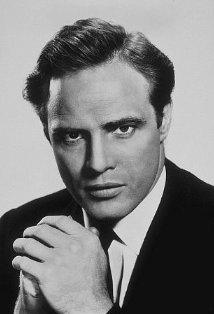
| Sign | Aries |
| Born |
Apr 3, 1924 Omaha, NE |
| Died |
Jul 1, 2004 Los Angeles, CA |
| Age | Died at 80 |
| Total Facts | 177 |
Film critic Roger Ebert praised Brando as "the Greatest Actor in the World."
Finished first in MSN's "The Big 50: Cinema's Greatest Legends" poll in March 2009 (Robert De Niro finished runner-up with Al Pacino in third place).
Former brother-in-law of Eliot Asinof.
Grandfather of Prudence Brando and Shane Brando, children of Brando's son Miko C. Brando.
Grandfather of Michael Brando (b.1988), son of Christian Brando. And Tuki Brando (b.1990), Son of Cheyenne Brando.
Grandfather of Tuki Brando, son of Brando's daughter Cheyenne.
He allegedly refused to be interviewed for Hearts of Darkness: A Filmmaker's Apocalypse (1991) (a documentary about the making of Apocalypse Now (1979)) because he claimed Francis Ford Coppola still owed him $2 million.
He and director Tony Kaye paid 350,000 pounds sterling for footage of what allegedly is the "Angel of Mons," according to The Sunday Times (March 11, 2001). The Angel of Mons was an apparition that legend holds appeared in the skies during the British Expeditionary Force's first encounter with the Imperial German army during WWI, which enabled a successful retreat by the BEF. The film allegedly was found in August 1999 in a junk-shop, which had a trunk belonging to a man called William Doidge, a WWI veteran. Doidge had been at Mons in August 1914 and knew about or possibly saw the apparition in the sky as the British army retreated before the overwhelming German advance. After the war he became obsessed by these apparitions. An American war veteran told him in 1952 that angels had appeared before some American troops were drowned during an exercise in 1944 at Woodchester Park in the Cotswolds. Doidge went there with a movie camera and supposedly captured images of them. Kaye planned to make a film of the incident, starring Brando as the American vet, but the plans fell through when the two fell out over an acting video.
He attended a staging of Eugene O'Neill's autobiographical "Long Day's Journey Into Night" with an eye towards starring in a proposed film of the play. The play deals with the drug addiction of Mary Tyrone, modeled after O'Neil's own mother, which, along with her husband's miserliness and her oldest son's alcoholism, has blighted her youngest son's life. When asked his opinion of the play, Brando, whose mother was an alcoholic and had died relatively young in 1954, replied, "Lousy." Jason Robards, who originated the role of older son James Tyrone, Jr. in the original Broadway production in 1956, subsequently appeared in Sidney Lumet's 1962 movie.
He attributed "Brando" to his great-great-grandmother whose last name was spelled "Brandeau". She was a 5th generation descendant of Louis DuBois, a French Huguenot refugee whom, with 11 others, founded New Paltz, NY. However, it was "Brandow" for at least 4 generations until his great-grandfather, James, shortened it to "Brando". Brando was also of Swiss and Prussian heritage through his paternal great-great-great-great grandmother, Annatje Lehnann, and of Irish heritage through his maternal great-grandfather, Myles Gahan, who immigrated to the United States from Ireland.
He balked at the prospect of Burt Reynolds in the role of Santino Corleone in The Godfather (1972).
He constantly referred to his good friend Johnny Depp as "the most talented actor of his generation".
He did not like to sign autographs for collectors. Because of this, his own autograph became so valuable that many checks he wrote went uncashed--his signature on them was worth more than the value of the check itself. Ironically, his secretary Alice Marchak remembered a time when a fan asked for his autograph. Brando promptly signed the fan's autograph book twice. Brando then told the fan that he had heard that one John Wayne autograph was equal to two Marlon Brando's on the collector's market.
He died in 2004 at the age of 80, from obesity, pulmonary fibrosis, diabetes, cardiac failure, and an enlarged liver suggesting cancer.
He liked to box. While performing as Stanley Kowalski in the stage version of "A Streetcar Named Desire", he would often persuade a member of the stage crew to spar with him in a room underneath the stage between his acts. During one of these impromptu boxing matches, a crew member surprised him with a hard punch to the nose. Brando's nose was broken so badly that it literally was split across its bridge. He managed to go on stage and finish the play despite the fact that backstage efforts to stanch the bleeding had failed, but he was taken to the hospital immediately after. His famous broken-beak nose was the result of his having taken off his bandages in order to cover his nose with Mercurochrome to make it look particularly bad when he was visited by the play's producer, Irene Mayer Selznick. The subterfuge worked, as Selznick gave him two weeks off from the grind of the play (he was on stage with "Streetcar" for two years), but by taking the bandages off, his nose did not properly set.
He reputedly suggested that his cameo role as Jor-El in Superman (1978) be done by him in voiceover only, with the character's image onscreen being a glowing, levitating green bagel. Unsure if Brando was joking or not, the film's producers formally rejected the suggestion.
He was a close friend of the reclusive singer Michael Jackson for many years, even appearing in his music video "You Rock My World" in 2001. The last time Brando left his bungalow in Hollywood was to stay at Jackson's Neverland Ranch in the summer of 2003.
He was an avid user of the Internet in his final years, often going into chat rooms to start arguments.
He was offered a chance to reprise his role as Vito Corleone in The Godfather: Part II (1974) and Jor El in Superman II (1980), but he turned them both down due to his own credo that once he finished a role, he put it away and moved on. He turned down both films despite being offered three times more money than any of his co-stars.
He was originally cast in John Wayne's role as Genghis Khan in The Conqueror (1956), but backed out at the last minute.
He was reportedly interested in making a film of Rolf Hochhuth's controversial play "The Deputy," an indictment of the alleged silence of Pope Pius XII (God's "Deputy" on Earth) over the Nazi persecution of the Jews during World War II. The film was never made.
He was reportedly once interested in playing Pablo Picasso on film and was trying to reduce weight on a banana diet. The film was never made.
He was sought for the role of O'Brien the interrogator in 1984 (1984), along with Sean Connery and Paul Scofield. Scofield accepted the part, but had to drop out of shooting after breaking his arm and was replaced by Richard Burton.
He was voted the 15th Greatest Movie Star of all time by Premiere Magazine.
He was voted the 7th "Greatest Movie Star" of all time by Entertainment Weekly.
He worked for union scale on the anti-apartheid film A Dry White Season (1989) with the proviso that the producers donate $3 million (which would have been his normal fee) to charity. When Brando was interviewed by Connie Chung for her TV program "Saturday Night with Connie Chung" (1989), broadcast on October 7, 1989, he said he was upset with the picture and mentioned the charitable gift the producers had made on his bequest to show his commitment to toppling apartheid in South Africa. Brando could be generous at that time, as he appeared to be set financially for life due to his profit participation in Apocalypse Now (1979) and the $14-million settlement he won from Superman (1978) producer Ilya Salkind. However, the defense of his son Christian Brando, who was arrested for murder on May 16, 1990, reportedly cost his father as much as $5 million, so Brando was forced to go back to work after almost a decade away from the screen, but for the anti-apartheid picture and what he intended
Helped out a lot of minorities in America, including African Americans, Asian Americans, Hispanic Americans and Native American Indians.
His Sacheen Littlefeather controversy at the Oscars resulted in the Academy setting stricter rules that nominees cannot send someone else to accept the award onstage or address the audience, and only the presenter is allowed to accept on the winner's behalf. Exceptions are made in the case that the honoree genuinely could not attend due to illness or death.
His The Night of the Following Day (1968) co-star Richard Boone directed the final scenes of the film at the insistence of Brando, who could no longer tolerate what he considered the incompetence of director Hubert Cornfield. The film is generally considered the nadir of Brando's career.
His ashes were scattered in Tahiti and Death Valley.
His best friend was Wally Cox, whom he had known as a child and then met again when both were aspiring actors in New York during the 1940s. According to Brando's autobiography, there wasn't a day that went by when he didn't think of Wally. So close did he feel to Cox, he even kept the pajamas he died in.
His character Ken Wilcheck in his cinema debut The Men (1950) has the nickname "Bud", which was his own nickname as he was a "junior". (Brando's father, Marlon Brando Sr., later worked for his company Pennebaker Productions, which was named after his mother, the former Dorothy Pennebaker.) The only other film in which Brando goes by the name which his family and intimate friends called him is The Night of the Following Day (1968).
His decision to play the title role in The Island of Dr. Moreau (1996) turned out to be an offer that he definitely should have refused. He received the Worst Supporting Actor Razzie Award, beating Burt Reynolds, who was nominated for Striptease (1996), by a single vote. The vote was cast by Razzie award founder John Wilson, who always chooses to vote last.
His favorite comedians were Charles Chaplin, Stan Laurel & Oliver Hardy, W.C. Fields, Wally Cox, Woody Allen, and Don Rickles. He did, however, consider The Marx Brothers "embarassing".
His favorite movie was Henry V (1989) which starred and was directed by Kenneth Branagh.
His idols are Fredric March, John Barrymore and Spencer Tracy.
His monumental portrayal of Vito Corleone in the masterpiece The Godfather (1972) is the #1 Greatest Movie Character of All Time in Premiere Magazine.
His mother gave him an odd pet: a raccoon he named Russell.
His Mulholland Drive home once shared a driveway with his The Missouri Breaks (1976) co-star Jack Nicholson. Nicholson later bought Brando's home from his estate.
His performance as Paul in Last Tango in Paris (1972) is ranked #27 on Premiere Magazine's 100 Greatest Performances of All Time (2006).
His performance as Stanley Kowalski in A Streetcar Named Desire (1951) is ranked #85 on Premiere Magazine's 100 Greatest Movie Characters of All Time.
His performance as Terry Malloy in On the Waterfront (1954) is ranked #2 on Premiere Magazine's 100 Greatest Performances of All Time (2006).
His performance as Terry Malloy in On the Waterfront (1954) is ranked #69 on Premiere Magazine's 100 Greatest Movie Characters of All Time.
His signature was considered so valuable to collectors, that many personal checks he wrote were never cashed because his signature was usually worth more than the amount on the check.
His son Miko C. Brando was once a bodyguard for Michael Jackson. Jackson and Brando remained good friends thereafter.
Idol of Julie Christie.
In 1995, as a guest on "Larry King Live" (1985), kissed Larry King on the mouth.
In 1999 the American Film Institute named him the fourth Greatest Male Star of All Time.
In a 1966 review of Brando's film The Chase (1966), film critic Rex Reed commented that "most of the time he sounds like he has a mouth full of wet toilet paper."
In a 1989 TV interview with Connie Chung, Brando told her that he contributed his entire salary for A Dry White Season (1989) to an anti-apartheid group in South Africa with the understanding that M.G.M. would make a similar contribution. The movie was the first Brando had made in nine years. Brando quoted his salary at $3.3 million plus 11.3% of gross. He claimed that M.G.M. reneged on its own matching contribution to the group and that he was uncertain how much the group received from M.G.M. because of his percentage. Brando's anger with M.G.M. over reneging on its charitable contribution and for cutting his scenes (which he felt were a more forceful indictment of apartheid and had been done to prevent South Africa's then-apartheid government from banning the studio's films) was felt to be one of the reasons that Brando gave his first interview in many years.