Home> Facts and Trivia > Stars > Marlon Brando
Marlon Brando Facts
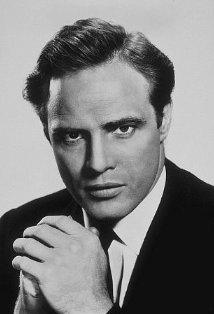
| Sign | Aries |
| Born |
Apr 3, 1924 Omaha, NE |
| Died |
Jul 1, 2004 Los Angeles, CA |
| Age | Died at 80 |
| Total Facts | 177 |
In April 2002, a woman filed a $100-million palimony lawsuit in California against Brando, claiming he fathered her three children during a 14-year romantic relationship. Maria Cristina Ruiz, 43, filed the breach-of-contract suit, demanding damages and living expenses. The lawsuit was settled in April 2003.
In his 1976 biography "The Only Contender" by Gary Carey, Brando was quoted as saying, "Like a large number of men, I, too, have had homosexual experiences, and I am not ashamed."
In his autobiography, he said that he was physically attracted to Vivien Leigh during the making of A Streetcar Named Desire (1951). He could not bring himself to seduce her, however, as he found her husband, Laurence Olivier, to be such a "nice guy."
In his book "The Way It's Never Been Done Before: My Friendship with Marlon Brando," George Englund relates how Brando told him a couple of years before his death that the Academy of Motion Picture Arts & Sciences offered him a Lifetime Achievement Oscar on the condition that he attend the ceremony to personally accept the award. Brando refused, believing that the offer shouldn't be conditional, and that the condition that he appear on the televised ceremony showed that the Academy was not primarily focused on honoring artistic excellence.
In his September 1972 Playboy Magazine interview, director Sam Peckinpah said that a problem with One-Eyed Jacks (1961) is that Brando would not play a villain. Peckinpah had worked on rewriting the script, which was based on the novel "The Authentic Death of Hendry Jones," a re-telling of the Billy the Kid legend. Billy the Kid, according to Peckinpah, was a genuine villain, whereas Brando's character "Rio" was not, thus lessening the dramatic impact of the story. He praised Brando for his acting comeback as Don Corleone in The Godfather (1972), both as the return of a great actor and as an example of Brando's newfound willingness to shuck off his old predilection and actually play a villain.
In Premiere Magazine's 100 Greatest Movie Character's of all time, he won the top spot for his performance as Vito Corleone in The Godfather.
In the last three years of his life, Marlon filmed a series of classes of him giving acting lessons to Sean Penn, Jon Voight and Nick Nolte. Marlon intended to call the series "Lying For A Living" and to sell DVDs of it on shopping channel QVC to raise money. The DVDs were never released publicly following his death.
In the summer of 1995, he started shooting a movie called "Divine Rapture" in the tiny Irish village of Ballycotton, County Cork. His co-stars were Johnny Depp, Debra Winger and John Hurt. Marlon was playing a priest in the film and he had dyed his hair red for the part. Shooting began, but was never completed due to lack of financing.
Is mentioned in Robbie Williams' song "Advertising Space".
Is mentioned in the Billy Joel song "We Didn't Start the Fire".
Is related to four presidents of the United States: James Madison, John Tyler, Zachary Taylor, Jimmy Carter; and to Gen. George S. Patton.
It was his idea for Jor-El to wear the "S" insignia as the family crest in Superman (1978).
Just after the end of World War II, met the then-unknown James Baldwin and Norman Mailer at a cafeteria in New York. He became friends with Baldwin, a friendship that lasted until Baldwin's death.
Lived on infamous "Bad Boy Drive" (Muholland Drive in Beverly Hills, California), which received its nickname because its residents were famous "bad boy" actors Jack Nicholson, Warren Beatty and Brando.
Made the Top 10 Poll of Money-Making Stars, as ranked by Quigley Publications' annual survey of movie exhibitors, five times from 1954 to 1973. He debuted at #10 in 1954, and climbed to #6 in 1955 before falling off the list in 1956. He again made the list, as #4, in 1958. He did not appear on the list again until 1972, when he was ranked the #6 Box Office star after the extraordinary success of The Godfather (1972). He made one last appearance in 1973, going out as he had come onto the list, at #10.
Mentioned in Neil Young's song "Pocahontas," in David Bowie's song "China Girl," in Bruce Springsteen's song "It's Hard To Be A Saint In The City", and The Cult's song "American Horse".
Mentioned in Madonna's song "Vogue."
Mentioned in Slipknot's song "Eyeless."
Mentioned in The Killers' "The Ballad of Michael Valentine".
Mentioned in the song "Risen Within" by MC Homicide featuring Paz.
Native of Omaha, Nebraska. His mother once gave stage lessons to Henry Fonda, another Nebraska native.
One of the innovators of the Method acting technique in American film.
Originally considered too young at 23 to play Stanley Kowalski in the Broadway version of "A Streetcar Named Desire", and the producers of the show tried to get 34-year-old Burt Lancaster, newly a huge star in movies thanks to The Killers (1946). When Lancaster was unable to get permission from the film studio, Brando was given the part and became an overnight sensation.
Owned a private island off the Pacific coast, the Polynesian atoll known as Tetiaroa, from 1966 until his death in 2004.
Paramount studio brass wanted him to appear as Jay Gatsby in The Great Gatsby (1974), but he wanted $4 million, an unheard-of salary at the time.
Posthomously received the 'Stella Adler' Award for Lifetime Achievement, presented by his friend and neighbor Warren Beatty to his son Miko C. Brando.
Ranked #12 in Entertainment Weekly's "Top 100 Entertainers" of all time (2000).
Ranked #13 in Empire (UK) magazine's "The Top 100 Movie Stars of All Time" list (Oct. 1997).
Received more money for his short appearance as Jor-El in Superman (1978) than Christopher Reeve did in the title role. Brando later sued for a percentage of the film's profits.
Received top billing in nearly every film he appeared in, even if not cast in the lead role.
Rode his own Triumph 6T Thunderbird, registration #63632, in The Wild One (1953).
Said that the only reason he continued to make movies was in order to raise the money to produce what he said would be the "definitive" film about Native Americans. The film was never made.
Shortly before his death in 2004, he gave EA Games permission to use his voice for its video game The Godfather (2006) (VG).
Shortly before his death, his doctors had told him that the only way to prolong his life would be to insert tubes carrying oxygen into his lungs. He refused permission, preferring to die naturally.
Signed on to appear in director Sidney Lumet's adaptation of the play Child's Play (1972) as schoolteacher Joseph Dobbs, but backed out just before principal photography was to begin when he realized James Mason had the better part as his schoolteacher rival. According to Bob Thomas' "Brando: Portrait of the Artist as a Rebel", Brando quit the production when he realized his flagging career would soon be revitalized by the The Godfather (1972). A last-minute replacement, Robert Preston was signed to take over the role, and though a fine actor, he bombed in the performance due to over-projection of his voice (Preston had been playing mainly in the theater in the previous decade). Brando subsequently was sued by producer David Merrick. Ironically, both Brando and Mason were rivals for the part of Viktor Komarovsky in Doctor Zhivago (1965). Both were offered the role by David Lean, and both turned it down.
Son of Marlon Brando Sr.
Studied at the Dramatic Workshop at the New School for Social Research in New York City.
Studied modern dance with Katherine Dunham in New York in the early 1940s and briefly considered becoming a dancer.
Subject of the song "I'm Stuck in a Condo with Mr. Marlon Brando" by The Dickies.
Supported John F. Kennedy in the 1960 presidential election.
The news agency Reuters, in an article about about Vanity Fair magazine's upcoming Hollywood issue, reported after his death that Brando repeatedly voiced objections to appearing in The Godfather (1972). According to Brando's friend Budd Schulberg, who won an Oscar writing the screenplay for On the Waterfront (1954), Brando repeatedly told his assistant Alice Marchak that he would not be in a film that glorified the Mafia. Schulberg said that Marchak pestered him to read the best-seller, and at one point he threw the book at her, saying, "For the last time, I won't glorify the Mafia!" However, Marchak noticed that Brando subsequently began toying with the idea of a mustache to play Don Corleone, at first drawing one on with an eyebrow pencil and asking her, "How do I look?" "Like George Raft," she replied. Marchak told Schulberg this went on for awhile, with Brando trying different mustaches, until he finally won the part after agreeing to a screen test. Among the actors he beat out for the role were Laurence Olivier, who was too sick to work on the film, and Burt Lancaster, who
The producers of the film adaptation of Sir Peter Shaffer's play Equus (1977) were interested in casting either Brando or Jack Nicholson in the lead role of Dr. Martin Dysart. The part went instead to Richard Burton, who had to "screen-test" for the role by agreeing to appear in the play on Broadway. Burton did, got rave reviews and a special Tony award, and won his seventh and last Oscar nomination for the role. In his diary, Burton wrote that in the late 1950s, he was always one of the first actors producers turned to when Brando turned down a role.
The story about his mother his character Paul tells Jeanne in Last Tango in Paris (1972), about how she taught him to appreciate nature, which he illustrates with his reminiscence of his dog Dutchy hunting rabbits in a mustard field, is real, based on his own recollections of his past.
The very last film role that was ever offered to him was Rayburn in Man on Fire (2004), less than a year before he passed away. The role instead went to Christopher Walken.
Tithed a tenth of his income to various black civil-rights organizations such as the Southern Christian Leadership Conference.
Took possession of friend Wally Cox's ashes from his widow in order to scatter them at sea but actually kept them hidden in a closet at his house. In his autobiography, Brando said he frequently talked to Cox. The Los Angeles Times on September 22, 2004 quoted Brando's son, Miko, to the effect that both his father's and Cox's ashes were scattered at the same time in Death Valley, California in a ceremony following Brando's death.
Turned down Edmund Purdom's role in The Egyptian (1954).
Turned down Charlton Heston's Oscar winning role in Ben-Hur (1959).
Turned down Gary Cooper's Oscar winning role in High Noon (1952).
Turned down Stacy Keach's role in American History X (1998).