Home> Facts and Trivia > Stars > Burt Lancaster
Burt Lancaster Facts
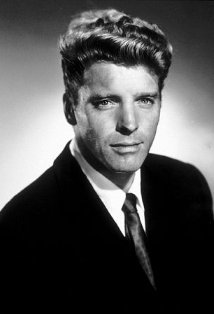
| Sign | Scorpio |
| Born |
Nov 2, 1913 New York City, NY |
| Died |
Oct 20, 1994 Century City, CA |
| Age | Died at 81 |
| Total Facts | 107 |
Robert Altman wanted Lancaster for the role of Ned Buntline in Buffalo Bill and the Indians, or Sitting Bull's History Lesson (1976) because he had the "stature" of a great movie star but was "able to play that as a kind of bullshitter", which was what Altman conceived the character to be: "He understood totally the bullshit factor and what he was playing." Buntline, a real-life writer of nickel Westerns, had invented Buffalo Bill Cody as a western hero; Altman knew that Lancaster had invented himself as a star, a new kind of star that had revolutionized the movies in the 1950s.
Luchino Visconti wanted to cast Laurence Olivier in the title role of the Italian prince in "The Leopard" (1963), but his producer overruled him. The producer insisted on a box office star to justify the lavish production's high budget and essentially forced Visconti to accept Burt Lancaster. A decade later, the two Oscar-winning actors competed again for the role of another Italian prince, Mafia chieftain Don Corleone, in "The Godfather" (1972), ultimately losing out to Marlon Brando.
Jane Fonda admitted she was devastated to lose Lancaster from Old Gringo (1989), because she admired him very greatly.
Go Tell the Spartans (1978), though little seen at the time of its release, is widely considered the greatest anti-war movie about Vietnam.
5 children: James Stephen "Jimmy" (born June 30, 1946), Wlliam "Billy" (born in November, 1947), Susan Elizabeth (born July 5, 1949), Joanna Mari (born in July, 1951) and Sighle (born in 1954).
A lifelong Democrat and liberal activist, Lancaster appeared prominently on President Richard Nixon's "List of Enemies" due to his support for Senator George McGovern in the 1972 presidential election.
A self-described "Kennedy man", Lancaster dined with President John F. Kennedy at the White House. He delayed the release of Seven Days in May (1964) when the President was assassinated, and later joined fellow liberal activists Robert Ryan and Will Geer in starring in Executive Action (1973), the first Kennedy assassination conspiracy movie. Its "real purpose", Lancaster stated, was "to make people skeptical.".
A self-described atheist, Lancaster agreed to play a corrupt evangelist in Elmer Gantry (1960) because he wanted to make an anti-Billy Graham statement. His performance won him the Best Actor Oscar.
A self-described atheist, Lancaster had turned down the role in the remake of Ben-Hur (1959) played by Charlton Heston, but followed in Heston's footsteps when he played the title role in "Moses the Lawgiver" (1974), the $5-million TV epic produced by Britain's ATV-ITC and Italy's RAI Television. When a reporter asked him if he was following in Heston's sandal-clad steps, Lancaster replied, "If Charlton was trapped in Biblical films, it was his own fault - he accepted the limitation." Though Lancaster claimed he was an atheist, some of his friends doubted him.
According to his wishes, he was buried without any memorial or funeral service. His grave in Westwood Memorial Park has a headstone that simply reads, ""Burt Lancaster, 1913-1994".
According to Kate Buford in her biography "Burt Lancaster: An American Life," he felt competitive with Marlon Brando, who achieved stardom playing Stanley Kowalski on Broadway, a role Lancaster turned down. A Top 10 box-office success in the early 1960s, it was this sense of competition with Brando, who was known as both an actor's actor and a major movie star, that led Lancaster to plunge into art films and riskier fare such as Luchino Visconti's The Leopard (1963), in order to prove himself as an actor and be known as an artist rather than just a movie star. After this refocusing of his career, he slipped out of the Top 10 and never again was a major box office attraction.
After placing tenth place in the Motion Picture Herald poll of most popular box-office stars in 1962, he dropped to 18th place in 1963 and never again appeared on the list.
Allegedly showed up at a Hollywood Oscar party in the late 1950s wearing a G-string and spray-painted gold, resembling an Academy Award statuette.
An unabashed political liberal, chairman of the American Civil Liberties Union Foundation of Southern California and an active campaigner for George McGovern in the 1972 Presidential election, Lancaster was one of the 575 people named on President Richard Nixon's 1973 "Enemies List," along with fellow actors Gene Hackman and Paul Newman, "Playboy" magazine publisher Hugh M. Hefner and TV producer Norman Lear.
Attended Elizabeth Taylor's "Commitment to Life" fundraiser on 19 September 1985, despite being warned his appearance would resurrect the longtime rumors about his sexuality. At the event Lancaster read out Rock Hudson's letter admitting that he had AIDS.
Attended Visconti's funeral in Rome in March 1976.
Came up with $150,000 of his own money to complete Go Tell the Spartans (1978) after the production ran out of money with five days left to shoot. The shooting schedule already had been pared from 40 to 31 days to save money.
Campaigned for Michael Dukakis in the 1988 presidential election.
Chosen by Empire magazine as one of the 100 Sexiest Stars in film history (#100). [1995]
Claimed that he learned a great deal from Gary Cooper's laid back acting style and behavior on the set of Vera Cruz (1954).
Daughter Sighle worked as a model then became a social worker.
Descended from Irish Protestants from Ulster who emigrated to the United States in the 1880s.
Despite his enduring stardom, he surprisingly only placed in Quigley Publications' Top 10 Poll of Money-Making Stars twice: #4 in 1956 and #10 in 1963. The annual poll of movie exhibitors ranks the top stars in terms of box-office drawing power. Even more surprisingly, his friend and co-star Kirk Douglas never made the list during his career.
Died the very same year as his long-time friend, circus acrobat partner and frequent co-star Nick Cravat.
During the late 1950s John Wayne approached Lancaster, suggesting they make a western together. Lancaster laughed off the idea, suggesting they would need Kirk Douglas in the film as well. In reality, Lancaster would not work with Wayne, Hollywood's most prominent Republican supporter who had been actively involved in the McCarthy witch hunts as a founding member and later President of the right-wing Motion Picture Alliance for the Preservation of American Ideals. Lancaster had only agreed to co-star opposite Gary Cooper, a moderate Republican who gave a vague testimony to the House Unamerican Activities Committee (HUAC) in 1947, after Cooper had starred in the anti-McCarthyism western High Noon (1952). Despite this, Lancaster joined a minute's silence for Wayne on 11 June 1979 while filming Cattle Annie and Little Britches (1981) after Wayne died in Los Angeles.
During World War II, he served as a member of the Special Services branch, entertaining troops. He was stationed in Italy for much of the war.
Eagerly sought the role of a dying composer who discovers his homosexuality in Luchino Visconti's masterpiece Death in Venice (1971). Although the role went to Dirk Bogarde, Lancaster later played a reclusive professor who is brought face to face with his latent homosexuality in Visconti's Conversation Piece (1974).
Father of actor/writer Bill Lancaster.
Felt intimidated by co-star Montgomery Clift on the set of From Here to Eternity (1953) due to Clift's great talent.
Frequently compared with the English actor Sir Dirk Bogarde. Both achieved stardom in purely commercial films, then deliberately broke away from their images to star in artistic films and in so doing lost their box office popularity. Both actors were directed twice to great effect by Luchino Visconti - Lancaster in The Leopard (1963) and Conversation Piece (1974), Bogarde in The Damned (1969) and Death in Venice (1971).
Gave two of his revolvers to Ringo Starr when The Beatles stayed in Hollywood in August 1964.
Graduated from DeWitt Clinton High School in New York [1930]
Had tried to raise financing for four years for Hector Babenco's film of Kiss of the Spider Woman (1985), based on the novel by Manuel Puig, after Babenco gave him the novel in 1981 at the NY Film Critics Society Ceremony. Lancaster was to have played the role of Molina, the gay hairdresser who shares a cell with Valentin, a political prisoner. However, Lancaster had a heart attack in June 1983, and subsequently a quadruple-bypass operation, and at the age of 70, he was essentially uninsurable. He had to withdraw from roles in Maria's Lovers (1984), Gorky Park (1983), Firestarter (1984) and the TV mini-series "A.D." (1985). The film was later made for less than $1 million with William Hurt in the role Lancaster wanted to play. Hurt won a Best Actor Oscar as Molina.
He admitted that an odd thing always happened to him on a movie set. He would complain about everything, sometimes very loudly. By the end of the shoot however, the crews loved him and hated to see him go, despite his complaints. He never understood why that happened.
He and Kirk Douglas acted together in 7 movies: Victory at Entebbe (1976) (TV), Tough Guys (1986), Seven Days in May (1964), The List of Adrian Messenger (1963), I Walk Alone (1948), Gunfight at the O.K. Corral (1957) and The Devil's Disciple (1959)
He could not attend the funeral of close friend Telly Savalas as he was so ill.
He has a star on the Hollywood Walk of Fame located at 6801 Hollywood Blvd.
He has a step-son, John Scherer, from his widow, Susie.
He has only one grandchild, granddaughter Keigh, born in 1966 to his son, Bill Lancaster.
He made a great deal of money from Airport (1970), which was a huge hit, due to a 10% profit participation once the movie hit $50 million. (the film grossed $45.3 million in North America alone). Lancaster said that the movie was "the worst piece of junk ever made."
He was 33 when he appeared in his first movie, The Killers (1946), having worked as a circus acrobat since his late teens and following war service and acting on Broadway.
He was an infamous ladies man in Hollywood, which eventually irritated his wife, Norma, enough for her to leave him.
He was nearly blacklisted in the late 1940s due to his liberal political beliefs, and the FBI kept a file detailing his activities.
He was not close friends with Kirk Douglas as was often perceived. The closeness of their friendship was largely fabricated by the publicity-wise Douglas, while, in reality, they were very competitive with each other and sometimes privately expressed a mutual personal disdain despite a mutual respect for their acting talents.
He was originally cast in Victor Mature's role in The Robe (1953), but backed out due to the Christian theme.
He was prevented from playing William Hurt's Oscar-winning role as a flamboyant gay hairdresser in Kiss of the Spider Woman (1985) when forced to undergo quadruple bypass surgery on 26 August 1983 following a heart attack. He believed his vocal chords were damaged after tubes were inserted down his throat during the operation.
He was voted the 39th Greatest Movie Star of all time by Entertainment Weekly.
He would frequently turn down lifetime achievement awards during the 1980s, saying half-jokingly, "Give them to my good friend Kirk", since he knew Douglas would be happier in the limelight.
Helped pay for the defense of Private Billy Dean Smith, an African American soldier accused of 'fragging' two officers in Vietnam in 1971. Lancaster gave $3,000 to his defense attorneys to hire ballistics experts to testify at his court-martial. Smith was acquitted.
His daughter Sighle's name is pronounced Sheila.