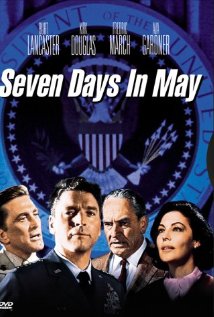

Seven Days in May (1964) |
|
| Director(s) | John Frankenheimer |
| Producer(s) | Edward Lewis |
| Top Genres | Drama, Film Adaptation, Romance, Thriller/Suspense, War |
| Top Topics | Book-Based, Cold War |
Featured Cast of Seven Days in May See More »
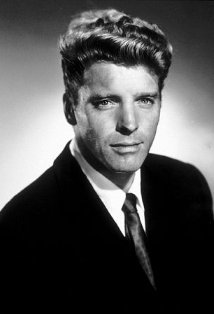
Seven Days in May
Released
1964
Burt Lancaster
(as Gen. James Mattoon Sco...)

Seven Days in May
Released
1964
Kirk Douglas
(as Col. Martin 'Jiggs' Ca...)
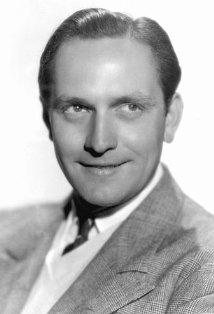
Seven Days in May
Released
1964
Fredric March
(as President Jordan Lyman)

Seven Days in May
Released
1964
Ava Gardner
(as Eleanor Holbrook)
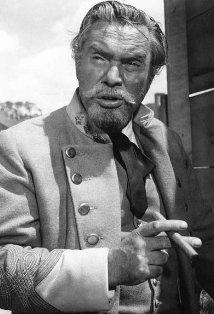
Seven Days in May
Released
1964
Edmond O'Brien
(as Sen. Raymond Clark)
Seven Days in May
Released
1964
Martin Balsam
(as Paul Girard)
Seven Days in May
Released
1964
Hugh Marlowe
(as Harold McPherson)
Seven Days in May
Released
1964
Whit Bissell
(as Sen. Frederick Prentic...)
Seven Days in May Overview:
Seven Days in May (1964) was a Drama - Romance Film directed by John Frankenheimer and produced by Edward Lewis.
Academy Awards 1964 --- Ceremony Number 37 (source: AMPAS)
| Award | Recipient | Result |
| Best Supporting Actor | Edmond O'Brien | Nominated |
| Best Art Direction | Art Direction: Cary Odell; Set Decoration: Edward G. Boyle | Nominated |
Seven Days in May BlogHub Articles:
Seven Days in May (1964): A Twilight Zone America Strikes Close to Home
The opening images of Seven Days in May could have easily been pulled out of the headlines. A silent protest continues outside the White House gates with hosts of signs decrying the incumbent president or at the very least the state of his America. We don’t quite know his egregious act altho... Read full article
Seven Days in May (1964, John Frankenheimer)
Screenwriter Rod Serling really likes to employ monologues in Seven Days in May. John Frankenheimer likes to direct them too. And the actors like to give them. Because they’re good monologues. The monologues give all then actors fantastic material. Everyone except George Macready, who isn’t the ... Read full article
Seven Days in May (1964)
Seven Days in May Directed by John Frankenheimer Written by Rod Sterling from a novel by Fletcher Knebel and Charles W. Bailey II 1964/USA Joel Productions/Seven Arts Productions Repeat viewing/FilmStruck I expected more suspense in a conspiracy theory film from John Frankenheimer. In the not so dis... Read full article
Warner Archive Blu-ray: March, Lancaster, Douglas and Gardner in Seven Days in May (1964)
Seven Days in May (1964) was director John Frankenheimer's follow-up to The Manchurian Candidate (1962), meant to be another unsettling portrait of power and politics. Given today's political climate though, it is striking how relatively sane everyone seems in this story of an attempted military tak... Read full article
Seven Days in May – part 5
In part 4 I had a section called “ One Liners and Small Roles”. With the exception of Richard Anderson Malcolm Atterbury and John Larkin were just two of the 10 actors who appeared in the film but were not given any screen credits. Other actors who appeared in the film but did not receiv... Read full article
See More Seven Days in May Articles
Seven Days in May Quotes:
Esther Townsend: [on intercom] Yes, sir.
Christopher Todd: I think it's time we faced the enemy, Mr. President.
President Jordan Lyman: He's not the enemy. Scott, the Joint Chiefs, even the very emotional, very illogical lunatic fringe: they're not the enemy. The enemy's an age - a nuclear age. It happens to have killed man's faith in his ability to influence what happens to him. And out of this comes a sickness, and out of sickness a frustration, a feeling of impotence, helplessness, weakness. And from this, this desperation, we look for a champion in red, white, and blue. Every now and then a man on a white horse rides by, and we appoint him to be our personal god for the duration. For some men it was a Senator McCarthy, for others it was a General Walker, and now it's a General Scott.
President Jordan Lyman: [to reporters at a televised press conference] There's been abroad in this land in recent months a whisper that we have somehow lost our greatness, that we do not have the strength to win without war the struggles for liberty throughout the world. This is slander, because our country is strong, strong enough to be a peacemaker. It is proud, proud enough to be patient. The whisperers and the detractors, the violent men are wrong. We will remain strong and proud, peaceful and patient, and we will see a day when on this earth all men will walk out of the long tunnels of tyranny into the bright sunshine of freedom.
[president exits; reporters stand and applaud]
Announcer: Ladies and gentlemen, that was the President of the United States.
President Jordan Lyman: Dammit, Ray, we could've had our paradise. Yes, by God, we could've had full employment, whopping Gross National Product, nice cushy feeling that we've got a bomb for every one of theirs. But just as sure as God made the state of Georgia, there'd've come one day when they'd've blown us up, or we'd've blown them up. My doctor worries about my blood pressure. You know who that gentleman is down there with the black box. There are five of them... you know that one of them sits outside my bedroom at night? You know what he carries in that box: the codes. The codes by which I, Jordan Lyman, can give the orders sending us into a nuclear war. Instead of my blood pressure, Horace should worry about my sanity.
Christopher Todd: That could easily mean another place. These military games... why, the multiplicity of our secret bases confuses ourselves more than the Soviets.