

Spartacus (1960) |
|
| Director(s) | Stanley Kubrick |
| Producer(s) | Kirk Douglas, Edward Lewis |
| Top Genres | Action, Adventure, Biographical, Drama, Historical |
| Top Topics | Ancient World, Book-Based, Freedom |
Featured Cast of Spartacus See More »

Spartacus
Released
1960
Kirk Douglas
(as Spartacus)

Spartacus
Released
1960
Laurence Olivier
(as Marcus Licinius Crassu...)
Spartacus
Released
1960
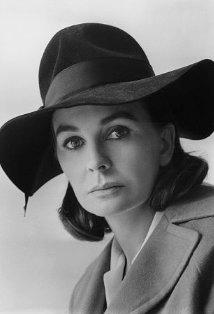
Jean Simmons
(as Varinia)
Spartacus
Released
1960
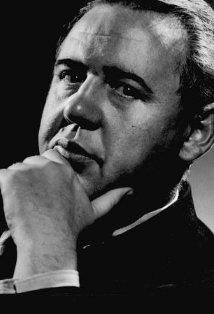
Charles Laughton
(as Sempronius Gracchus)

Spartacus
Released
1960
Peter Ustinov
(as Lentulus Batiatus)
Spartacus
Released
1960
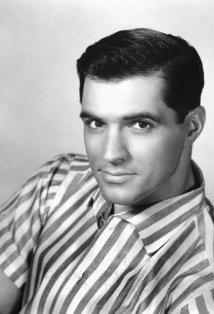
John Gavin
(as Julius Caesar)

Spartacus
Released
1960
Nina Foch
(as Helena Glabrus)
Spartacus
Released
1960
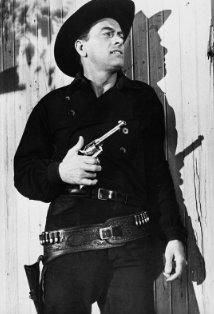
John Ireland
(as Crixus)
Spartacus Overview:
Spartacus (1960) was a Action - Adventure Film directed by Stanley Kubrick and produced by Kirk Douglas and Edward Lewis.
The film was based on the novel of the same name written by Howard Fast published in 1951.
SYNOPSIS
Director Kubrick marshals the proverbial cast of thousands in an early example of his celebrated concern for authenticity. The result is one of the finest movie depictions of the ancient Roman world. Douglas gives a muscular, emotional performance as a slave brought to the Roman gladiator school by its master, Ustinov. There he befriends and then bests Strode in an unwanted contest to the death staged for the pleasure of senator Olivier. When guards taunt Douglas with the news that Olivier has taken away Simmons, the slave girl with whom he's in love, Douglas leads a slave rebellion that shakes the foundations of the empire. Though the epic struggle ends with Douglas's crucifixion, Simmons lifts up to him his free son before he dies. Director Anthony Mann was replaced with Kubrick by executive producer Douglas after the first scenes. Trumbo's compelling script was his first after being blacklisted. The film's stunning music score was composed by Alex North.
(Source: available at Amazon AMC Classic Movie Companion).
Academy Awards 1960 --- Ceremony Number 33 (source: AMPAS)
| Award | Recipient | Result |
| Best Supporting Actor | Peter Ustinov | Won |
| Best Art Direction | Art Direction: Alexander Golitzen, Eric Orbom; Set Decoration: Russell A. Gausman, Julia Heron | Won |
| Best Cinematography | Russell Metty | Won |
| Best Costume Design | Valles, Bill Thomas | Won |
| Best Film Editing | Robert Lawrence | Nominated |
| Best Music - Scoring | Alex North | Nominated |
Spartacus BlogHub Articles:
Spartacus (1960)
Spartacus Directed by Stanley Kubrick Written by Dalton Trumbo from a novel by Howard Fast 1960/USA Bryna Productions Repeat viewing/Netflix rental One of 1001 Movies You Must See Before You Die I am not big on 3 1/2 hour sword-and-sandal epics. This one is so grand, however, that it keeps my ... Read full article
Vivien Leigh and Laurence Olivier Blogathon: Spartacus
On November 5, 2015, Vivien Leigh, my 8th favourite actress would have celebrated her 102nd birthday. Even if she has left us since the very young age of 53, that’s not a reason why my friend Joey from Wolffian Classic Movies Digest wouldn’t honour her with a blogathon! Vivien Leigh is a... Read full article
Spartacus (1960)
In this epic film starring Kirk Douglas and directed by Stanley Kubrick, a slave turned gladiator leads a revolt against the Roman empire. Spartacus leads his fellow plebeians in a sacking and burning of the countryside while slowly gaining followers. Along the way he is reunited with his love (Je... Read full article
Spartacus (1960)
In this epic film starring Kirk Douglas and directed by Stanley Kubrick, a slave turned gladiator leads a revolt against the Roman empire. Spartacus leads his fellow plebeians in a sacking and burning of the countryside while slowly gaining followers. Along the way he is reunited with his love (Je... Read full article
Spartacus
1960’s Spartacus was a laborious film for all involved. After one week of filming under Anthony Mann’s direction, Stanley Kubrick took over as director. Working with a script by blacklisted Dalton Trumbo that feels pulled between political views of the time and a main character paralleling M... Read full article
See More Spartacus Articles
Spartacus Quotes:
Antoninus: When I have them, master.
Marcus Licinius Crassus: Do you eat snails?
Antoninus: No, master.
Marcus Licinius Crassus: Do you consider the eating of oysters to be moral and the eating of snails to be immoral?
Antoninus: No, master.
Marcus Licinius Crassus: Of course not. It is all a matter of taste, isn't it?
Antoninus: Yes, master.
Marcus Licinius Crassus: And taste is not the same as appetite, and therefore not a question of morals.
Antoninus: It could be argued so, master.
Marcus Licinius Crassus: My robe, Antoninus. My taste includes both snails and oysters.
Marcus Licinius Crassus: I'm not after glory, I'm after Spartacus!