
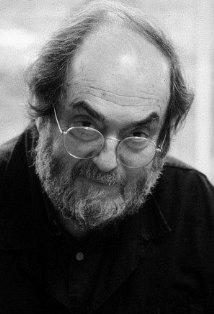

Birthname: Stanley Kubrick
| Sign | Leo |
| Born |
Jul 26, 1928
New York City, NY |
| Died |
Mar 7, 1999
Harpenden, Hertfordshire |
| Age | Died at 70 |
| Final Resting Place Childwickbury Manor | |
Stanley Kubrick |
|
| Job | Film director, producer, screenwriter, cinematographer, editor |
| Years active | 1951-1999 |
| Top Genres | Drama, Adventure, War, Crime, Film Noir, Thriller/Suspense |
| Top Topics | Book-Based, Satire, Ancient World, Freedom, Outer Space |
| Top Collaborators | Kirk Douglas (Actor), Ted de Corsia (Actor), Peter Sellers (Actor), Sterling Hayden (Actor), Timothy Carey (Actor), Frank Silvera (Actor), Laurence Olivier (Actor), Jean Simmons (Actress) |
| Also Born on July 26 | |
| Also Born in 1928 | |
| Also Born in New York | |
| Also a Leo | |


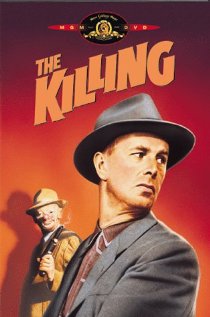

Stanley Kubrick Overview:
Legendary director, Stanley Kubrick, was born on Jul 26, 1928 in New York City, NY. Kubrick died at the age of 70 on Mar 7, 1999 in Harpenden, Hertfordshire and was laid to rest in Childwickbury Manor Cemetery in Childwick Green, Hertfordshire, England.
HONORS and AWARDS:
.Although Kubrick was nominated for four Oscars, he never won a competitive Academy Award.
Academy Awards
| Year | Award | Film name | Role | Result |
| 1964 | Best Director | Dr. Strangelove or: How I Learned to Stop Worrying and Love the Bomb (1964) | N/A | Nominated |
| 1968 | Best Director | 2001: A Space Odyssey (1968) | N/A | Nominated |
| 1971 | Best Director | A Clockwork Orange (1971) | N/A | Nominated |
| 1971 | Best Writing | A Clockwork Orange (1971) | N/A | Nominated |
Stanley Kubrick BlogHub Articles:
Barry Lyndon (1975, Stanley Kubrick)
The first half of Barry Lyndon, very nicely delineated on screen with a title card and then an intermission, is a black comedy. The second half is a tragedy. The epilogue explicitly reconciles the two, but there’s also Michael Hordern’s narration, which does the most expository work of anything ... Read full article
Quote: Stanley Kubrick on Plot
Image Source A very good plot is a minor miracle; it's like a hit tune in music. -Stanley Kubrick Source... Read full article
Flying Padre (1951, Stanley Kubrick)
Flying Padre has three types of impressive shots. The first two types involve an airplane. The short is about a New Mexico priest who flies around his 4,000-square mile parish. There are interior and exterior shots of the plane and director Kubrick gets some fantastic shots from inside out. He’s a... Read full article
Book Review--Space Odyssey: Stanley Kubrick, Arthur C. Clarke, and the Making of a Masterpiece
Space Odyssey: Stanley Kubrick, Arthur C. Clarke, and the Making of a Masterpiece Michael Benson Simon & Schuster, 2018 Upon its release, 2001: A Space Odyssey (1968) became a sensation as a sort of Disneyland ride for grown ups. With its innovative, and trippy special effects, it was the perfe... Read full article
2001: A Space Odyssey (1968, Stanley Kubrick)
2001: A Space Odyssey has five distinct parts–the “Dawn of Man” sequence, then the space station and moon visit, then the main action before the intermission, then the main action after the intermission, then the “Jupiter” sequence. The prehistoric sequence, where an advanced alien device ... Read full article
See More Stanley Kubrick Articles