

The Magnificent Ambersons (1942) |
|
| Director(s) | Orson Welles, Fred Fleck (uncredited), Robert Wise (uncredited) |
| Producer(s) | Orson Welles, Jack Moss (uncredited), George Schaefer (uncredited) |
| Top Genres | Drama, Film Adaptation, Romance |
| Top Topics | Book-Based, Mother/Son, Romance (Drama) |
Featured Cast of The Magnificent Ambersons See More »
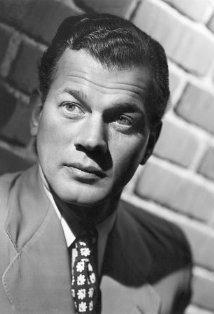
The Magnificent Ambersons
Released
1942
Joseph Cotten
(as Eugene)

The Magnificent Ambersons
Released
1942
Dolores Costello
(as Isabel)

The Magnificent Ambersons
Released
1942
Anne Baxter
(as Lucy)

The Magnificent Ambersons
Released
1942
Tim Holt
(as George)

The Magnificent Ambersons
Released
1942
Agnes Moorehead
(as Fanny)
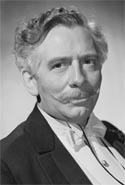
The Magnificent Ambersons
Released
1942
Ray Collins
(as Jack)
The Magnificent Ambersons
Released
1942
Erskine Sanford
(as Roger Bronson)

The Magnificent Ambersons
Released
1942
Orson Welles
(as Narrator)
The Magnificent Ambersons Overview:
The Magnificent Ambersons (1942) was a Drama - Romance Film directed by Orson Welles, Fred Fleck (uncredited) and Robert Wise (uncredited) and produced by Orson Welles, Jack Moss and George Schaefer.
The film was based on the novel of the same name written by Booth Tarkington published in 1918.
SYNOPSIS
Both one of the supreme works of the American cinema and one of its most notorious "ruined" films, Welles's follow-up to Citizen Kane (1941) keeps him behind the camera, though his presence is felt in every frame. Tarkington's novel about a turn-of-the-century family's conflicts is transformed by Welles into a eulogy for a slower, simpler, and decent past, and this is a more personal film for Welles than his stunning debut the year before. Now missing close to 30 minutes and containing a saccharine "happy ending" shot by another crew while Welles was filming in South America, this version of Ambersons is the only one that survives. The Welles regulars are all here (Cotten, Moorehead, Collins), aided by Cortez's astounding cinematography and Herrmann's fitting score. The laserdisc contains interviews and original storyboards.
(Source: available at Amazon AMC Classic Movie Companion).
The Magnificent Ambersons was inducted into the National Film Registry in 1991.
Academy Awards 1942 --- Ceremony Number 15 (source: AMPAS)
| Award | Recipient | Result |
| Best Supporting Actress | Agnes Moorehead | Nominated |
| Best Art Direction | Art Direction: Albert S. D'Agostino; Interior Decoration: Darrell Silvera, Al Fields | Nominated |
| Best Cinematography | Stanley Cortez | Nominated |
| Best Picture | Mercury | Nominated |
The Magnificent Ambersons BlogHub Articles:
The Magnificent Ambersons (1942)
The Magnificent Ambersons (1942) On May 2, 2017May 2, 2017 By CarolIn Uncategorized The Magnificent Ambersons (1942) was one of the many, many movies I saw in the glorious summer of 2007. That was the year I fell in love with classic movies, and that summer I watched a... Read full article
The Magnificent Ambersons (1942, Orson Welles)
Unfortunately, I feel the need to address some of the behind the scenes aspects of The Magnificent Ambersons. Not because I plan on talking about them, but because director Welles’s career is filled with a lack of control. There are always questions–what did editor Robert Wise do on his ... Read full article
The Magnificent Ambersons
The Magnificent Ambersons (Orson Welles, 1942) The spoiled young heir to the decaying Amberson fortune comes between his widowed mother and the man she has always loved. The Magnificent Ambersons plays like a nice classical music from a classic composer, it is a story about pride, richness, family... Read full article
The Magnificent Ambersons, the Second Welles’ Masterpiece
Classic Film Aficionados Prologue:The Devil is in the details. It all began with the signing of the new contract by Orson Welles with RKO. With Kane came unprecedented freedoms and choices for Welles, the new agreement gave cast and script approval along with the final cut to RKO for The Magnificent... Read full article
The Magnificent Ambersons, the Second Welles’ Masterpiece
Classic Film Aficionados Prologue:The Devil is in the details. It all began with the signing of the new contract by Orson Welles with RKO. With Kane came unprecedented freedoms and choices for Welles, the new agreement gave cast and script approval along with the final cut to RKO for The Magnificent... Read full article
See More The Magnificent Ambersons Articles
The Magnificent Ambersons Quotes:
Narrator: The magnificence of the Ambersons began in 1873. Their splendor lasted throughout all the years that saw their midland town spread and darken into a city. In that town, in those days, all the women who wore silk or velvet knew all the other women who wore silk or velvet, and everybody knew everybody else's family horse and carriage. The only public conveyance was the streetcar. A lady could whistle to it from an upstairs window, and the car would halt at once and wait for her, while she shut the window, put on her hat and coat, went downstairs, found an umbrella, told the girl what to have for dinner, and came forth from the house. Too slow for us nowadays, because the faster we're carried, the less time we have to spare. During the earlier years of this period, while bangs and bustles were having their way with women, there were seen men of all ages to whom a hat meant only that rigid, tall silk thing known to impudence as a stovepipe. But the long contagion of the derby had arrived. One season the crown of this hat would be a bucket; the next it would be a spoon. Every house still kept its bootjack, but high-top boots gave way to shoes and congress gaiters, and these were played through fashions that shaped them now with toes like box ends, and now with toes like the prows of racing shells. Trousers with a crease were considered plebian; the crease proved that the garment had lain upon a shelf and hence was ready-made. With evening dress, a gentleman wore a tan overcoat, so short that his black coattails hung visible five inches below the overcoat. But after a season or two, he lengthened his overcoat till it touched his heels. And he passed out of his tight trousers into trousers like great bags. In those days, they had time for everything. Time for sleigh rides, and balls, and assemblies, and cotillions, and open house on New Year's, and all-day picnics in the woods, and even that prettiest of all vanished customs: the serenade. Of a summer night, young men would bring an orchestra under a pretty girl's window, and flute, harp, fiddle, cello, cornet, bass viol, would presently release their melodies to the dulcet stars. Against so home-spun a background, the magnificence of the Ambersons was as conspicuous as a brass band at a funeral.