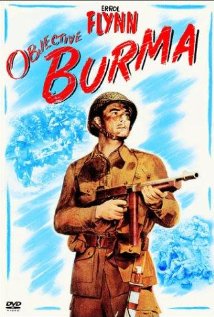

Objective, Burma! (1945) |
|
| Director(s) | Raoul Walsh |
| Producer(s) | Jack L. Warner, Jerry Wald |
| Top Genres | Action, Adventure, Drama, War |
| Top Topics | World War II |
Featured Cast of Objective, Burma! See More »

Errol Flynn(as Capt. Nelson)
Objective, Burma!
Released
1945
Objective, Burma!
Released
1945
Errol Flynn
(as Capt. Nelson)
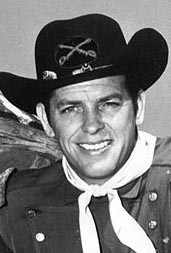
James Brown(as SSgt. Treacy)
Objective, Burma!
Released
1945
Objective, Burma!
Released
1945
James Brown
(as SSgt. Treacy)
William Prince(as Lt. Sid Jacobs)
Objective, Burma!
Released
1945
Objective, Burma!
Released
1945
William Prince
(as Lt. Sid Jacobs)
George Tobias(as Cpl. Gabby Gordon)
Objective, Burma!
Released
1945
Objective, Burma!
Released
1945
George Tobias
(as Cpl. Gabby Gordon)
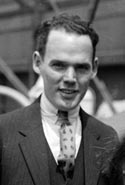
Henry Hull(as Mark Williams)
Objective, Burma!
Released
1945
Objective, Burma!
Released
1945
Henry Hull
(as Mark Williams)
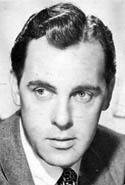
Warner Anderson(as Col. J. Carter)
Objective, Burma!
Released
1945
Objective, Burma!
Released
1945
Warner Anderson
(as Col. J. Carter)

Mark Stevens(as Lt. Barker)
Objective, Burma!
Released
1945
Objective, Burma!
Released
1945
Mark Stevens
(as Lt. Barker)
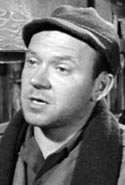
Richard Erdman(as Pvt. Nebraska Hooper)
Objective, Burma!
Released
1945
Objective, Burma!
Released
1945
Richard Erdman
(as Pvt. Nebraska Hooper)
Objective, Burma! Overview:
Objective, Burma! (1945) was a Action - Adventure Film directed by Raoul Walsh and produced by Jack L. Warner and Jerry Wald.
Academy Awards 1945 --- Ceremony Number 18 (source: AMPAS)
| Award | Recipient | Result |
| Best Film Editing | George Amy | Nominated |
| Best Music - Scoring | Franz Waxman | Nominated |
| Best Writing | Alvah Bessie | Nominated |
Objective, Burma! BlogHub Articles:
No article for Objective, Burma! at this time. Submit yours here.
Objective, Burma! Quotes:
Capt. Nelson:
[Looking at disfigured corpses of comrades] That's Harris... isn't it? But who are the others?
SSgt. Treacy: [Visibly shaken] I don't know. How do I know who they are? If they were my brothers, I still wouldn't know.
Capt. Nelson: Take it easy... they can't feel anything... now.
SSgt. Treacy: [Visibly shaken] I don't know. How do I know who they are? If they were my brothers, I still wouldn't know.
Capt. Nelson: Take it easy... they can't feel anything... now.
Pvt. Nebraska Hooper:
It's sure peaceful so far.
Cpl. Gabby Gordon: That's the way I like it... peaceful. I already said when I starved to death, I want it to be peaceful.
Cpl. Gabby Gordon: That's the way I like it... peaceful. I already said when I starved to death, I want it to be peaceful.
Capt. Nelson:
[Commenting on a sleeping soldier] That guy could go to sleep on a clothesline.
Capt. Nelson:
[Seeing Gabby putting stagnant water in his canteen and getting ready to drink it] Hey, do you want to get sick? Where's your purifying tablets?
Cpl. Gabby Gordon: I lost them when we made that last river crossing.
[Nelson gives him some of his]
Cpl. Gabby Gordon: They'll remember me in history. Gabby Gordon: the guy who purified all the stinkin' rivers in Burma!
Cpl. Gabby Gordon: I lost them when we made that last river crossing.
[Nelson gives him some of his]
Cpl. Gabby Gordon: They'll remember me in history. Gabby Gordon: the guy who purified all the stinkin' rivers in Burma!
Cpl. Gabby Gordon:
[about Nelson to the other men] C'm'on! I'll follow him down the barrel of a cannon!
See More Quotes from Objective, Burma!Objective, Burma! Facts
See More Facts about Objective, Burma! >>
All the weapons, uniforms, and gear used in this movie are original and accurate. This was possible due to the fact that these were still in use to the US military when this film was made. WW2 movies made in recent times use reproduction weapons and gear.
The movie was pulled from release in Britain after just one week. It was banned there after heated protest from British veterans groups and the military establishment. As the Burma campaign was a predominantly British and Australian operation, the picture was taken as a national insult due to the movie's Americanization of the Burma operation. The resentment that many felt was seen as yet another example of Americans believing they had won the war singlehandedly. It was not shown in Britain again until 1952/1953 and then with an apology disclaimer. Incidentally, writer Lester Cole, who co-wrote the somewhat overly patriotic flag-waving script, would be branded an "Un-American" Communist, becoming one of the Hollywood Ten just a few years later.
Errol Flynn was criticized for playing heroes in World War II movies. Tony Thomas in his book 'Errol Flynn: The Spy Who Never Was' states that Flynn had tried to enlist in every branch of any armed services he could but was rejected as unfit for service on the grounds of his health. Flynn had a heart condition, tuberculosis, malaria and a back problem. Flynn felt he could contribute to America's war effort by appearing in such films as Edge of Darkness; Northern Pursuit; Dive Bomber, Objective, Burma!, and Uncertain Glory. Reportedly, Flynn was at his most professional and co-operative he ever was whilst working on Second World War movies. The studios apparently did not diffuse the criticism of Flynn's state-of-health as they wished to keep it quiet for fear of his box-office draw waning.
The Henry Hull character utters the oath, "The bastards!" in reference to the Japanese. It is somewhat and muffled, and as he was off-screen, the censors evidently missed it.
'Vinegar Joe' Stilwell was commander of the US forces in the China-Burma-India Theatre and is portrayed in the movie by Erville Anderson.