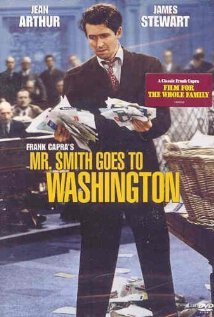

Mr. Smith Goes to Washington (1939) |
|
| Director(s) | Frank Capra |
| Producer(s) | Frank Capra (uncredited) |
| Top Genres | Drama |
| Top Topics | Integrity, Justice, Politics, Romance (Drama), Washington D.C. |
Featured Cast of Mr. Smith Goes to Washington See More »
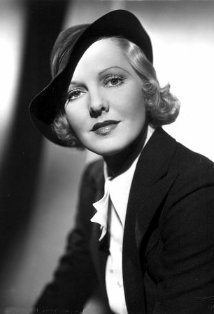
Mr. Smith Goes to Washington
Released
1939
Jean Arthur
(as Clarissa Saunders)

Mr. Smith Goes to Washington
Released
1939
James Stewart
(as Jefferson Smith)
Mr. Smith Goes to Washington
Released
1939
Claude Rains
(as Sen. Joseph Harrison P...)
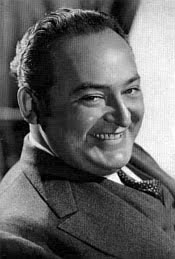
Mr. Smith Goes to Washington
Released
1939
Edward Arnold
(as Jim Taylor)
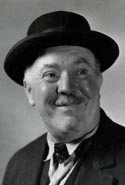
Mr. Smith Goes to Washington
Released
1939
Guy Kibbee
(as Gov. Hubert Hopper)

Mr. Smith Goes to Washington
Released
1939
Thomas Mitchell
(as Diz Moore)
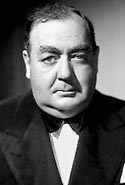
Mr. Smith Goes to Washington
Released
1939
Eugene Pallette
(as Chick McGann)

Mr. Smith Goes to Washington
Released
1939
Beulah Bondi
(as Ma Smith)
Mr. Smith Goes to Washington Overview:
Mr. Smith Goes to Washington (1939) was a Drama - Black-and-white Film directed by Frank Capra and produced by Frank Capra.
SYNOPSIS
Capra's enduring favorite has Stewart as the idealistic, yet naive, politician sent to Washington as junior senator who runs afoul of the political corruption in his state. Capra favorite Arthur plays his cynical secretary and Rains the powerful senior senator who expects Smith to be nothing more than a rubber stamp. As with the best of Capra's films, the sentiment and moralizing are kept in check by wonderful acting and genuine emotion. Based on Lewis R. Foster's novel The Gentleman from Montana.
(Source: available at Amazon AMC Classic Movie Companion).
Mr. Smith Goes to Washington was inducted into the National Film Registry in 1989.
Academy Awards 1939 --- Ceremony Number 12 (source: AMPAS)
| Award | Recipient | Result |
| Best Actor | James Stewart | Nominated |
| Best Supporting Actor | Harry Carey | Nominated |
| Best Supporting Actor | Claude Rains | Nominated |
| Best Art Direction | Lionel Banks | Nominated |
| Best Director | Frank Capra | Nominated |
| Best Film Editing | Gene Havlick, Al Clark | Nominated |
| Best Music - Scoring | Dimitri Tiomkin | Nominated |
| Best Picture | Columbia | Nominated |
| Best Writing | Lewis R. Foster | Won |
| Best Writing | Sidney Buchman | Nominated |
Mr. Smith Goes to Washington BlogHub Articles:
Mr. Smith Goes to Washington Quotes:
Jefferson Smith: I have no defense against forged papers!
Senator Joseph Paine: The Committee ruled otherwise! The gentleman stands guilty, as charged. And I believe I speak for every member when I say that no one cares to hear what a man of his condemned character has to say about any section of any legislation before this House.
President of Senate: Order, order, gentlemen.
Jefferson Smith: Mr. President, I stand guilty as FRAMED! Because section 40 is graft! And I was ready to say so, I was ready to tell you that a certain man in my state, a Mr. James Taylor, wanted to put through this dam for his own profit. A man who controls a political machine! And controls everything else worth controlling in my state. Yes, and a man even powerful enough to control Congressmen - and I saw three of them in his room the day I went up to see him!
Senator Joseph Paine: Will the Senator yield?
Jefferson Smith: No, sir, I will not yield! And this same man, Mr. James Taylor, came down here and offered me a seat in this Senate for the next 20 years if I voted for a dam that he knew, and I knew, was a fraud. But if I dared to open my mouth against that dam, he promised to break me in two.
Clarissa Saunders: Your friend, Mr. Lincoln had his Taylors and Paines. So did every other man who ever tried to lift his thought up off the ground. Odds against them didn't stop those men. They were fools that way. All the good that ever came into this world came from fools with faith like that. You know that, Jeff. You can't quit now. Not you. They aren't all Taylors and Paines in Washington. That kind just throw big shadows, that's all. You didn't just have faith in Paine or any other living man. You had faith in something bigger than that. You had plain, decent, everyday, common rightness, and this country could use some of that. Yeah, so could the whole cockeyed world, a lot of it. Remember the first day you got here? Remember what you said about Mr. Lincoln? You said he was sitting up there, waiting for someone to come along. You were right. He was waiting for a man who could see his job and sail into it, that's what he was waiting for. A man who could tear into the Taylors and root them out into the open. I think he was waiting for you, Jeff. He knows you can do it, so do I.