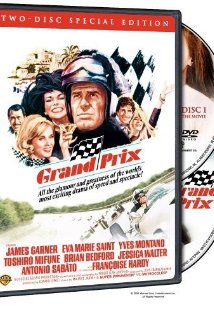

Grand Prix (1966) |
|
| Director(s) | John Frankenheimer |
| Producer(s) | Kirk Douglas, John Frankenheimer, James Garner, Edward Lewis |
| Top Genres | Drama, Sports |
| Top Topics | Cars & Auto Racing |
Featured Cast of Grand Prix See More »

Grand Prix
Released
1966
James Garner
(as Pete Aron)
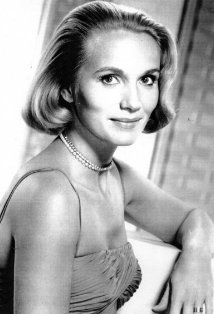
Grand Prix
Released
1966
Eva Marie Saint
(as Louise Frederickson)
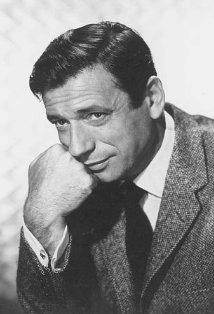
Grand Prix
Released
1966
Yves Montand
(as Jean)
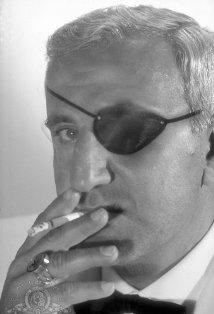
Grand Prix
Released
1966
Adolfo Celi
(as Agostini Manetta)
Grand Prix
Released
1966
Rachel Kempson
(as Mrs. Stoddard)
Grand Prix
Released
1966
Paul Frees
(as Izo Yamura)
Grand Prix
Released
1966
Arthur Howard
(as Claude)
Grand Prix Overview:
Grand Prix (1966) was a Sports - Drama Film directed by John Frankenheimer and produced by Kirk Douglas, John Frankenheimer, James Garner and Edward Lewis.
Academy Awards 1966 --- Ceremony Number 39 (source: AMPAS)
| Award | Recipient | Result |
| Best Film Editing | Fredric Steinkamp, Henry Berman, Stewart Linder, Frank Santillo | Won |
Grand Prix BlogHub Articles:
Grand Prix (1966)
Grand Prix Directed by John Frankenheimer Written by Robert Alan Arthur 1966/USA Metro-Goldwyn-Mayer/John Frankenheimer Productions/etc. First viewing/Netflix rental If not for the splendid racing scenes, this would just be another waste of some good actors on 3 hours of typical mid-sixties melodr... Read full article
Racing Cars ~ Grand Prix (1966)
About MeBlogger, Out of the Past - A Classic Film Blog and more. Please add my Google profile to your circles. There is no film quite like Grand Prix (1966). It is the quintessential racing movie and while it's not the best film out there we are very lucky to have it. Grand Prix was made during a g... Read full article
Racing Cars ~ Grand Prix (1966)
There is no film quite like Grand Prix (1966). It is the quintessential racing movie and while it's not the best film out there we are very lucky to have it. Grand Prix was made during a golden era of race car driving, when Formula 1 was glamorous, safety in driving wasn't all that important, race c... Read full article
See More Grand Prix Articles
Grand Prix Quotes:
Pete Aron: Oh yes, I had heard that.
Izo Yamura: Impatience on my part. I also manufacture radios and sewing machines. In order to save time, I wanted a proven product. That was not to be, however. Racing cars are not merely another product. They require great attention if any success is to be hoped for.
Pete Aron: Then that's why you're here.
Izo Yamura: I have been racing my cars in Formula One for two years, and have yet to win my first Grand Prix. I intend to win, by whatever means are open to me.
Pete Aron: That's the right attitude. All you have to do is go fast enough and long enough.
Izo Yamura: And with the best drivers! Do you want a job with me?
Pete Aron: Driving?
Izo Yamura: Driving, of course.
Pete Aron: Who are you dumping?
Izo Yamura: Dumping?
Pete Aron: Ah, which one of your drivers are you getting rid of?
Izo Yamura: Neither one. I am entering a third car.
Pete Aron: That'll be expensive.
Izo Yamura: Yes.
Pete Aron: You've got a driver.
Izo Yamura: My racing headquarters is at Silverstone, in England. Can you be there next week?
Pete Aron: Yes, sir.
Izo Yamura: We must begin to think about - Spa!
Pete Aron: Next week, then.
Izo Yamura: By the way, you are a terrible broadcaster!
[Aron turns and starts heading for the door]
Izo Yamura: Oh, Mr. Aron, if giving you the job would have meant firing one of the other drivers, would you still have taken it?
[Aron glares at Yamura]
Izo Yamura: Good!
Pete Aron: Oh, Mr. Yamura, I don't think there's one of us who doesn't ask himself at least once in the middle of a race, "What the hell am I doing here?" Of course, when it's over, we conveniently forget that we asked ourselves that question. I think about it and a lot of reasons I don't know. Maybe to do something that brings you so close to the possibility of death and to survive it is to feel life and living so much more intensely.
Agostini Manetta: What means far more to me than anything else is: our good name! Our reputation represents desire for perfection of the highest quality. I gamble that reputation gladly, because I have *absolute* faith in every car that leaves this factory. But I will not risk it on a driver in whom I cannot have an equal faith. There are fewer than thirty men in the world qualified to drive Formula One; a mere half-dozen, perhaps, to win. At this moment, I am inclined to think you are not one of them.
Pete Aron: Well, we accumulate things.
Izo Yamura: And then you lock them away in closets. And the bathrooms?
Pete Aron: No, no, you don't get me on that one.
Izo Yamura: Yes, and you?
Pete Aron: No, I missed it by a year.
Izo Yamura: In the war, I was a fighter pilot. I shot down 17 American planes.
Pete Aron: Okay.
Izo Yamura: I believe that some things must not be left unsaid. There will come a time when you will ask yourself, "What did he do in the war, this man, Yamura?"
Pete Aron: Mr. Yamura, I like you.
Izo Yamura: Why?
Pete Aron: Well, because... because you come right to the point.
Izo Yamura: In a sense, you are here because you drive a car the way I conduct my business. You come right to the point.