Home> Facts and Trivia > Stars > John Cassavetes
John Cassavetes Facts
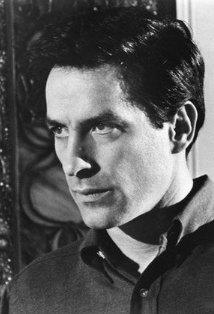
| Sign | Sagittarius |
| Born |
Dec 9, 1929 New York City, NY |
| Died |
Feb 3, 1989 Los Angeles, CA |
| Age | Died at 59 |
| Total Facts | 24 |
A photograph of Cassavetes, taken during the production of his film Husbands (1970), appears on one stamp of a sheet of 10 USA 37¢ commemorative postage stamps, issued 25 February 2003, celebrating American Filmmaking: Behind the Scenes. The stamp honors directing.
Acted in films by other directors in order to finance his own projects.
Adhered to the Stanislavsky school of Method acting and taught acting classes in 1956, prior to making the film 'Shadows'.
As of 2007, he is one of only 8 filmmakers to be nominated for Best Directing, Writing, and Acting Oscars over the course of his lifetime. The other 6 are Orson Welles, Woody Allen, Warren Beatty, George Clooney, Roberto Benigni, John Huston and Kenneth Branagh.
As of 2007, he is one of six directors who has directed his wife to a Best Actress Oscar nomination and is the only one to have directed her to two nominations (Gena Rowlands in A Woman Under the Influence (1974) & Gloria (1980)). The other five are Joel Coen directing Frances McDormand in Fargo (1996), Paul Newman directing Joanne Woodward in Rachel, Rachel (1968), Blake Edwards directing Julie Andrews in Victor Victoria (1982), Paul Czinner directing Elisabeth Bergner in Escape Me Never (1935) and Richard Brooks directing Jean Simmons in The Happy Ending (1969). <a href="bio.php?pers
Auditioned for The Actors Studio when he was starting out as an actor, but was rejected.
Biography in: John Wakeman, editor. "World Film Directors, Volume Two, 1945-1985". Pages 189-194. New York: The H.W. Wilson Company, 1988.
Born to Nicholas John Cassavetes and Katherine Cassavetes.
Brother-in-law of David Rowlands.
Despite many claiming that his films are improvised, it's actually a completed script that comes from improvised work by the actors. Another trademark of his films is that they're shot documentary-style.
Directed 3 different actors in Oscar-nominated performances: Seymour Cassel, Lynn Carlin and Gena Rowlands.
Dropped out of university to become a sports announcer.
Educated at the American Academy of Dramatic Arts in New York City.
Father of Nick Cassavetes, Xan Cassavetes and Zoe R. Cassavetes. Son of Katherine Cassavetes.
Friend/actor Peter Falk said: "Cassavetes was the most fervent man I ever met, and he didn't have a copy-cat bone in his body."
Friend/actor Peter Falk said: "Every Cassavetes film is always about the same thing. Somebody said 'Man is God in ruins,' and John saw the ruins with a clarity that you and I could not tolerate."
He and Gena Rowlands made 10 movies together: A Child Is Waiting (1963), Faces (1968/I) , Gloria (1980), Love Streams (1984), Minnie and Moskowitz (1971), Opening Night (1977), A Woman Under the Influence (1974), Machine Gun McCain (1969), Two-Minute Warning (1976) and Tempest (1982)
He and his good friend Peter Falk made 6 movies together: Husbands (1970), Machine Gun McCain (1969), Mikey and Nicky (1976), Opening Night (1977), Big Trouble (1986), A Woman Under the Influence (1974) and one movie made for TV: "Columbo: Étude in Black (#2.1)" (1972)
He and his good friend Ben Gazzara made 5 movies together: Husbands (1970), Capone (1975), If It's Tuesday, This Must Be Belgium (1969), Opening Night (1977) and The Killing of a Chinese Bookie (1976)
He was fully Greek in heritage.
In Ray Carney's "Cassavetes on Cassavetes" book, Cassavetes confessed to his parents that he wanted to be an actor. His father wasn't initially thrilled at the idea of his son being an actor, but told him that he had to work hard because he would be portraying human emotions truthfully.
One of the screening rooms at the Thessaloniki Film Festival is named after him.
Son-in-law of Lady Rowlands.
While some of his Hollywood films (such as Too Late Blues (1961)) lost money, his own movies were often hugely successful. Shadows (1959), filmed with non-professional actors on the streets of New York with a hand-held camera on 16mm black & white film, cost a mere $40,000 and recouped its cost many times over, winning the 1960 Critics Award at the Venice Film Festival. Another of his films, Faces (1968/I), cost $1 million and made ten times as much in profits, as well as taking out another five prizes in Venice in 1970.