Home> Facts and Trivia > Stars > Ginger Rogers
Ginger Rogers Facts
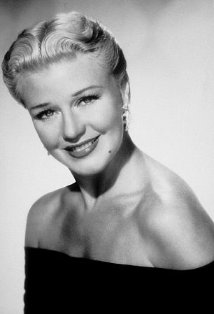
| Sign | Cancer |
| Born |
Jul 16, 1911 Independence, MO |
| Died |
Apr 25, 1995 Rancho Mirage, CA |
| Age | Died at 83 |
| Total Facts | 47 |
A distant cousin of Lucille Ball, according to Lucie Arnaz.
A keen artist, Ginger did many paintings, sculptures and sketches in her free time but could never bring herself to sell any of them.
Always the outdoor sporty type, she was a near-champion tennis player, a topline shot and loved going fishing.
Author Graham Greene always said he would have liked Ginger to play the role of Aunt Augusta in the film version of his novel "Travels With My Aunt". When the film Travels with My Aunt (1972) was made in 1972 the role was played by Maggie Smith.
Brought her first cousin Helen Nichols to Hollywood, renamed her Phyllis Fraser, and guided her through a few films. Phyllis Fraser married and then became known as Phyllis Cerf.
Daughter of Lela E. Rogers
Despite being married 5 times, all of her marriages ended under a decade. Her longest marriage was her last, to William Marsh, which lasted 8 years.
Directed her first stage musical, "Babes In Arms", at age 74.
During the last years of her life she retired in Oregon and bought a ranch in the Medford area because she liked the climate. She donated money to the community and funded the Craterian Ginger Rogers Theater in downtown Medford, which was named after her.
First cousin, once removed, of Christopher Cerf and Jonathan Cerf.
For the "Cheek to Cheek" number in Top Hat (1935), she wanted to wear an elaborate blue dress heavily decked out with ostrich feathers. When director Mark Sandrich and Fred Astaire saw the dress, they knew it would be impractical for the dance. Sandrich suggested that Rogers wear the white gown she had worn performing "Night and Day" in The Gay Divorcee (1934). Rogers walked off the set, finally returning when Sandrich agreed to let her wear the offending blue dress. As there was no time for rehearsals, she wore the blue feathered dress for the first time during filming of the "Cheek to Cheek" number, and as Astaire and Sandrich had feared, feathers started coming off the dress. Astaire later claimed it was like "a chicken being attacked by a coyote". In the final film, some stray feathers can be seen drifting off it. To patch up the rift between them, Astaire presented Rogers with a locket of a gold feather. This was the origin of Rogers' nickname "Feathers". The shedding feathers episode was recreated to hilarious results in a scene from Easter Parade (1948) in which Astaire da
Has a street named after her in Rancho Mirage, California, her final winter home. Ginger Rogers Road is located in the Mission Hills Golf Course. It crosses Bob Hope Drive, between Gerald Ford Drive and Dinah Shore Drive and 2 blocks from Frank Sinatra Drive.
Her first teaming with Fred Astaire, Flying Down to Rio (1933), was her 20th film appearance but only Astaire's second.
Her great-great-grandfather was a doctor who discovered quinine, the cure for malaria.
Her tied-to-the-hip relationship with her mother, Lela E. Rogers, proved eternal. They're buried side by side at Oakwood Memorial Park. The grave of Ginger's screen partner, Fred Astaire, is just yards away.
In a 1991 TV interview when asked why the Fred Astaire / Rogers union wasn't known as "Ginger & Fred" rather than "Fred & Ginger" (as Ginger had been in films longer), she replied, "It's a man's world".
In Italy, most of her films were dubbed by either Lidia Simoneschi or Wanda Tettoni. She was occasionally dubbed by Andreina Pagnani; Dhia Cristiani; Rosetta Calavetta and Giovanna Scotto.
Inducted into the Hall of Famous Missourians in 2009.
Interred at Oakwood Memorial Park, Chatsworth, California, USA, the same cemetery as long-time dancing/acting partner Fred Astaire is located.
Is one of the many movie stars mentioned in Madonna's song "Vogue"
Measurements: 34-23 1/2-34 1/2 (late 1950s), (Source: Celebrity Sleuth magazine)
One of the celebrities whose picture Anne Frank placed on the wall of her bedroom in the "Secret Annex" while in hiding during the Nazi occupation of Amsterdam, Holland.
Related to Random House publisher and "What's My Line?" (1950) panelist Bennett Cerf through marriage, when he married Ginger's cousin Phyllis Fraser, who later became known as Phyllis Cerf.
Replaced Judy Garland in the film The Barkleys of Broadway (1949) after Garland was suspended from MGM due to her tardiness.
Salary for 1938, $219,500.
She and Fred Astaire acted in 10 movies together: The Barkleys of Broadway (1949), Carefree (1938), Flying Down to Rio (1933), Follow the Fleet (1936), The Gay Divorcee (1934), Roberta (1935), Shall We Dance (1937), The Story of Vernon and Irene Castle (1939), Swing Time (1936) and Top Hat (1935)
She didn't drink: she had her very own ice cream soda fountain
She first introduced the song "The Continental" in The Gay Divorcee (1934) and it went on to be the first song that won an Academy Award for Best Original Song.
She made her final public appearance on 3/18/95 (just five weeks before her death) when she received the Women's International Center (WIC) Living Legacy Award.
She owned a lingerie factory in Rock Island Tennessee, called Form Fit Rogers.
She was a radical right-wing Republican, a proud member of the Daughters of the American Revolution, a Christian Scientist and a vocal supporter of the Hollywood blacklist.
She was of Welsh and Scottish heritage.
Sort-of cousin of Rita Hayworth. Ginger's aunt married Rita's uncle.
The well-known quote often attributed to her--"My first picture was [Kitty Foyle: The Natural History of a Woman (1940)]. It was my mother who made all those films with Fred Astaire"--was actually fabricated for a 1966 article in "Films In Review".
Turned down Donna Reed's role in It's a Wonderful Life (1946).
Turned down lead roles in To Each His Own (1946) and The Snake Pit (1948). Both of these roles went on to be played to great acclaim by Olivia de Havilland.
Was a Christian Scientist.
Was a life-long Republican.
Was asked to replace Judy Garland in both Harlow (1965/II) and Valley of the Dolls (1967). She turned down "Dolls" because she hated the script; she did, however, accept Harlow (1965/II). She played Jean Harlow's mother and, unlike the movie, garnered good reviews. The film was made in only eight days.
Was badly affected by illness in her last years after suffering two strokes that had left her wheelchair-bound and visibly overweight, while her voice had become a shrunken rasp.
Was fashion consultant for the J.C. Penney chain from 1972-75.
Was given the name "Ginger" by her little cousin who couldn't pronounce "Virginia" correctly.
Was good friends with actress Maureen O'Hara since the late 1930s.
Was Hollywood's highest paid star of 1942.
Was named #14 Actress on The AFI 50 Greatest Screen Legends
Was offered the part of Hildy Johnson in His Girl Friday (1940), but she turned it down. As a result Rosalind Russell was cast instead.
When Ginger Rogers received a Kennedy Center Honor in 1992, Robyn Smith, widow of Fred Astaire, withheld all rights to clips of Rogers' scenes with Astaire, demanding payment. The Kennedy Center refused and Rogers received her honor without the retrospective show.