Facts > Films > The Sound of Music
The Sound of Music (1965) Facts
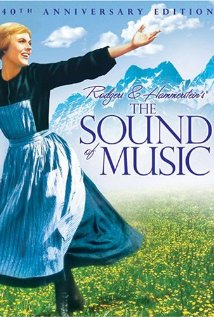
| Director(s) | Robert Wise |
| Producer(s) | Robert Wise, Richard D. Zanuck (uncredited), Saul Chaplin, Peter Levathes (uncredited) |
| Featured Cast | Julie Andrews, Christopher Plummer, Eleanor Parker, Richard Haydn, Peggy Wood |
| Total Facts | 85 |
"Sixteen Going On Seventeen" was shot in the gazebo, one of the last to be done. On the first take, Charmian Carr (Liesl) slipped while leaping across a bench, and fell through a pane of glass. Although she was not badly injured, her ankle was hurt and the scene was later shot with her leg wrapped and makeup covering the bandages.
Sean Connery and Richard Burton were considered for the part of Captain von Trapp.
Marni Nixon had become well known in Hollywood circles as a ghost singer for the leads in several film adaptations of hit Broadway musicals. She provided the vocals for Deborah Kerr in The King and I, Natalie Wood in West Side Story and Audrey Hepburn in My Fair Lady. "The Sound of Music" provided a rare onscreen performance by Marni Nixon, who plays Sister Sophia. Julie Andrews had previously appeared on Broadway in My Fair Lady but was passed over for the film. The producers were wary of how Julie Andrews would react to Nixon because she dubbed Audrey Hepburn's vocals in a role made famous by Andrews. When Andrews first met Nixon, she exclaimed, "Marni, I'm a fan of you!" and the producers were relieved.
Portia Nelson was the only member of the original Broadway cast to reprise her role in the film version.
Debbie Turner (Marta) had many loose teeth during filming. When they fell out, they were replaced with false teeth.
Nicholas Hammond (Friedrich) has brown hair, and had to undergo several painful hair bleachings before and during filming to make his hair blond.
Kym Karath (Gretl) couldn't swim, so the original idea was to get Julie Andrews to catch her when the boat tips up and they all fall in the water. However, during the second take the boat toppled over so that Andrews fell to one side and Karath fell to the other. Heather Menzies-Urich (Louisa) had to save her instead. Andrews stated later she felt guilty about this for years.
Kym Karath (Gretl) swallowed too much water upon falling out of the rowboat, and threw up on Heather Menzies-Urich (Louisa).
Duane Chase's (Kurt) high note in the "So Long, Farewell" number was actually sung by Darleen Carr (younger sister of Charmian Carr), as that note was beyond Chase's range.
Maria von Trapp: The elder of the two women in Austrian peasant garb who are in the background as Maria walks through a brick archway during "I Have Confidence".
Doris Day was apparently offered the role of Maria von Trapp, but turned it down.
Mary Martin was the wife of Richard Halliday, producer of the original Broadway show. Martin, who originated the role of Maria on Broadway, would eventually see nearly $8,000,000 from the film. In contrast, Julie Andrews earned just $225,000 for her performance.
Jeanette MacDonald was originally considered for the role of the Mother Abbess, and she was interested, but, in the end, her increasingly worsening health precluded her taking the part. She died a month before the film was released. Had she been able to accept, it would have been her first film in sixteen years.
Liza Minnelli, Patty Duke, Mia Farrow, Kim Darby, Lesley Ann Warren, Tisha Sterling, and Sharon Tate all auditioned/tested for the role of Liesl.
Julie Andrews nearly turned down the role of Maria Von Trapp, fearing the character was too similar to her role in Mary Poppins.
Julie Andrews was always Robert Wise's first choice to play Maria even though no one had really seen how she worked onscreen. Mary Poppins hadn't been released at that stage.
William Wyler wanted Audrey Hepburn to play Maria von Trapp.
Christopher Plummer admitted that he ate and drank heavily during filming to drown out his unhappiness with making the picture, and found plenty of opportunities to do both in Austria. His costume eventually had to be refitted for his extra weight.
Christopher Plummer intensely disliked working on the film. He's been known to refer to it as "The Sound of Mucus" or "S&M" and likened working with Julie Andrews to "being hit over the head with a big Valentine's Day card, every day." Nontheless, he and Andrews have remained close friends ever since.
Christopher Plummer learned to play the guitar for his part, but the guitar (like his vocals) were re-dubbed.
Christopher Plummer opted out of the Harry Palmer role in The Ipcress File in favor of the Captain Von Trapp part, a decision he later regretted.
Christopher Plummer was not fond of the song "Edelweiss," which he considered trite, and wrote a letter to screenwriter Ernest Lehman suggesting a new song should be written to replace it, but he was rebuffed.
Christopher Plummer wasn't overly impressed with the film; he has called it "The Sound of Mucus" and says that the song "Edelweiss" was "schmaltzy".
Charmian Carr (Liesl) slipped and injured her ankle while filming "Sixteen Going On Seventeen". In early editions of the film, the bandage covering that ankle is visible. When the film was remastered for DVD, the images of this bandage were digitally removed. On the movie commentary of the 40th Anniversary edition in 2005, Charmian said that because of this, some people do not believe her when she says she danced on an injured ankle.
Charmian Carr sang "16 Going On Seventeen" for the movie when she was nearly 22.
Charmian Carr who played Liesel and was 21 at the time, wrote in her autobiography that she was attracted to the 35 year old Christopher Plummer, who played her father. Plummer admitted that the feeling was mutual, but insists that it didn't get beyond mere flirtation.
Danny Lockin, the blond actor best known for his supporting role of Barnaby Tucker alongside Michael Crawford as Cornelius Hackl in Hello, Dolly!, screen tested for the role of Rolfe. The test survives today, along with those of many other notable actors who were not cast in the film, including Mia Farrow. These tests can be seen in the engrossing Hollywood Screen Tests: Take 2.
According to director Robert Wise the grass on the hill of the opening song was supposed to be much longer than it was. The filmmakers had made an arrangement with the farmer who owned the land to leave the grass long, but when they arrived for filming it had been cut. Wise commented that the scene turned out very well after all.
According to the British tabloid The Sun, the movie was selected by BBC executives as one to be broadcast after a nuclear strike, to improve the morale of survivors. The BBC did not confirm or deny the story, saying, "This is a security issue so we cannot comment".
Adjusted for inflation, this would be the third highest-grossing movie of all time.
Along with The Bible: In the Beginning..., this is one of the few Twentieth Century-Fox films in which no music at all is heard when the Twentieth Century-Fox logo appears on screen.
Although Christopher Plummer's own vocals were in fact recorded, it was subsequently decided that he should be dubbed.
Among kids who auditioned to play one of the Von Trapp children were Kurt Russell, Richard Dreyfuss, Veronica Cartwright, and the four eldest Osmond Brothers (Alan Osmond, Jay Osmond, Merrill Osmond and Wayne Osmond). Dreyfuss couldn't dance.
At the beginning of filming, Heather Menzies-Urich (Louisa) was about three inches taller than Nicholas Hammond (Friedrich). He had to wear heel lifts to make him look taller. By the end of the shoot, Nicolas Hammond had grown six inches (5'3" to 5'9"). He often filmed in no shoes and Charmian Carr had to stand on a box to make her taller. All of the Von Trapp children grew a lot during filming, so heel lifts and various camera tricks were used to keep their heights steady.
At the Musical competition at the end of the movie, Fraulein Schweiger, the third place winner, bows 16 times.
Came second in the UK's Ultimate Film, in which films were placed in order of how many seats they sold at cinemas
Captain Von Trapp's car is a Mercedes-Benz W142, manufactured between 1936 and 1942.
Director Robert Wise considered Yul Brynner for the role of Captain Von Trapp.
During the filming of the opening shot of Julie Andrews taken from a helicopter, Julie Andrews relates that although she tried digging her heels into the ground and bracing herself, on every take she was knocked over by the powerful helicopter downdraft. After more than a dozen takes, she attempted to hand-signal to Robert Wise to have the helicopter make a wider pass, but the response she got was a thumbs-up - he was finally satisfied with the shot.
During the scene with Maria and the Captain at the gazebo, Julie Andrews couldn't stop laughing due to a lighting device that was making, in her words, a "raspberry" every time she leaned in to kiss Plummer. After more than 20 takes, the scene was altered to silhouette the two and to hide Andrews' giggles.
Four other children were brought in to augment the singing of the seven von Trapp children - to produce a better, fuller, more polished sound. Among the four "extra singers" was the younger sister of Charmian Carr (Liesl), Darleen Carr.
In 1962, Julie Andrews and Carol Burnett appeared in a special, Julie and Carol at Carnegie Hall, and at the time, "The Sound of Music" was still running on Broadway. Ironically, in a sketch on this TV special, Julie and Carol did a spoof of the "The Sound of Music" in much the same way Burnett later spoofed movies on her own variety show The Carol Burnett Show. At the time, Julie Andrews had no idea she would later star in the film version.
In 2007, the American Film Institute ranked this as the #40 Greatest Movie of All Time.
In Austria the film is know as "Meine Lieder - meine Träume" ("My Songs - my dreams"). It's not very well known there though, and the ending of the film was cut when it hit Austrian cinemas in the 60s.
In real life, Georg Von Trapp was not stern. The Von Trapp children were upset and disturbed by the portrayal of their father in the film. 'Maria Von Trapp' requested that director Robert Wise soften the character of her husband, but Wise refused.
In the capacity of producer and director, Robert Wise won two statuettes but was unavailable to claim them due to his location shoot in Hong Kong on The Sand Pebbles.
In the closing shot, when the family is climbing over the hills to safety, it is not really Kym Karath as Gretl on the shoulders of Captain von Trapp. In the DVD version, it is revealed that while in Austria, Kym Karath gained a lot of weight. This was one of the last shots filmed and so she was evidently a bit too heavy to be carried on Christopher Plummer's back. Plummer requested a stunt double and that is who's seen being carried on his back.
In the original play the Captain and Baroness separate due to ideological differences: the Baroness refuses to stand up against the Nazis, and the Captain refuses to compromise with the Nazis.
Julie Andrews sang "Supercalifragilisticexpialidocious" to the children in the cast to entertain them between shooting. Since Mary Poppins hadn't yet been released, they just thought she'd made up the song for them.
Maria never uses the Captain's first name, "Georg", in the film. Instead, she calls him Captain, Sir and Darling.