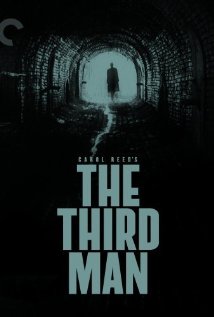

The Third Man (1949) |
|
| Director(s) | Carol Reed |
| Producer(s) | Carol Reed, David O. Selznick (uncredited), Alexander Korda (uncredited), Hugh Perceval |
| Top Genres | Film Adaptation, Film Noir, Mystery, Thriller/Suspense |
| Top Topics | Book-Based, Mistaken Identity |
Featured Cast of The Third Man See More »
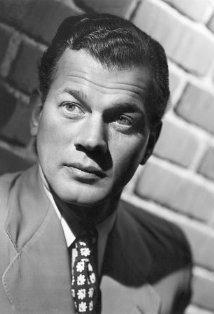
The Third Man
Released
1949
Joseph Cotten
(as Holly Martins)

The Third Man
Released
1949
Alida Valli
(as Anna Schmidt)

The Third Man
Released
1949
Orson Welles
(as Harry Lime)

The Third Man
Released
1949
Trevor Howard
(as Maj. Calloway)
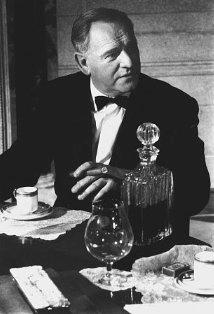
The Third Man
Released
1949
Bernard Lee
(as Sgt. Paine)

The Third Man
Released
1949
Wilfrid Hyde-White
(as Crabbin)
The Third Man
Released
1949
Paul Birch
(as Military Policeman)
The Third Man
Released
1949
Martin Boddey
(as Russian Military Polic...)
The Third Man Overview:
The Third Man (1949) was a Film Noir - Mystery Film directed by Carol Reed and produced by Carol Reed, David O. Selznick, Alexander Korda and Hugh Perceval.
The film was based on the novel of the same name written by Graham Greene published in 1949.
Academy Awards 1950 --- Ceremony Number 23 (source: AMPAS)
| Award | Recipient | Result |
| Best Cinematography | Robert Krasker | Won |
| Best Director | Carol Reed | Nominated |
| Best Film Editing | Oswald Hafenrichter | Nominated |
The Third Man BlogHub Articles:
Joseph Cotten searches for “The Third Man” in Postwar Vienna
Joseph Cotten searches for “The Third Man” in Postwar Vienna The Third Man (1949) is a British film noir directed by Carol Reed and starring Joseph Cotten, Alida Valli, Orson Welles, and Trevor Howard. The film’s screenplay was written by Graham Greene. The film focuses on Ho... Read full article
The Third Man
(1949) Directed by Carol Reed; Screenplay by Graham Greene; Based on a novella by Graham Greene; Starring: Joseph Cotten, Alida Valli, Orson Welles, Trevor Howard, Paul Hörbiger, Ernst Deutsch, Erich Ponto; Available on Blu-ray and DVD Rating: ***** “Carol Reed is the kind of director who... Read full article
The Third Man At 70
Oh, how I love The Third Man (or The 3rd Man). Regardless of how you write it, Carol Reed‘s post-war noir is one of those special films that was a case of love at first sight. I knew some of the reasons already, but watching the film with a friend (on his first viewing) teased them out even... Read full article
The Third Man (1949): Out of the Rubble
Like the fella says, in Italy for 30 years under the Borgias they had warfare, terror, murder, and bloodshed, but they produced Michelangelo, Leonardo da Vinci, and the Renaissance. In Switzerland they had brotherly love – they had 500 years of democracy and peace, and what did that produce? T... Read full article
The Third Man (1949): Out of the Rubble
Like the fella says, in Italy for 30 years under the Borgias they had warfare, terror, murder, and bloodshed, but they produced Michelangelo, Leonardo da Vinci, and the Renaissance. In Switzerland they had brotherly love – they had 500 years of democracy and peace, and what did that produce? T... Read full article
See More The Third Man Articles
The Third Man Quotes:
[Scenes of black market goods changing hands]
Opening narrator: I really got to know it in the classic period of the black market. We'd run anything if people wanted it enough and had the money to pay. Of course a situation like that does tempt amateurs
[Dead body seen floating in the river]
Opening narrator: but, well, you know, they can't stay the course like a professional.
Opening narrator: Now the city is divided into four zones, you know, each occupied by a power: the American, the British, the Russian and the French. But the centre of the city that's international policed by an international patrol. One member of each of the four powers. Wonderful! What a hope they had! All strangers to the place and none of them could speak the same language. Except a sort of smattering of German.
Opening narrator: Good fellows on the whole, did their best you know. Vienna doesn't really look any worse than a lot of other European cities. Bombed about a bit.
Opening narrator: Oh, I was going to tell you, wait, I was going to tell you about Holly Martins, an American. Came all the way here to visit a friend of his. The name was Lime, Harry Lime. Now Martins was broke and Lime had offered him, some sort, I don't know, some sort of job.
Opening narrator: Anyway, there he was, poor chap. Happy as a lark and without a cent.
Sgt. Paine: The striptease, sir.
Crabbin: Yes, the Hindu dancers. Thank you, sergeant.