
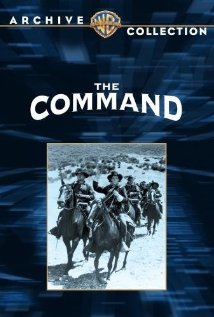

The Command (1954) |
|
| Director(s) | David Butler |
| Producer(s) | David Weisbart |
| Top Genres | Western |
Featured Cast of The Command See More »
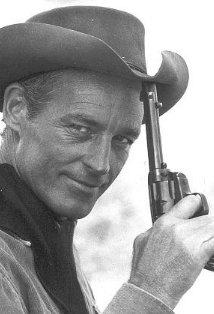
Guy Madison(as Capt. Robert MacClaw)
The Command
Released
1954
The Command
Released
1954
Guy Madison
(as Capt. Robert MacClaw)
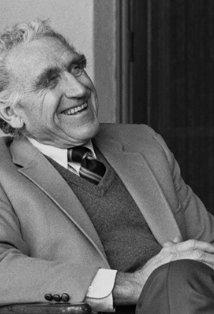
James Whitmore(as Sgt. Elliott)
The Command
Released
1954
The Command
Released
1954
James Whitmore
(as Sgt. Elliott)
Carl Benton Reid(as Col. Janeway)
The Command
Released
1954
The Command
Released
1954
Carl Benton Reid
(as Col. Janeway)
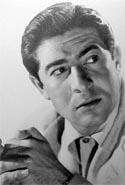
Harvey Lembeck(as Pvt. Gottschalk)
The Command
Released
1954
The Command
Released
1954
Harvey Lembeck
(as Pvt. Gottschalk)
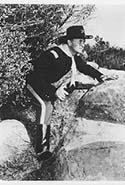
Gregg Barton(as Capt. Forsythe)
The Command
Released
1954
The Command
Released
1954
Gregg Barton
(as Capt. Forsythe)
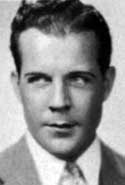
Reed Howes(as Infantry Lieutenant)
The Command
Released
1954
The Command
Released
1954
Reed Howes
(as Infantry Lieutenant)
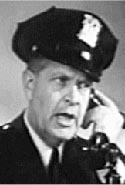
Jack Mower(as Bit)
The Command
Released
1954
The Command
Released
1954
Jack Mower
(as Bit)
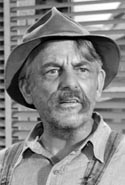
Denver Pyle(as Infantryman)
The Command
Released
1954
The Command
Released
1954
Denver Pyle
(as Infantryman)
The Command Overview:
The Command (1954) was a Western - Film directed by David Butler and produced by David Weisbart.
The Command BlogHub Articles:
No article for The Command at this time. Submit yours here.
Quotes from The Command:
Capt. Robert MacClaw:
Sir, may I suggest that my troop act as rear guard?
Col. Janeway: Where did you learn cavalry tactics, Captain?
Capt. Robert MacClaw: Well, infantry isn't mobile...
Col. Janeway: Neither is dead cavalry. Ask Custer!
Col. Janeway: Where did you learn cavalry tactics, Captain?
Capt. Robert MacClaw: Well, infantry isn't mobile...
Col. Janeway: Neither is dead cavalry. Ask Custer!
Sgt. Elliott:
Never say an injun is dumb. He just waits for the chance to use his one good cavalry tactic: ring around and close in.
Martha Cutting:
You hate being a soldier and you hate killing. Yet you do it.
Capt. Robert MacClaw: I got a uniform and a conscience. Right now, the uniform covers the conscience.
Capt. Robert MacClaw: I got a uniform and a conscience. Right now, the uniform covers the conscience.
Sgt. Elliott:
Well, injuns fight two ways, Captain. When they're running against a little outfit, they go ring around right away and close in quick for the kill. But if they're running against a big outfit, like we're tied up with now, they'll keep hacking and chopping away at your weak spots until they wear you down. Then make a ring around. And once they get you in a circle, you're finished.
Capt. Robert MacClaw:
I'm getting out of the Army in seven days.
Martha Cutting: As a civilian?
Capt. Robert MacClaw: As a doctor.
Martha Cutting: But you're one now.
Capt. Robert MacClaw: Am I? A veterinarian can yank an arrow out of a dead man or a live one and a blacksmith can cauterize a wound with a hot iron. But neither of 'em can pull a child through diptheria or pneumonia.
See More Quotes from The CommandMartha Cutting: As a civilian?
Capt. Robert MacClaw: As a doctor.
Martha Cutting: But you're one now.
Capt. Robert MacClaw: Am I? A veterinarian can yank an arrow out of a dead man or a live one and a blacksmith can cauterize a wound with a hot iron. But neither of 'em can pull a child through diptheria or pneumonia.
Facts from The Command
See More Facts about The Command >>
There's a scene where Indians are attacking the wagons full of soldiers, and one Indian gets shot off his horse and then is run over by a wagon drawn by four horses. That wasn't a planned stunt - he was supposed to be "shot" and fall off the side of his horse, but the horse unexpectedly reared back and dumped him into the path of the wagon, which ran over him. He suffered numerous broken bones and ribs, but the scene was left in.
Began shooting late July 1953.
Filmed in two separate versions - 3-D and CinemaScope - with different aspect ratios (1.37:1 for the 3-D, and 2.55:1 for the CinemaScope print). Only the wide screen version was ever released, though the 3-D elements still exist in Warner Bros. vault. Also the first wide screen Western of the 1950's. The flat (i.e. non 3-D) 1.37:1 version was also made available to theatres who were not yet equipped to project CinemaScope.
WILHELM SCREAM: As an Indian is shot off of his horse during the wagon convoy attack.
The wide-screen version of this film was photographed using Zeiss anamorphic lenses. The system was to be called WarnerScope, but it was essentially a straight copy of Fox's CinemaScope process. However, Warner Bros. realized that the Zeiss lenses were of inferior quality to the Bausch & Lomb lenses Fox used for CinemaScope. Ultimately it decided to drop the WarnerScope name, and instead licensed CinemaScope from Fox so it could use the superior Bausch & Lomb-designed lenses. These were first used by Warner for A Star Is Born.