

Gentleman's Agreement (1947) |
|
| Director(s) | Elia Kazan |
| Producer(s) | Darryl F. Zanuck |
| Top Genres | Drama, Romance |
| Top Topics | Book-Based, New York, Newspapers, Prejudice, Reporters, Romance (Drama) |
Featured Cast of Gentleman's Agreement See More »
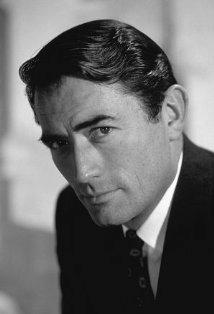
Gregory Peck(as Philip Schuyler Green)
Gentleman's Agreement
Released
1947
Gentleman's Agreement
Released
1947
Gregory Peck
(as Philip Schuyler Green)

Dorothy McGuire(as Kathy Lacy)
Gentleman's Agreement
Released
1947
Gentleman's Agreement
Released
1947
Dorothy McGuire
(as Kathy Lacy)
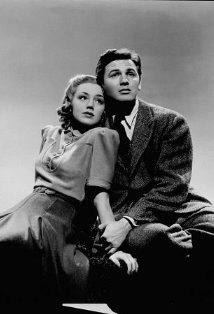
John Garfield(as Dave Goldman)
Gentleman's Agreement
Released
1947
Gentleman's Agreement
Released
1947
John Garfield
(as Dave Goldman)

Celeste Holm(as Anne Dettrey)
Gentleman's Agreement
Released
1947
Gentleman's Agreement
Released
1947
Celeste Holm
(as Anne Dettrey)

Anne Revere(as Mrs. Green)
Gentleman's Agreement
Released
1947
Gentleman's Agreement
Released
1947
Anne Revere
(as Mrs. Green)
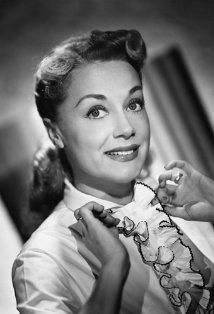
June Havoc(as Elaine Wales)
Gentleman's Agreement
Released
1947
Gentleman's Agreement
Released
1947
June Havoc
(as Elaine Wales)
Albert Dekker(as John Minify)
Gentleman's Agreement
Released
1947
Gentleman's Agreement
Released
1947
Albert Dekker
(as John Minify)

Jane Wyatt(as Jane)
Gentleman's Agreement
Released
1947
Gentleman's Agreement
Released
1947
Jane Wyatt
(as Jane)
Gentleman's Agreement Overview:
Gentleman's Agreement (1947) was a Drama - Romance Film directed by Elia Kazan and produced by Darryl F. Zanuck.
The film was based on the novel of the same name written by Laura Z. Hobson published in 1947.
SYNOPSIS
The best of the few Hollywood treatments of anti-Semitism. Peck gives the right gravity to his role of a magazine reporter who comes to understand in a personal way the barriers imposed by prejudice when, to add depth to his magazine feature, he takes on a Jewish identity. Hart wrote the script, based on the novel by Laura Z. Hobson.
(Source: available at Amazon AMC Classic Movie Companion).
Academy Awards 1947 --- Ceremony Number 20 (source: AMPAS)
| Award | Recipient | Result |
| Best Actor | Gregory Peck | Nominated |
| Best Actress | Dorothy McGuire | Nominated |
| Best Supporting Actress | Celeste Holm | Won |
| Best Supporting Actress | Anne Revere | Nominated |
| Best Director | Elia Kazan | Won |
| Best Film Editing | Harmon Jones | Nominated |
| Best Picture | 20th Century-Fox | Won |
| Best Writing | Moss Hart | Nominated |
Gentleman's Agreement BlogHub Articles:
No article for Gentleman's Agreement at this time. Submit yours here.
Gentleman's Agreement Quotes:
Tommy Green:
Pop, what's that?
Phil Green: That's a statue of Atlas carrying the world on his shoulders.
Tommy Green: No kidding? That's what Grandma says you're doing. She says she wishes you'd leave the world alone once in a while.
Phil Green: That's a statue of Atlas carrying the world on his shoulders.
Tommy Green: No kidding? That's what Grandma says you're doing. She says she wishes you'd leave the world alone once in a while.
John Minify:
I've asked Phil to do a piece on anti-Semitism.
Kathy Lacey: Am I going to get a credit line?
John Minify: You? Why?
Kathy Lacey: Well, don't you remember last winter when that Jewish schoolteacher resigned, and I...
John Minify: Oh, yes. Well, I knew somebody would be asking me for a credit line. I'm always stealing ideas without realizing it.
Kathy Lacey: That's what makes your magazine so original.
Kathy Lacey: Am I going to get a credit line?
John Minify: You? Why?
Kathy Lacey: Well, don't you remember last winter when that Jewish schoolteacher resigned, and I...
John Minify: Oh, yes. Well, I knew somebody would be asking me for a credit line. I'm always stealing ideas without realizing it.
Kathy Lacey: That's what makes your magazine so original.
Phil Green:
You aren't going to fit it at all, Kathy! You're just going to give in and let their idiotic rules stand!
Kathy Lacey: What can one person do?
Phil Green: What can they do?
Kathy Lacey: Plenty! Ostracize him!
Phil Green: And you expect me to live there now that I know all this?
Kathy Lacey: Oh, you can't change the whole world!
Kathy Lacey: What can one person do?
Phil Green: What can they do?
Kathy Lacey: Plenty! Ostracize him!
Phil Green: And you expect me to live there now that I know all this?
Kathy Lacey: Oh, you can't change the whole world!
Mrs. Green:
I never realized pain could be so... sharp.
Anne Dettrey:
I know dear, and some of your other best friends are Methodist, but you never bother to say it.
See More Quotes from Gentleman's AgreementGentleman's Agreement Facts
See More Facts about Gentleman's Agreement >>
Celeste Holm is on record as saying that she found Gregory Peck to be no fun to work with.
Producer Darryl F. Zanuck sought legal advice regarding the naming of the three anti-Semitic political figures. When told there was only a small risk of libel, Zanuck - who wasn't Jewish - replied, "Let them sue us. They won't dare, and if they do, nothing would make me more happy than to appear personally as a witness or defendant at the trial." As it turned out, Sen. Bilbo died before the film's release, Rep. Rankin lost in his campaign to succeed Bilbo (but remained in Congress), and Gerald L.K. Smith filed a lawsuit that ultimately failed.
Studio bosses - most of whom were Jewish themselves - urged Elia Kazan not to make the film.
Shooting started in late May 1947 and took 3 months. The film opened in November of that year to overwhelming critical favor.
"Lux Radio Theater" broadcast a 60 minute radio adaptation of the movie on
September 20, 1948 with Gregory Peck reprising his film role.