Home> Facts and Trivia > Stars > Leo McCarey
Leo McCarey Facts
| Sign | Libra |
| Born |
Oct 3, 1896 Los Angeles, CA |
| Died |
Jul 5, 1969 Santa Monica, CA |
| Age | Died at 72 |
| Total Facts | 31 |
Orson Welles said of the film Make Way for Tomorrow (1937), "It would make a stone cry", and rhapsodized about his enthusiasm for the film in his book-length series of interviews with Peter Bogdanovich, "This Is Orson Welles".
According to director Edward Dmytryk, who worked for him as an editor, McCarey never forgot a slight. He once told Dmytryk that early in his career Paramount had humiliated him by unceremoniously throwing him off the lot the moment a picture he was making for them was completed. After he became successful Paramount hired him for several more pictures, but McCarey got his revenge, he told Dmytryk, because "every picture I make for Paramount costs them a half-million more than it should".
Attended St. Joseph's Catholic school and Los Angeles High School.
Began his career as an assistant to Tod Browning at Universal Studios.
Biography in: "American National Biography." Supplement 1, pp. 392-393. New York: Oxford University Press, 2002.
Biography in: John Wakeman, editor. "World Film Directors, Volume One, 1890-1945." Pages 739-747. New York: The H.W. Wilson Company, 1987.
Brother of director Ray McCarey.
Child: Virginia Mary McCarey (c. 1927).
Directed 6 different actors in Oscar-nominated performances: Ralph Bellamy, Irene Dunne, Maria Ouspenskaya , Bing Crosby, Barry Fitzgerald and Ingrid Bergman. Crosby and Fitzgerald won for their performances in Going My Way (1944).
Director/writer with Stan Laurel and Oliver Hardy, W.C. Fields, and The Marx Brothers.
French director Jean Renoir once said that no other Hollywood director understood people better than McCarey.
Graduated from law school, passed the California bar and was a practicing criminal defense attorney for a short time before entering the movie business.
Had the highest reported income in the United States in 1944.
Has a star on the Hollywood Walk of Fame at 1500 Vine Street.
He accused Cary Grant of ripping off his persona while shooting The Awful Truth (1937), saying that the star's style and personality was just like his. McCarey and Grant worked together several times after that but never fully extinguished their long-standing antagonism resulting from McCarey's comments.
He and his wife Stella lived at 1014 North Crescent Drive in Beverly Hills, two blocks away from McCarey's friend and fellow filmmaker Hal Roach.
He believed that Make Way for Tomorrow (1937) was his finest film.
He is among an elite group of seven directors who have won Best Picture, Best Director and Best Screenplay (Orig/Adapted). The others are Billy Wilder, Francis Ford Coppola, James L. Brooks, Peter Jackson and Joel Coen and Ethan Coen (the brothers co-produced, co-directed and co-wrote No Country for Old Men (2007) with each other).
He is responsible for the original teaming of Stan Laurel and Oliver Hardy, though Hal Roach claimed it later and is now sometimes erroneously given credit.
He is the first director to win three major categories at the Academy Awards--Best Picture, Best Director and Best Writing, Original Story, for )Going My Way (1945)_.
He is the first director to win three major categories at the Academy Awards--Best Picture, Best Director and Best Writing, Original Story, for Going My Way (1944).
He was a practicing criminal defense attorney for a short time in Los Angeles and San Francisco. McCarey often told a story about his last case when he was conned into defending a wife-beater, who chased him out of court and down the street. That incident was the conclusion of his legal career. McCarey would later claim that he never won a single case.
In The Godfather (1972), his name appears outside of Radio City Music Hall, which is playing his popular film The Bells of St. Mary's (1945), as Michael is walking with Kay and reads about his father's attempted assassination from a newspaper headline.
In August 2006, an Oscar statuette described as McCarey's Best Director award for Going My Way (1944) was going to be auctioned online, and was expected to sell for at least $100,000 (US). The auction was canceled after the award was found to be counterfeit. McCarey's daughter said she still had all three of her father's Oscars. The base was authentic, but the original nameplate had been removed and replaced with a fake one. The statuette also weighed about a pound more than a real one.
In Newsweek Magazine famed documentary filmmaker Errol Morris named Make Way for Tomorrow (1937) his number one most important film, stating "The most depressing movie ever made, providing reassurance that everything will definitely end badly".
Interviewed in Peter Bogdanovich's "Who the Devil Made It: Conversations With Robert Aldrich, George Cukor, Allan Dwan, Howard Hawks, Alfred Hitchcock, Chuck Jones, Fritz Lang, Joseph H. Lewis, Sidney Lumet, Leo McCarey, Otto Preminger, Don Siegel, Josef von Sternberg, Frank Tashlin, Edgar G. Ulmer, Raoul Walsh." NY: Alfred A. Knopf, 1997.
It is widely believed that many aspects of McCarey's films were based on his personal history.
Named after his French-born mother, Leona (Mistrot) McCarey.
Pressured by his father to study law at USC.
The opening sequences of Nickelodeon (1976) in which Ryan O'Neal's character, Leo Harrigan, a lawyer who intentionally loses a case and is chased out of the courtroom by his enraged client, are inspired by actual events that happened to McCarey, who was once a criminal defense lawyer and was defending a wife-beater who chased him out of the courtroom and down the street.
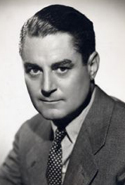
Was considered one of the most handsome directors in Hollywood, and some said as good looking as Cary Grant, whom he directed in four films.