Home> Facts and Trivia > Stars > Judy Garland
Judy Garland Facts
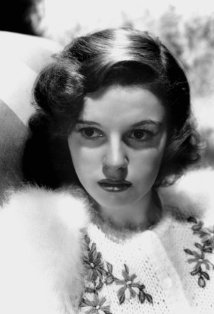
| Sign | Gemini |
| Born |
Jun 10, 1922 Grand Rapids, MN |
| Died |
Jun 22, 1969 London, England |
| Age | Died at 47 |
| Total Facts | 86 |
Offered the lead role in The Three Faces of Eve (1957), but turned down the role because the storyline bore too many resemblances to her own personal life. The role was then given to Joanne Woodward who went on to win the Best Actress Oscar for her performance.
One of the few actresses to have danced with both Fred Astaire and Gene Kelly in the movies, other actresses that have also done this includes Rita Hayworth, Cyd Charisse, Vera-Ellen, Debbie Reynolds, and Leslie Caron.
Originally screen-tested and signed to play the main supporting role of Helen Lawson, in Valley of the Dolls (1967). The studio even provided her with a pool table in her dressing room at her request. Eventually she backed out of the film and was ultimately replaced by Susan Hayward. She kept her costume when she walked off the film, and proceeded to wear the sequined pantsuit while performing in concerts around the world. The character of Neely O'Hara in the film was partially based on her own history (with pills, alcohol, and failed marriages). Sadly, it was Garland's real-life pill addiction that contributed to her leaving this film.
Performed two songs in films that won the Academy Award for Best Original Song: "Over the Rainbow" from The Wizard of Oz (1939) and "On the Atchison, Topeka and the Santa Fe" from The Harvey Girls (1946). Performed four more songs that were nominated: "Our Love Affair" from Strike Up the Band (1940), "How About You?" from Babes on Broadway (1941), "The Trolley Song" from Meet Me in St. Louis (1944), and "The Man That Got Away" from A Star Is Born (1954). Performed others that became standards, including "Have Yourself a Merry Little Christmas" from Meet Me in St. Louis (1944).
Replaced June Allyson in the film Royal Wedding (1951) after she became pregnant, but her failure to report to the set led to her being replaced by Jane Powell.
Returned to work eleven months after giving birth to her daughter Lorna Luft in order to film A Star Is Born (1954).
Returned to work nine months after giving birth to her daughter Liza Minnelli in order to film The Pirate (1948).
September 2002: A Los Angeles federal judge barred Sidney Luft from selling the replacement Juvenile Oscar she received for The Wizard of Oz (1939). Luft was also ordered to pay nearly $60,000 to the Academy of Motion Picture Arts and Sciences to end their second lawsuit against him for repeatedly trying to sell the statuette.
She discouraged her children from entering show business, pointing out her financial and health problems resulting from the nature of the entertainment business. Nevertheless, two of her children, Liza Minnelli and Lorna Luft both became entertainers. Her son Joe lives in relative anonymity as a freelance photographer.
She experienced financial difficulties in the 1960s due to her overspending, periods of unemployment, owing of back taxes and embezzlement of funds by her business manager. The IRS garnished most of her concert revenues in the late 1960s. Her financial difficulties combined with her erratic behavior due to her drug dependencies helped break up her marriages and estrange her children from her a year before her death.
She only performed "Over The Rainbow" three times during her many television appearances, which spanned 14 years. She performed it on her first TV Special, "Ford Star Jubilee" (1955) episode, "The Judy Garland Special" in 1955, sang it to her children on The Christmas Edition of her weekly "The Judy Garland Show" (1963), and on _"The Mike Douglas Show" in August 1968_.
She performed with her sisters at the 1933-34 World's Fair in Chicago on the infamous midway (where Sally Rand was the main attraction), more specifically in the Old Mexico Club, where they sold out every night. During their third week at the club, it unexpectedly closed due to an expired liquor license. Judy served as the grand marshal in a parade for the Fair's "Children's Day" in early 1934. It was during their last day in Chicago that Frances Gumm changed her name to Judy Garland during a performance at the Oriental Theater, partly at the advice of George Jessel, who was emceeing.
She was a very active member of the Hollywood Democratic Committee and donated her time and money to many liberal causes (such as the Civil Rights Movement) and political candidates (including Franklin D. Roosevelt, Henry Wallace, Adlai Stevenson, John F. Kennedy, and Robert F. Kennedy) for most of her adult life.
She was considered an icon in the gay community in the 1950s and 1960s. Her death and the loss of that emotional icon in 1969 has been thought to be a contributing factor to the feeling of the passing of an era that helped spark the Stonewall Riots that began the modern gay rights advocacy movement.
She was three-quarters Scottish and one-quarter Irish in ancestry.
She was voted the 22nd Greatest Movie Star of all time by Premiere Magazine.
She was voted the 23rd Greatest Movie Star of all time by Entertainment Weekly.
Sister of Mary Jane Gumm and Virginia Gumm.
The day she died, there was a tornado in Kansas.
The famous theme song David Raksin wrote for the film "Laura" (1944) was originally entitled "Judy" in honor of Garland.
The famous theme song David Raksin wrote for the film Laura (1944) was originally entitled "Judy" in honor of her.
The first film she made after marrying Vincente Minnelli was The Harvey Girls (1946).
The godparents of her daughter Liza Minnelli were Ira Gershwin and Kay Thompson
The month and year Judy Garland was born, 6-22 (June 1922), eerily turned out to be a forecast of the month and day she would die, 6/22 (June 22).
The only witnesses present at her Las Vegas wedding to David Rose in 1941 were her mother and stepfather.
The song "Quiet Please, There's A Lady On Stage" from the stage musical "The Boy From Oz" was written by Peter Allen (Liza Minnelli's former husband) as a tribute to her.
There is surviving footage of Garland performing the lead role of Annie Oakley in Annie Get Your Gun (1950) before she was replaced by Betty Hutton, and this has been included in many documentaries. Undoubtedly, the best is That's Entertainment! III (1994), which for the first time assembled raw unedited footage for two musical numbers and presented them as they would have looked had the film been completed with Garland. Also surviving today are Garland's prerecordings of all songs for the production.
Was a member of The International Order of Job's Daughters.
Was close friends with Lauren Bacall, who had once been her neighbor during the 1950s. Had Judy won the 1955 Best Actress Oscar for A Star Is Born (1954), Lauren would have accepted the Oscar statuette on her behalf.
Was considered for the role of Careen O'Hara in Gone with the Wind (1939), but the role was eventually given to Ann Rutherford, so Judy immediately began working on The Wizard of Oz (1939), a film which was considered for as early as 1937.
Was in consideration for the role of Sophie MacDonald in The Razor's Edge (1946) but Anne Baxter, who went on to win a Best Supporting Actress Oscar for her performance, was cast instead.
Was Matron of Honor at the wedding of actor Don DeFore and Marion Holmes DeFore on February 14, 1942.
Was named #8 Actress on The AFI 50 Greatest Screen Legends
Was pregnant with her first child Liza Minnelli while filming her minor role in Till the Clouds Roll By (1946). In order to hide her pregnant stomach she was hidden behind stacks of dishes while singing "Look For The Silver Lining". She had also recorded a song "Do You Love Me", which was cut before release. Her scenes were directed by her then husband Vincente Minnelli.
Was replaced by Ginger Rogers in the film The Barkleys of Broadway (1949) after being suspended from MGM for her tardiness.
When she married Vincente Minnelli, Louis B. Mayer gave her away.