Home> Facts and Trivia > Stars > Henry Fonda
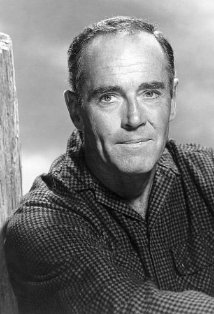
Henry Fonda Facts
| Sign | Taurus |
| Born |
May 16, 1905 Grand Island, NE |
| Died |
Aug 12, 1982 Los Angeles, CA |
| Age | Died at 77 |
| Total Facts | 53 |
1982: Was unable to be present at the 1982 Academy Awards ceremony to accept his best actor Oscar for On Golden Pond (1981). His award was accepted on his behalf by his daughter Jane Fonda.
A friendship and collaboration of nearly 20 years was ended when director John Ford sucker-punched him while making Mister Roberts (1955).
Appeared in three movies based exclusively on World War II battles. The Longest Day (1962), Battle of the Bulge (1965) and Midway (1976).
At 76, he was the oldest person to win a best actor Oscar.
Awarded "Father of The Year" in 1963 by the Father's Day Mother's Day Council, Inc.
Biography in: "The Scribner Encyclopedia of American Lives". Volume One, 1981-1985, pages 284-287. New York: Charles Scribner's Sons, 1998.
Considered for the leading role of "Ladri di biciclette" (1948).
Contrary to popular belief, Fonda did approve of his daughter Jane's anti-war activism during Vietnam and at AFI Life Achievement Award: A Tribute to Henry Fonda (1978) (TV) told her critics to "shut up", because "she's perfect".
Currenty holds the record for the longest gap between acting Oscar nominations. His first nomination was for The The Grapes of Wrath (1940) in 1940, his second was for On Golden Pond (1981) in 1981, 41 years later. He received one other Oscar nomination in the period between his two acting nominations, that was for producer of 12 Angry Men (1957) in 1957.
Divorced Margaret Sullavan after two months.
During a Barbara Walters interview, Jane Fonda claimed that her father was deeply in love with Lucille Ball and that the two were "very close" during the filming of Yours, Mine and Ours (1968).
Earned the rank of Life Scout and became a scout master as an adult.
Father of Jane Fonda and Peter Fonda and Amy Fonda. Stepfather of Pan, from marriage to Frances Brokaw. Grandfather of Bridget Fonda, Justin Fonda, Vanessa Vadim and Troy Garity. Ex-father-in-law of Roger Vadim, Tom Hayden and Ted Turner.
Fonda told his third wife Susan Blanchard to stay away from Ward Bond, whose ultra-conservative views and active support for McCarthyism he despised.
Fonda, who played the second Commander in Chief-Pacific (CINCPAC II) in In Harm's Way (1965), was actually a naval veteran of World War II who served in the Pacific Theater. After making The Ox-Bow Incident (1943), Fonda enlisted in the Navy to fight in World War II, saying, "I don't want to be in a fake war in a studio." He served in the Navy for three years, initially as a Quartermaster 3rd Class on the destroyer USS Satterlee; later, Fonda was commissioned as a Lieutenant Junior Grade (O-2) in Air Combat Intelligence. For his service in the Central Pacific, he won the Bronze Star, the fourth highest award for bravery or meritorious service in conflict with the enemy.
Formed a partnership with actors Robert Ryan and Martha Scott in 1968, co-founding the theatrical production company Plumstead Playhouse in New York. Later called the Plumstead Theatre Society, it co-produced the Broadway production of First Monday in October, starring Fonda and Jane Alexander.
He and his daughter Jane Fonda were the first father-daughter couple to be Oscar-nominated the same year (1982).
He left a clause in his will requesting that there be no funeral or memorial service.
He periodically returned to the legitimate stage throughout his career (Mister Roberts, Critic's Choice and First Monday in October), but missed out on the chance to create the role of George in the original Broadway production of Who's Afraid of Virginia Woolf?. His agent rejected the script out of hand, without consulting him. The agent gave as his reason the assertion that, "You don't want to be in a play about four people yelling at each other all the time." Fonda, who was an admirer of playwright Edward Albee's talents, was furious. It didn't help matters when old friends like James Stewart and his wife Gloria Stewart, or even his own daughter Jane, told him that they saw the play in New York and couldn't picture anyone but Fonda in the lead. Finally seeing the show himself, Fonda was duly impressed by Arthur Hill's performance in the role, and conceded that he couldn't have played the part any better.
He returned to Broadway in 1974 for the biographical drama Clarence Darrow for which he was nominated for a Tony Award. Fonda's health had been deteriorating for years, but his first outward symptoms occurred after an April 1974 performance when he collapsed from exhaustion. After the appearance of a heart arrhythmia brought on by prostate cancer, a pacemaker was installed and Fonda returned to the play in the following year. After the run of the 1978 play First Monday of October, he took the advice of his doctors and quit the rigors of live stage, though he continued to star in films and on television.
He was a close friend of actor Ross Alexander from the time they first worked together on Broadway.
He was a founding member of the Hollywood Democratic Committee during the 1930s, formed in support of President Franklin D. Roosevelt's New Deal agenda.
He was one of the most active, and most vocal, liberal Democrats in Hollywood along with Robert Ryan and Gregory Peck. He once said that President Ronald Reagan made him "physically ill", and that he "couldn't stomach any of the Republicans, most of all Richard Nixon.".
He was voted the 10th Greatest Movie Star of all time by Premiere Magazine.
He was voted the 29th Greatest Movie Star of all time by Entertainment Weekly.
His ancestors came from Genoa, Italy, and fled to the Netherlands around 1400. Among the early Dutch settlers in America, they established a still-thriving small town in upstate New York named Fonda in the early 1600s, named after patriarch Douw Fonda, who was later killed by Indians. His paternal grandparents moved to Nebraska in the 1800s.
His performance as Tom Joad in The Grapes of Wrath (1940) is ranked #51 on Premiere Magazine's 100 Greatest Performances of All Time (2006).
Hobby was making model airplanes and kites.
In spite of his kind, heroic, honest screen persona, he was often described as being cold, aloof and frequently angry off-screen.
Longtime friend of James (Jimmy) Stewart.
Named Father of The Year 1963 by the Father's Day/Mother's Day Council, Inc.
Named the #6 greatest actor on The 50 Greatest Screen Legends by the American Film Institute
Nearly fell out with his close friend James Stewart in an argument over blacklisting in the spring of 1947. It happened shortly after Fonda joined Humphrey Bogart, Lauren Bacall and John Huston in signing an open letter to the House Unamerican Activities Committee, suggesting it end its investigations of Communism involvement in the film industry. According to Stewart, the argument was "long and pretty heated" and ended only when the two men realized they were jeopardizing so many years of friendship. Soon afterward, Fonda moved to New York, not returning to Hollywood until 1955. Although part of the reason for his extended stay in the East was his starring role in Mister Roberts on Broadway, he also confided to friends that he couldn't tolerate the political climate in Southern California during those years. Jane Fonda admits she never got her father to say exactly what was said during the argument with Stewart. "I know it was definitely about the House Unamerican Activities Committee and what became known as McCarthyism later on," she recalled. "And it's true that their friendship really almost ended over that. That was why, after they had cooled down, they decided
Of the Oscar-winning father-daughter couples, he and daughter Jane are the one of two pairs where the daughter won an Academy award before the father did. The other pair is Hayley Mills and John Mills. Hayley's 1960 honorary Oscar was given to her for the best juvenile performance in Pollyanna (1960). Her father John became very popular with the denizens of Hollywood when the Mills family resided there while Hayley made films for Walt Disney. He won a supporting actor Oscar in 1971 for his role as the village idiot in David Lean's Ryan's Daughter (1970/I).
On April 12, 1967, he visited the aircraft carrier U.S.S. Kitty Hawk for an overnight stay.
One of his hobbies was bee keeping. This was one of many traits that his son, Peter Fonda, incorporated into his performance in Ulee's Gold (1997), a performance Peter says he based on his father.
Pictured on a 37¢ USA commemorative postage stamp in the Legends of Hollywood series, issued in his honor on 20 May 2005.
Played a man wrongly accused of a crime three times: You Only Live Once (1937), Let Us Live (1939), and The Wrong Man (1956).
Ranked #6 as AFI's top male screen legends.
Ranked #95 in Empire (UK) magazine's "The Top 100 Movie Stars of All Time" list. [October 1997]
Son of William Brace Fonda (of Dutch American and Scottish ancestry) and wife Herberta Jaynes.
Studied acting with Dorothy Brando, mother of Marlon Brando.
The birth of his daughter Jane Fonda was the cause of some interruptions during his filming of Jezebel (1938) with Bette Davis.
The Fonda family was acquainted with Marlon Brando's family, as they both lived in Omaha, Nebraska and Henry appeared with Marlon's mother Dorothy in community theater. In fact, the Brando family, on a trip to Southern California in the late 1930s, visited Henry on a movie set. The two very different actors never knew each other socially because Fonda was much older. In fact, when the teen-aged Brando started out as an actor, he did so in the shadow of Fonda, who was the most famous person from Omaha at that point. Brando did tell a story about how he had to fire a housekeeper after he found out that she was allowing tourists to come into his home to look around the digs of a star, for a fee. Soon after, Henry called him to check up on the credentials of a woman applying for the job of housekeeper at his home. It was the same woman that Brando had fired. He enthusiastically recommended her to his mother's former acting protégé, without telling him of her unauthorized tours.
Though a Democrat for most of his life, Fonda was once a registered Republican, according to his son Peter Fonda in his autobiography Don't Tell Dad: A Memoir (1999). Peter believes that Henry's liberalism caused him to be gray-listed during the early 1950s, when he experienced a six-year layoff from films.
Three films of his are on the American Film Institute's 100 Most Inspiring Movies of All Time. They are: On Golden Pond (1981) at #45, 12 Angry Men (1957) at #42, and The Grapes of Wrath (1940) at #7.
Was a first-hand witness to the Omaha race riots of 1919 and lynching of Will Brown.
Was good friends with John Wayne from the time they were part of the director John Ford's stock company. Henry's son, Peter Fonda, in his autobiography, said that Henry had some trouble with the Duke and fellow Ford film co-star Ward Bond over politics, as the two were definitely to his father's right. Peter said that the Duke and Bond were wonderful with him and very warm, in contrast to his father, who was rather cold. Henry would drift away from the Ford stock company, and his relationship with the great director would end on the set of Mister Roberts (1955) when he objected to Ford's direction of the film. Ford punched Fonda and had to be replaced.
Was known as a ladies' man in Hollywood, having been involved in affairs with many actresses.
Was twice a roommate and a very close friend of James Stewart. They met and shared a room when the two were both struggling young actors in the early 1930s. Stewart went to Hollywood shortly before Fonda. When Fonda arrived he shared Stewart's home, where they both gained reputations as ladies' men. After both married and had kids, the more mellow buddies still hung out, usually spending time building model airplanes.