Home> Facts and Trivia > Stars > Gregory Peck
Gregory Peck Facts
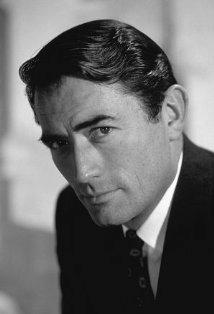
| Sign | Aries |
| Born |
Apr 5, 1916 La Jolla, CA |
| Died |
Jun 12, 2003 Los Angeles, CA |
| Age | Died at 87 |
| Total Facts | 117 |
Brock Peters delivered his eulogy on the day of his funeral and burial, June 16, 2003. In To Kill a Mockingbird (1962), Peters played Tom Robinson, the black man accused of raping a white girl that Atticus Finch (Peck's character) defended in court.
Only the Valiant (1951) was his least favorite film. He thought the western potboiler was a step backwards after starring in The Gunfighter (1950).
A back injury incurred in college kept him out of the services in World War II.
A physically powerful man, Peck was known to do a majority of his own fight scenes, rarely using body or stunt doubles. Robert Mitchum, his on-screen opponent in Cape Fear (1962), said that Peck once accidentally punched him for real during their final fight scene in the movie. He recalled feeling the impact of the punch for days afterwards and said, "I don't feel sorry for anyone dumb enough who picks a fight with him.".
According to at least one biography, he took his role in The Omen (1976) at a huge cut in salary (a mere $250,000) but was guaranteed 10% of the film's box office take. It went on to gross more than $60 million in the U.S. alone, and became the film for which he earned the most money in his career.
According to director Lewis Milestone, Pork Chop Hill was cut by nearly twenty minutes because the wife of star Gregory Peck felt that her husband made his first entrance too late into the picture. True or not, the film does show signs of post-production tampering, with flashes of several excised scenes showing up under the main title credits.
Advertised Chesterfield cigarettes.
After making Arabesque (1966), Peck withdrew from acting for three years in order to concentrate on various humanitarian causes, including the American Cancer Society.
After Peck stormed off the set of The Big Country (1958), director William Wyler said of him: "I wouldn't direct Peck again for a million dollars and you can quote me on that.".
Agreed to star in David and Bathsheba (1951) as a riposte to the Biblical epics of Cecil B. DeMille.
Along with Dorothy McGuire, Mel Ferrer and David O. Selznick, he co-founded the La Jolla Playhouse, located in his hometown, and produced many of the classics there. Due to film commitments, he could not return to Broadway but whet his appetite for live theater on occasion at the Playhouse, keeping it firmly established with a strong, reputable name over the years.
Appeared on President Richard Nixon's infamous "List of Enemies" in 1972.
As a board member of Handgun Control Inc. (along with Martin Sheen and Susan Sarandon), Peck was sometimes criticized for his friendship with Charlton Heston, a longtime advocate of gun ownership who served as President of the National Rifle Assocation (NRA) from 1998 to 2003. When questioned by James Brady, Peck said, "We're colleagues rather than friends. We're civil to each other when we meet. I, of course, disagree vehemently with him on gun control.".
Attended San Diego High School.
Biography in: "The Scribner Encyclopedia of American Lives". Volume 7, 2003-2005, pages 417-420. Farmington Hills, MI: Thomson Gale, 2007.
Broke his ankle in three places in a fall from a horse while filming Yellow Sky (1948).
By 1974, following a series of flops, Peck's career had declined to such an extent that he admitted in an interview that he was thinking of retiring from acting. Two years later however he made an enormous comeback with The Omen (1976).
Campaigned for Harry S. Truman in the 1948 presidential election.
Chairman, American Film Institute. He was the first Chairman of the AFI. [1967-1969]
Chairman, Motion Picture & Television Relief Fund. [1971]
Charter Member, National Council on the Arts. [1964-1966]
Charter Member, National Council on the Arts. [1968-1974]
Children with Veronique Passani: Tony Peck (b. 1956) and Cecilia Peck (b. 1958).
Children, with Kukkonen, Jonathan (b. 1944 - d. 1975), Stephen Peck (b. 1945), Carey Paul Peck (b. 1949).
Chosen by producer Darryl F. Zanuck for the epic film David and Bathsheba (1951) because Zanuck thought Peck had a "biblical face".
Cited that his favorite leading ladies were Audrey Hepburn, Ingrid Bergman, and Ava Gardner.
During his lean salad days, he supported himself as a Radio City Music Hall tour guide and as a catalog model for Montgomery Ward.
During the Vietnam War Peck was a vocal supporter of teenagers who dodged the draft, calling them "patriots" and "heroes" and saying that burning their draft cards was part of their civic duty. He produced an anti-war film, The Trial of the Catonsville Nine (1972) using his own money in order to provoke more opposition to the conflict.
Father-in-law of Daniel Voll.
Formed a solid friendship with Mary Badham, who played his daughter "Scout" in To Kill a Mockingbird (1962). They remained in contact until his passing. According to Badham, she always called him "Atticus" and he always called her "Scout".
Grandfather of actor Ethan Peck.
He and The Big Country (1958) co-star Charlton Heston both played the infamous Nazi war criminal Dr. Josef Mengele: Peck in The Boys from Brazil (1978), Heston in Rua Alguem 5555: My Father (2003).
He did not get along with director Elia Kazan while filming Gentleman's Agreement (1947). Kazan told the press he was very disappointed with Peck's performance and the two men never worked together again.
He had always wanted to act in a Shakespearean play, but by the time the opportunity presented itself in 1951 he decided it was too late to start.
He had always wanted to do a Walt Disney movie.
He had Armenian roots from his paternal grandfather, Sam "Peck", an immigrant from England. After Gregory married his second wife, Veronique Passani, she had his ancestry traced and discovered the Armenian lineage. Urging him to learn of his partial Armenian heritage and to learn the language, he took Armenian classes for a short time in his middle age.
He is listed in the Cal Berkeley Alumni roster as a graduate of the Class of 1942 who studied as an English major and where he acted in plays at the Associated Students sponsored 'Little Theatre' on campus. Incidentally while under the watch of the University's Committee on Music and Drama led by Professor William Popper as chairman, the University's Department of Dramatic Arts was just being established towards the end of his student tenure in 1941.
He regularly visited Humphrey Bogart while filming Designing Woman (1957) with Bogart's wife Lauren Bacall. Peck was reportedly devastated by the star's death in January 1957.
He took in former co-star Ava Gardner's housekeeper and dog after her death in 1990.
He visited Michael Jackson on the set of filming the "Smooth Criminal" segment for Moonwalker (1988). Also visiting the set was Robert De Niro and Bruce Willis.
He was a close friend and ardent supporter of President Lyndon Johnson, spending much time at the White House and the Johnson Ranch.
He was a close friend of Michael Jackson for the last 25 years of his life, and often went horse riding with the singer at his Neverland Ranch. During the Jordie Chandler scandal in 1993, Peck wrote a letter defending Jackson. He also gave a glowing video tribute to Jackson at his 30th Anniversary concert in New York in 2001.
He was a close friend of Jane Fonda, and frequently attended political rallies with her.
He was a close friend of former French President Jacques Chirac.
He was a heavy drinker as a young actor in Hollywood. In 1949 he was hospitalized with heart spasms, and while filming David and Bathsheba (1951) he was hospitalized with a suspected heart attack. Though it turned out to be a palpitation brought on by his lifestyle and overwork, he began to drink less thereafter. However, he did not stop smoking for many more years.
He was a lifelong opponent of nuclear weapons, and made On the Beach (1959) for this reason.
He was a vocal opponent of the Vietnam War, while remaining supportive of his son who was serving there.
He was an active supporter of AIDS fund raising.
He was awarded the American National Medal of the Arts in 1998 by the National Endowment of the Arts in Washington D.C.
He was considered for Rock Hudson's role in Ice Station Zebra (1968).