Home> Facts and Trivia > Stars > Gary Cooper
Gary Cooper Facts
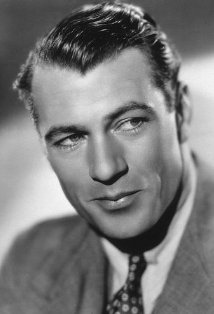
| Sign | Taurus |
| Born |
May 7, 1901 Helena, MT |
| Died |
May 13, 1961 Beverly Hills, Los Angeles |
| Age | Died at 60 |
| Total Facts | 118 |
He was originally supposed to play the leading role in Frank Capra's Mr. Smith Goes to Washington (1939), but Harry Cohn refused to loan Cooper out so James Stewart was cast instead.
He was very popular with audiences over a long period of time, his popularity exceeding that of "The King" Clark Gable himself at the box office. Named the #1 Box Office Star of 1953 in the Top 10 Poll of Money-Making Stars, as ranked by Quigley Publications' annual survey of movie exhibitors. He made the list 18 times from 1936 to 1957, which was a record when he died in 1961. Of his contemporaries, John Wayne (who accepted Cooper's 1952 Best Actor Oscar for High Noon (1952)) established the still-standing record of Box Office success with 25 appearances in the Top 10 between 1949 and 1974.
He was voted the 18th Greatest Movie Star of all time by Entertainment Weekly.
He was voted the 42nd Greatest Movie Star of all time by Premiere Magazine.
He wasn't present to receive his Academy Award in February 1953, for his portrayal of Marshal Will Kane in High Noon (1952). He asked John Wayne to accept it on his behalf.
He won an Oscar for playing Alvin C. York in Sergeant York (1941), making him one of 13 actors to win the Award for playing a real person who was still alive at the evening of the Award ceremony (as of 2007). The other 11 actors and their respective performances are: Spencer Tracy for playing 'Father Edward Flanagan' in Boys Town (1938), Patty Duke for playing Helen Keller in The Miracle Worker (1962), Jason Robards for playing Benjamin C. Bradlee in All the President's Men (1976), Robert De Niro for playing Jake LaMotta in Raging Bull (1980), Sissy Spacek for playing Loretta Lynn in <a href="search.php?q=Coal+Miner%26%23x27%3Bs+Daughter&submit=
His appetite was prodigious, but no matter how much he ate, he always remained thin. During his early years in Hollywood, working odd jobs and living with his parents, he said, he said with some comic exaggeration, that his "starvation diet at the time ran to no less than a dozen eggs a day, a couple of loaves of bread, a platter of bacon, and just enough pork chops between meals to keep me going until I got home for supper." His specialty on hunting trips was gargantuan: wild duck covered with bacon strips, enhanced by four eggs and steak. He could eat a cherry pie and drink a quart of milk for lunch.
His daughter, Maria Veronica Balfe Cooper, was born on September 15, 1937. She now goes by her married name, Maria Cooper Janis.
His estate was valued at $9 million at the time of his death in 1961.
His father Charles Cooper died of pneumonia on September 18th 1946, three months after Gary completed Cloak and Dagger (1946) and 3 days after his father's 81st birthday.
His father, an English immigrant to Montana who became a wealthy lawyer and rancher, was a judge on the Montana Supreme Court.
His lovers included Clara Bow, Evelyn Brent, Carole Lombard, Lupe Velez, Ingrid Bergman, Grace Kelly, Marlene Dietrich and Patricia Neal. Sir Cecil Beaton also claimed to have had an affair with him.
His mother Alice Cooper died in a Palm Desert convalescent home in October 1967, at the age of 94. His brother Arthur Cooper died in May 1982, at the age of 87.
His mother's favorite movie of his is The Pride of the Yankees (1942).
His Oscar-winning roles as Will Kane from High Noon (1952) and Sgt. Alvin York from Sergeant York (1941) were ranked #5 and #35 in the American Film Institute's Heroes list in their 100 years of The Greatest Screen Heroes and Villains.
His reputation as an unthinking conservative seems largely undeserved. Though he appeared as a "friendly witness" before the House Un-American Activities Committee (HUAC) in 1947, he carefully avoided naming any people he suspected of having Communist sympathies within the Hollywood community. He later starred in High Noon (1952), a western that was an allegory for blacklisting in Hollywood, and strongly defended blacklisted screenwriter Carl Foreman from attacks by the right-wing Motion Picture Alliance for the Preservation of American Ideals. Foreman later credited Cooper as the only major star in Hollywood who tried to help him. His mistress Patricia Neal, who did consider herself a liberal, said Gary was "conservative" but "you couldn't call him right-wing". Cooper showed a sense of humor by asking John Wayne to collect his Oscar for him in 1953, after Wayne had criticized High Noon (1952) as "anti-American".
His shot from High Noon (1952) was used as a Solidarity candidates trademark of the first independent elections in Poland in June 1989 ("There's a new sheriff in town")
Hobbies: Fishing, hunting, riding, swimming, and taxidermy.
In High Noon, Gary Cooper's character (Marshal Will Kane) is betrayed by all the "good" men in town who will not take up arms for a just cause. Carl Foreman (screenplay and uncredited producer) stated that High Noon was intended as an allegory of the contemporary failure of intellectuals to combat the rise of McCarthyism, as well as how people in Hollywood had remained silent while their peers were blacklisted. The film has also been embraced by those who, like Ronald Reagan and Bill Clinton, admire its emphasis on duty and courage.
In 1925 he befriended another young, struggling, would-be actor named Walter Brennan. At one point, they were even appearing as a team at casting offices, and although Cooper emerged in major and leading roles first, they would work together in the good years, too. Most memorably they starred in The Westerner (1940) together, where the general critical consensus was that Brennan's underplayed performance as Judge Roy Bean had stolen the film from Cooper.
In 1932 he was named as a supporter and benefactor of a right-wing organization known as the Hollywood Light Horse, which described itself as "a military organization formed to promote Americanism and combat Communism and radicalism subversive to Constitutional government", and which numbered English actor Victor McLaglen as one of its members. The assertion that Cooper was an active supporter was quickly withdrawn following protests by his representatives.
In 1938 Cooper took his wife on a junket to England and the Continent, and was the last American movie star to visit Nazi Germany prior to the outbreak of World War II. Until that point he had been basically apolitical and isolationist, opposed to President Woodrow Wilson's League of Nations. When the fateful Munich Conference immediately followed Cooper's return to America, he became increasingly active in the film community's pastime of playing national partisan politics. His allegiance to the right wing would be fairly consistent, though never a sure thing. He said he believed the United States should become more involved diplomatically in world affairs, but felt it was no business of Hollywood's. He said pointedly that MGM's cautiously anti-Nazi Three Comrades (1938) with it's F. Scott Fitzgerald screenplay should not have been made, and that henceforth he would give more thoughtful attention to some of the film projects he was offered.
In 1940, Cooper actively campaigned for Wendell Willkie as the Republican challenger to President Franklin D. Roosevelt's quest for a third term of office. Cooper believed Roosevelt was already too powerful, and would become more so. He told Cecelia Ager though that he advocated most of the New Deal reforms and believed the GOP made a mistake by not emphasizing their intention of retaining most of them. He said, "There's no going back to the ways of the Old Guard." Willkie, a well known womanizer, became firm friends with the actor.
In 1943 Cooper was one of the founding members of the right-wing Motion Picture Alliance for the Preservation of American Ideals, called merely "the Alliance" in the film community. Its other early leaders included Robert Taylor, Adolphe Menjou, Sam Wood, Norman Taurog, Clarence Brown, and Walt Disney. Clark Gable, thought of as one whose apolitical inclination was even more pronounced than Cooper's, was also a member. The Alliance's cheerleader was Lela E. Rogers, mother of Ginger Rogers.
In 1944 he formed his own production company, International Pictures, with Samuel Goldwyn. His partners were Leo Spitz, William Goetz (who'd recently been ousted from 20th Century Fox) and Nunnally Johnson. They only produced nine movies, two of which starred Cooper, Casanova Brown (1944)_ and Along Came Jones (1945). Then in 1946 they sold International Pictures to Universal Pictures, which changed its name to Universal-International.
In 1951 he organized his own production company once more, calling it Baroda and buying the film rights to Alfred Hayes's best-selling novel "The Girl on the Via Flaminia". He paid $40,000 for the rights, and $10,000 to Hayes for a screenplay. He wanted to star in it with the young Montgomery Clift, the most popular young actor in Hollywood and also one of the best. Cooper could not arrange financing but broke even on his investment by selling the property to Leland Hayward and Anatole Litvak with the stipulation that Clift would have to star in it. The film was never made. Litvak, however, eventually made a film of The Chase (1966) much later, with Marlon Brando in the sheriff role that was being talked about in 1950 as Cooper's likely stage debut. John Hodiak took the role in Horton Foote's play when Cooper was unable to clear time with Warner Brothers - if indeed he tried.
In 1951, after 25 years in show business, his professional reputation declined, and he was dropped from the Motion Picture Herald's list of the top 10 Box Office performers. In the following year he made a big comeback at the age of fifty-one with High Noon (1952).
In 1958 Cooper had a private audience with Pope Pius XII at the Vatican, and in the following year became a convert to Roman Catholicism.
In 1960, for the first time since his arrival in Hollywood, there were no new Gary Cooper pictures. In the spring of that year he underwent several operations for prostate cancer, but in the autumn managed to film one final movie in England, The Naked Edge (1961).
In 1968 a "Variety" magazine poll of popular television personalities still included Cooper and his one-time rival Clark Gable, even though both actors had died nearly a decade earlier.
In 1974, Cooper's body was removed from Holy Cross Cemetary and reburied under a three ton boulder at Sacred Heart Cemetery in Southampton, Long Island. His wife explained, " Gary loved Southapton. This is what he would want.".
In May 1931, after finishing I Take This Woman (1931), the combination of exhaustion, physical illness, and the conflict between his possessive mother and jealous mistress led to a nervous breakdown. He had been working fourteen to sixteen hours a day, sometimes twenty-three, making one film by day and another by night. He suffered from anemia and jaundice, and his weight dropped thirty pounds to a dangerously low 148 lbs.
In May 1974 his body was removed from Holy Cross Cemetery in Los Angeles and reburied, under a three-ton boulder from a Montauk quarry, in Sacred Heart Cemetery in Southampton, New York near his family on the East Coast.
In November 1955 Cooper was announced to star under the direction of Gerd Oswald in The Proud Ones (1956). Eventually the film was directed by Robert D. Webb with Robert Ryan in the leading role.
In the early 1930s, his doctor told him he had been working too hard. Cooper went to Europe and stayed a lot longer than planned. When he returned, he was told there was now a "new" Gary Cooper - an unknown actor needed a better name for films, so the studio had reversed Gary Cooper's initials and created a name that sounded similar - Cary Grant.
In the late 1950s, his voracious eating habits finally caught up with him. After decades of incomparable thinness, Cooper put on 15 lbs, pushing his weight up to 190 lbs, which on his 6'3" frame was still slender.
In the spring of 1960 he had two operations, one for prostate cancer and then after that a part of his colon removed which was cancerous also. The doctors were sure that they had gotten all of it. His body strengthened and he made the movie The Naked Edge (1961) in England, but while he was making this film he had a lot of pain in his neck and shoulders. When he returned home from England he went back to the doctor and it was then that he had to be told the cancer had metastasized to his lungs and bones. As he did in The Pride of the Yankees (1942) he took it in his stride and said, "If it is God's will, that's all right too." He opted not to take very much treatment.
Inducted into the Hall of Great Western Performers of the National Cowboy and Western Heritage Museum in 1966.
Is mentioned in the song "La Dernière Séance" by Eddy Mitchell.
It was testament to Cooper's durability that Charlton Heston, already a major star following The Ten Commandments (1956), was prepared to play a supporting role in The Wreck of the Mary Deare (1959). Heston was impressed that the veteran actor, fifty-eight years old and in declining health, was still able to perform his own stunts, including being submerged underwater for long periods of time. In his book "The Actor's Life", Heston recalled he sensed early on it would be Cooper's picture but he didn't mind, because of all Cooper himself had meant to Heston, even as a child.
Lived with Anderson Lawler, a contract player at Paramount, in 1929.
Met Soviet premier Nikita Khrushchev at a luncheon organized by Charles Feldman at Twentieth Century Fox on 19 September 1959. Kruschev personally invited Cooper and his wife and daughter on a six-day, United States Information Agency-sponsored trip to Moscow and Leningrad. After Cooper entertained some Soviet dignitaries at his house in Hollywood, Hedda Hopper publicly denounced him as "soft on Commies".
Named the #11 Greatest Actor on The 50 Greatest Screen Legends list by the American Film Institute
Often cited James Stewart as his closest friend.
Often played the love interest of a significantly younger woman. A notable example is High Noon (1952) in which he and Grace Kelly played newlyweds. He was 51 and she was 22.
On 16 April 1958 he entered the Manhattan Eye, Ear and Throat Hospital for a full face-lift and other cosmetic surgery by Dr John Converse, one of the leading plastic surgeons in America. Newspaper articles commenting on the effects of the operation said his face now looked quite different and the procedure had not been successful.
On 23 October 1947, he appeared before the House Unamerican Activities Committee in Washington, not under subpoena but responding to an invitation to give testimony on the alleged infiltration of Hollywood by communists. Other friendly witnesses appearing on the same day as Cooper were Robert Taylor, Robert Montgomery, George Murphy, Ronald Reagan and the aging Adolphe Menjou. Montgomery had long been active in Republican politics as a committeeman and later would serve as White House adviser during the Eisenhower administration. Murphy would serve as a Republican senator from California, with a reactionary voting record. Reagan would become Governor of California and the national champion of extreme conservatism. Taylor, Menjou and Cooper would all retreat gradually from the political fracas, but only Cooper would make a show of repudiating what he had done. Although he never recanted his testimony, or said he regretted having been a friendly witness, he became conciliatory during the subsequent period of the blacklist. As an independent producer, he hired blacklisted actors and technicians. He did say he had never wanted to see anyone lose the right to work, regardless of what he had done. After the
On 8 January 1961 he was given a testimonial dinner in Hollywood at the Friar's Club. It was a coincidental thing, his terminal cancer was not suspected. The aged Carl Sandburg was there, calling Cooper "a tradition while he's living, something of a clean sport, the lack of a phony." Audrey Hepburn read a poem called "What is a Gary Cooper?". Cooper didn't look well that night, but most observers thought he looked marvelous anyway.
Pictured on a 44¢ USA commemorative postage stamp in the Legends of Hollywood series, issued 10 September 2009.
Pictured on one of four 25¢ US commemorative postage stamps issued 23 March 1990 honoring classic films released in 1939. The stamp featured Cooper as the title character of Beau Geste (1939). The other films honored were Stagecoach (1939), The Wizard of Oz (1939), and Gone with the Wind (1939).