Home> Facts and Trivia > Stars > Dirk Bogarde
Dirk Bogarde Facts
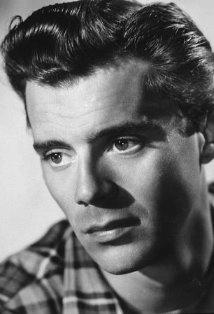
| Sign | Aries |
| Born |
Mar 28, 1921 Hampstead, London |
| Died |
May 8, 1999 Chelsea, London |
| Age | Died at 78 |
| Total Facts | 44 |
1984: President of the jury at the Cannes Film Festival.
1985: Member of the jury at the Cannes Film Festival.
1995: Chosen by Empire magazine as one of the 100 Sexiest Stars in film history (#78).
A British soldier during WW II, he was present when the Allies rescued the prisoners from the Nazi death camp at Belsen.
According to his friend Charlotte Rampling, Bogarde was approached in 1990 by Madonna to appear in her video for "Justify My Love", citing The Night Porter (1974) as an inspiration. Bogarde turned the offer down.
Befriended Rock Hudson while filming Campbell's Kingdom (1957), while Hudson was filming A Farewell to Arms (1957).
Beginning in 1977, Bogarde was also a prolific writer with seven volumes of autobiography and seven novels all becoming best-sellers.
Born at 3:20am-UT
Born Derek van den Bogaerde in the north London suburb of Hampstead to an actress mother and an artist father, he went to university in London and Scotland.
Considered retiring after The Night Porter (1974), which had left him emotionally drained.
Director Joseph Losey originally offered the part of Leon Trotsky in his film The Assassination of Trotsky (1972) to Bogarde. Losey admitted that the script was terrible, but told Bogarde that it would be revised. Bogarde turned the role down, embittering Losey, who felt that Bogarde didn't trust him. Richard Burton, who had worked with Losey on Boom! (1968), did trust Losey enough to take the part, even though he was shown the same script. Bogarde was wise to turn down the part as the finished film was a critical and box office failure, and along with the earlier Losey-Burton collaboration Boom! (1968) made the list of the "Fifty Worst Films of All Time", by Harry Medved and Randy Lowell.
During the late 1940s Bogarde was living at No 44 Chester Row, Belgravia, London with a rescued cat called Cliff. While he was there Bogarde received his first contract from J. Arthur Rank, which set him on the way to stardom.
Following the death of his partner Anthony Forwood in 1988, he moved into an apartment at 2 Cadogan Gardens in London, where he remained until his death.
For a time in the 1950s, Bogarde was promoted as "The British Rock Hudson", despite the fact that he was actually Dutch and stood considerably shorter than the 6'4" American star.
Going to the wrong room for a British Broadcasting Corporation audition, the young Bogarde accidentally got a part in a stage play that proved so successful he was hailed as a star overnight.
He had a remarkably good singing voice.
He made his stage debut in 1939, but his acting career was interrupted for seven years by World War II until he was demobilized in September 1946.
He moved to Europe in the late 1960s, when he saw his career path lay in the sort of films being produced in Italy, France and Germany, rather than England or America. He lived in France some 20 years, thus fulfilling a childhood ambition.
He was a close friend of Rex Harrison, whom he named as the actor who had influenced him most in a 1963 interview with the BBC. In 1958 Bogarde provided a video message praising Harrison when the musical "My Fair Lady" transferred from Broadway to London.
He was awarded a Chevalier De L'Ordre Des Lettres from the French Government in 1982.
He was awarded an honorary Doctorate of Literature on Junly 4, 1985 by St. Andrews University in Scotland.
He was awarded Knight Bachelor of the Order of the British Empire in the 1992 Queen's New Years Honours List for his services to drama and was officially knighted on February 13, 1992.
He was made a Fellow of the British Film Institute in recognition of his outstanding contribution to film culture.
He was the only cast member of A Bridge Too Far (1977) to have actually served at the actual battles depicted in the film.
His favourite of his films was King & Country (1964), which reflected his strong anti-war views. Bogarde was very disappointed by the film's commercial failure.
His height was measured at five feet eight and a half inches when he was drafted into the British army in September 1939.
In "Dirk Bogarde: The Authorized Biography" (2004), John Coldstream offers four major reasons for Bogarde's failure to become a Hollywood star in 1960. Firstly, the vehicle for his potential breakthrough, Song Without End (1960), was a flop. Secondly, his talents at that time were not seen as being particularly different from those of, in particular, Montgomery Clift, John Cassavetes and Anthony Perkins - nor could he possibly compete as a light comedy lead in the manner of Cary Grant and Rock Hudson. Thirdly, he had had enough of making formulaic films and was determined to prove himself as a serious actor. But fourthly, and perhaps most importantly, his refusal to enter into an arranged marriage to a starlet in the style of Rock Hudson's marriage to Phyllis Gates, did not go down well among producers in Hollywood.
Longtime companion of actor manager Anthony Forwood.
Made only one Hollywood film: Song Without End (1960).
Quit smoking following a minor stroke in November 1987.
Resisted attempts to make him Hollywood's new "Spanish" star, and to be married off to some starlet. Turned down The Egyptian (1954) after Marlon Brando had turned it down.
Scottish director Bill Douglas approached Bogarde to play a small part in his feature Comrades (1986) but Bogarde declined, sending Douglas a postcard saying, "I don't do small parts".
Sir David Lean considered making Doctor Zhivago (1965) with Bogarde, but decided on Omar Sharif instead.
The ancestral town of paternal grandfather Aimé Van Den Bogaerde was Izegem in West Flanders, Belgium, where the illustrious family owned the castle Wolvenhof and produced several mayors. However Aimé left Belgium to pursue a Bohemian lifestyle and travel the world, and would tell his grandson Dirk that he was in fact Dutch.
The day before he died was spent with his friend Lauren Bacall. Apparently they had a wonderful time together.
Turned down Glenn Ford's role in The Four Horsemen of the Apocalypse (1962), which turned out to be a critical and financial disaster.
Turned down Jeremy Irons's role in The Mission (1986).
Turned down a co-starring role for $150,000 alongside Rock Hudson and George Peppard in Tobruk (1967).
Turned down an offer of $150,000 from MGM to star with Natalie Wood in Penelope (1966), in order to make Accident (1967) with his friend, director Joseph Losey.
Turned down the role of the British padre in The Longest Day (1962).
Uncle of Ulric Van Den Bogaerde.
Was considered for Louis Jordan's role in Gigi (1958).
Was considered for the role of Thomas More in A Man for All Seasons (1966).
Won a British Academy Award (BAFTA) for his performance in The Servant (1963).