Home> Facts and Trivia > Stars > Charles Laughton
Charles Laughton Facts
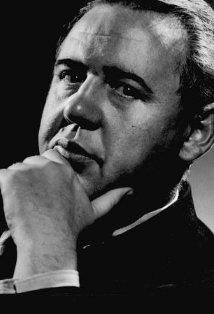
| Sign | Cancer |
| Born |
Jul 1, 1899 Scarborough, Yorkshire |
| Died |
Dec 15, 1962 Hollywood, CA |
| Age | Died at 63 |
| Total Facts | 33 |
Robert Mitchum once stated that Laughton was the best director he had ever worked for, ironic in that Laughton never directed another movie after The Night of the Hunter (1955) with Mitchum.
A highly regarded drama teacher, whose students included Albert Finney and William Phipps, Laughton would play Billie Holiday records for his students as an illustration of vocal inflection techniques.
After making Island of Lost Souls (1932), Laughton humorously claimed that he couldn't go to a zoo for the rest of his life. He based the appearance of his character, Dr. Moreau, on his dentist. His character had to use a whip in the film to tame his "creations", but Laughton already knew how to use one, having learned from a London street performer for an earlier stage role.
Although he directed only one film, The Night of the Hunter (1955), Laughton was a prolific stage director, staging the original Broadway productions of George Bernard Shaw's "Don Juan in Hell" (in which he also appeared), Herman Wouk's "The Caine Mutiny Court-Martial" and Stephen Vincent Benet's "John Brown's Body".
Appeared on the cover of the March 31, 1952 issue of "Time" magazine, which was reporting on his tour of the stage production of the "Don Juan in Hell" episode from George Bernard Shaw's 1903 play "Man and Superman." The famous episode, which is part of the third act of the four-act drama, has often been played as its own show. In Laughton's production, he played the character of The Devil. According to the "Time" cover story, entitled "The Happy Ham," the touring show had already raked in a gross profit in excess of $1 million ($1.00 equaling approximately $8.00 in 2008 money, when factored for inflation) by the time he was due to make his third appearance in the show in New York City, at the time the article appeared. The article also reported that during a hiatus in the tour, Laughton launched a separate, six-week-long solo tour in which he gave readings from "Aesop's Fables", the Bible and Charles Dickens. The solo tour grossed $164,000, or which his share was $90,000. The article quoted Laughton as saying, "Contrary to what I'd been told in the entertainment industry, people everywhere have a common shy hunger for literature.".
Became an agnostic after his experiences as a soldier during World War I.
Became an American citizen in 1950.
Charles Laughton is caricaturized in the Walt Disney 1938 animated short, Mother Goose Goes Hollywood which featured parodies of Mother Goose nursery rhymes and caricatures of Hollywood celebrities from the 1930s. The nursery rhyme, Rub-a-dub-dub is portrayed with Charles Laughton (as Captain Bligh), Spencer Tracy (as Manuel Fidello from Captains Courageous) and Freddie Bartholomew (as Harvey Cheyne in Captains Courageous). Bartholomew falls overboard, but Tracy pulls him back aboard. Then Katharine Hepburn as Bo Peep passes by on a outboard motor looking for her sheep. The tub overturns when the trio tries to hitch a ride with Hepburn.
Discovered actress Maureen O'Hara at the age of 18 and immediately signed her under contract as his protege.
For the film Advise & Consent (1962), Laughton based his character of Sen. Seab Cooley on real-life Mississippi Sen. John C. Stennis, and went so far as to have Stennis read the character's lines into a tape recorder so he could get Stennis' accent and rhythms the way he wanted them.
Gave highly successful one-man reading tours for many years, his material ranging from the Bible to Jack Kerouac's "The Dharma Bums".
He and his wife were both active in liberal politics.
He greatly disliked children. Because of his disdain for them and the fact that he had to work with them in The Night of the Hunter (1955), most of the scenes with the children were directed by star Robert Mitchum, who had three children of his own.
He had always wanted to play Lear in the stage production of "King Lear" at the Oregon Shakespeare Festival in Ashland, but he passed away before the play was ever staged.
He played a Navy Captain whose crew mutinies against him in Mutiny on the Bounty (1935). Appropriately, he went on to direct another story about a Captain with a mutinous crew, The Caine Mutiny Court-Martial.
He was a close friend of Burgess Meredith.
He was diagnosed with cancer of the gall bladder in January 1962 after being hospitalized with a collapsed vertebrae following a fall in the bath. Over the course of his final eleven months, his weight dropped to just ninety pounds.
He was shooting a Hollywood version of the H.G. Wells novel "The History of Mr Polly", playing the title role, when war broke out in 1939 and production was abandoned.
He was very disappointed by the commercial failure of The Night of the Hunter (1955).
In a memoir written after his death, Laughton's widow, Elsa Lanchester, stated they never had children because he was homosexual. According to Maureen O'Hara, however, Laughton once told her that not having children was his biggest regret, and that it was because Elsa could not bear children as a result of an botched abortion she had early in her career while performing burlesque. It is possible both stories are true. Whether Lanchester ever had an abortion (which would have been illegal at the time) is not known, but it is known that Charles Laughton was gay. That fact, however, would not have precluded parenthood. There is, additionally, Laughton's reputed great dislike of children. It is possible he said what he did to Maureen O'Hara because he knew she was a VERY devout Roman Catholic and, having been schooled by Jesuits himself, he wanted to play a little joke on her sensibilities.
In later years he was frequently accused by the critics of having a tendency to ham, although he remained a popular star.
In the 1928 play "Alibi" he became the first actor to play Agatha Christie's detective Hercule Poirot.
In the opening scene of It Started with Eve (1941), an assistant newspaper editor comments that if Jonathan Reynolds Sr. had lived two centuries earlier, he would have made a great pirate - "Captain Kidd himself." Three years later, Laughton, who played Jonathan Reynolds Sr., played the title role in Captain Kidd (1945) and again in Abbott and Costello Meet Captain Kidd (1952).
Interred at Forest Lawn, Hollywood Hills, Los Angeles, California, USA, in the Court of Remembrance.
Laughton was originally cast as Micawber in David Copperfield (1935), but resigned after two days of shooting. It was said at the time that "he looked as though he were about to molest the child" (played by Freddie Bartholomew).
Served in First World War. In spite of having Public School education and Officer Training (in Stonyhurst College's OTC), he chose to join the Army as a private in 1917. He served with the Huntingdonshire Cyclist Regiment, and later with 7th Bn. Northamptonshire Regiment in the Western Front. Shortly before the armistice he became a casualty due to mustard gas.
Twice was the Mystery Guest on the popular television quiz show "What's My Line" (1951).
Was an acquaintance of Rev. Felton H. Griffin, a pioneering Alaska minister who founded the Alaska Baptist Convention in the 1940s. Griffin was an avid hunter and fisherman, and on occasion, he flew Laughton to his cabin at Coal Lake, Alaska for weekend retreats.
Was director-writer Billy Wilder's first choice to play the character of Moustache in Irma la Douce (1963). Laughton, who had been directed to a Best Actor Oscar nomination by Wilder in Witness for the Prosecution (1957) in 1958, agreed to play the role, but died before principal photography commenced.
Was the first actor to play Roman Emperor Tiberius Claudius Caesar Augustus Germanicus, in the aborted film version of Robert Graves' I, Claudius (1937). Production was suspended after Laughton's co-star Merle Oberon, playing his wife Messalina, was involved in an automobile accident in which she crashed through the car's windshield and sustained cuts to her face. The decision was made to shut down the production and the costs were reimbursed to producer Alexander Korda's London Films by Lloyds of London.
Was the first choice to play Professor Henry Higgins in Pygmalion (1938) but he, however, turned it down. Leslie Howard was cast instead.
Was the original choice to play the role of Col. Nicholson in The Bridge on the River Kwai (1957). He turned down the part, saying he did not know how to play it convincingly as he did not understand the motivations of the character. He said he only understood the character after seeing the completed film and Alec Guinness' performance.
Was the stand-in for Ed Sullivan for Elvis Presley's first appearance on _"Toast of the Town" in 1956. Later his wife Elsa Lanchester had a small role in Elvis' movie Easy Come, Easy Go (1967).