Home> Facts and Trivia > Stars > Akira Kurosawa
Akira Kurosawa Facts
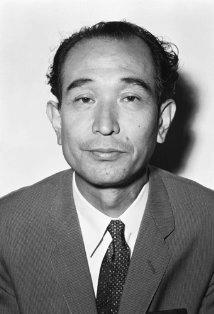
| Sign | Aries |
| Born |
Mar 23, 1910 Tokyo, Japan |
| Died |
Sep 6, 1998 Tokyo, Japan |
| Age | Died at 88 |
| Total Facts | 37 |
A theoretical interpretation of his work can be found in "Akira Kurosawa and Intertextual Cinema" by James Goodwin, published by Johns Hopkins in 1994.
According to his family, he rarely thought about anything other than films. Even when at home, he would sit around silently, apparently composing shots in his head.
Although he received an Honorary Award in 1990 "For cinematic accomplishments that have inspired, delighted, enriched and entertained worldwide audiences and influenced filmmakers throughout the world," he was only nominated once for a Best Director Oscar for Ran (1985). Also, his only film to have ever received the Best Foreign Language Film Oscar was for Dersu Uzala (1975), which was also his only film not done in Japanese (it was in Russian).
Although his "samurai" films are considered the archetypal samurai films over the rest of the world, they were actually considered atypical in Japan. Most Japanese samurai films had been set in the 18th & 19th centuries, when a peaceful Japan was at the peak of its nationalism, with the largest number of bushido code-adhering samurai. Kurosawa's films typically feature individualistic "ronin" (masterless samurai) rather than true "samurai" and a majority are set in the far more chaotic feudal periods (16th-17th centuries) when the Japanese were engaged in civil war.
Although the Japanese press tried to paint him as a tyrant, almost all of his casts and crews agreed he was a much more cool and detached presence on sets. Many also described him as "intense".
At over 6' feet tall, he was extremely large by Japanese standards, having stood a head taller than any of his colleagues.
Awarded the French Legion of Honor, 1984.
Awarded the Kyoto Prize, 1994.
Because he could not get film financing for a period of time in his career, he directed and even appeared in Japanese television commercials.
Biography in: John Wakeman, editor. "World Film Directors, Volume One, 1890- 1945". Pages 583-605. New York: The H.W. Wilson Company, 1987.
Father of Hisao Kurosawa.
Father of Kazuko Kurosawa.
He believed his years as an assistant director were invaluable. In Japanese cinema at that time, assistant directors dabbled in virtually every aspect of film production and Kurosawa, among other things, learned all about editing, set-decorating, costume-design and working with actors. Almost all of the assistant directors in Kurosawa's day were aspiring to become full-fledged directors. He felt that it was a shame that, in more modern Japanese cinema and in America, the assistant director doesn't accrue as much experience and usually permanently stays as an assistant director throughout his career and that there would be a great number of excellent directors had they had his training.
He had a son Hisao (b. 20-Dec-1945), and a daughter, award-winning film costume designer Kazuko (b. 29-Apr-1954).
He named the film that made him want to work in cinema as Abel Gance's film La roue (1923), particularly certain kinetic shots of trains.
He was a fan of the films of Satyajit Ray.
He was a fan of the work of Sergei M. Eisenstein, who, like Kurosawa, edited his own films.
He was born the youngest of four children for Isamu and Shima Kurosawa. As a child, he revered his elder brother Heigo. While young Akira was mainly into painting, Heigo was a film-lover and worked as a "benshi", a narrator/ commentator for foreign silent films. Akira's love for film was handed down from his brother. Unfortunately, Heigo suffered from depression and committed suicide. Short thereafter, both Akira's eldest brother and only sister died from illnesses, leaving Akira the only remaining child. His siblings' deaths (particularly that of Heigo) was a traumatic experience for Akira and is thought to have considerably darkened his world view.
He was infamous for his perfectionism. Among the related tales are his insisting a stream be made to run in the opposite direction in order to get a better visual effect, and having the roof of a house removed, later to be replaced, because he felt the roof's presence to be unattractive in a short sequence filmed from a train. He also required that all the actors in his period films had to wear their costumes for several weeks, daily, before filming so that they would look lived in.
He was made a Fellow of the British Film Institute in recognition of his outstanding contribution to film culture.
He was voted the 6th greatest director of all time by Entertainment Weekly, making him the only Asian on a list of 50 directors and the highest ranking non-American.
He worked with most of his cast and crew members repeatedly, similarly to the way his idol John Ford used the same people again and again. When Kurosawa was at his working peak, it was widely thought that if he didn't work with an actor or crew member again, the implication was that he did not like them.
His Dodes'ka-den (1970), Dersu Uzala (1975) and Kagemusha (1980) were Oscar-nominated for "Best Foreign Language Film". "Dersu Uzala" won. Rashomon (1950) won an Honorary Award as the most outstanding foreign language film released in the United States during 1951.
His favorite Japanese director was Kenji Mizoguchi.
His films are frequently copied and remade by American and European filmmakers.
His mentor was 'Kajiro Yamamoto'.
His two favorite actors to work with were apparently Takashi Shimura and, more famously, Toshirô Mifune. Kurosawa made 16 films with Mifune (almost always in a leading role) and 21 films with Shimura (in either a leading or supporting role).
In December 1971, after a period of suffering from mental fatigue and frustrated with a run of unsatisfying and sub par directing work, Kurosawa attempted suicide by slashing his wrist thirty times with a razor. Fortunately, the wounds were not fatal and he made a full recovery.
In the 1990s he referred to Kagemusha (1980), which some have considered a great film on its own, as a mere "dress rehearsal" for _Ran (1985)_ (qv_ (both are epics about failing emperors set roughly in the same historical era), with the latter film having been his passion for roughly a decade before he made it.
Interviewed in "World Directors in Dialogue" by Bert Cardullo (Scarecrow Press, 2011).
Is not related to Kiyoshi Kurosawa.
Kurosawa worshipped legendary American director John Ford, his primary influence as a filmmaker. When the two met, Ford was uncommonly pleasant to the younger Japanese filmmaker and after wards Kurosawa dressed in a similar fashion to Ford when on film sets.
Many of the characters in his period films were loosely based on historical figures.
One his closest friends was Ishirô Honda, the writer-director behind Godzilla (1954).
Ranked #6 in Empire (UK) magazine's "The Greatest directors ever!" [2005]
Several of his films have been remade in America as westerns. Seven Samurai (1954) ("The Seven Samurai") was remade as The Magnificent Seven (1960), and Yojimbo (1961) ("The Bodyguard") was remade as A Fistful of Dollars (1964). In addition, The Hidden Fortress (1958) ("The Hidden Fortress") was a major inspiration for the "Star Wars" saga, which takes many inspirations from westerns and is often referred to as a space western. Common story elements include Gen. Makabe, who became Obi-Wan Kenobi; Princess Yuki, who became Princess Leia and whose trick of disguising herself as a handmaiden would later be used by Queen Amidala; and the farmers from whose viewpoint the film is told, Matashichi and Tahei, whose constant bickering inspired C-3PO and R2-D2.
Unbeknownst to many people, Kurosawa had always wanted to make a Godzilla film of his own, but the executives at Toho Co., Ltd. (the Japanese studio that produces all the Godzilla films) wouldn't let him because they feared it would cost too much.