Facts > Films > White Christmas
White Christmas (1954) Facts
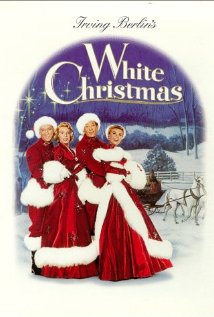
| Director(s) | Michael Curtiz |
| Producer(s) | No producer listed for this movie |
| Featured Cast | Bing Crosby, Danny Kaye, Rosemary Clooney, Vera- Ellen, Dean Jagger |
| Total Facts | 28 |
Danny Kaye was a last-minute replacement for the originally cast Donald O'Connor.
Rosemary Clooney was not allowed to record her voice for the soundtrack album because it was being released by a record company (Decca) other than hers (Columbia). She was replaced on the soundtrack album by Peggy Lee.
Vera-Ellen did not actually sing any of the songs for the movie. Rosemary Clooney sang all her songs. Vera's own voice is heard singing only in the "arrival in Pine Tree" scene at the railroad station where the quartet reprises the opening lines of "Snow".
Bing Crosby, Danny Kaye and Rosemary Clooney all died at the same age: 74.
According to Rosemary Clooney, the "midnight snack" scene in which Bob Wallace expounds on his theory of what foods cause what dreams was almost entirely improvised.
Although this movie musical has been a beloved favorite for decades - especially at Christmastime - there has never been an official "original soundtrack" album released in any form. Decca controlled the soundtrack rights, but Rosemary Clooney was under exclusive contract to Columbia, who would not allow her to appear on a competing label. As a result, Decca and Columbia each released their own White Christmas albums in 1954, although neither is an official soundtrack. Decca's album featured the movie cast minus Rosemary Clooney, with Peggy Lee taking over Clooney's part. Columbia's album had Rosemary Clooney singing 8 songs from the film. Both albums have been issued on CD in recent years.
An myth persists that all of Vera-Ellen's costumes, down to her robe and sleepwear, were designed to cover her neck, which had been damaged by anorexia. This is untrue. Seeing her in the premiere footage for A Star Is Born, she is wearing a low cut gown and her neck is clearly visible.
Cast members Bing Crosby and Rosemary Clooney both have descendants in the Star Trek series. Bing's granddaughter, Denise Crosby appeared in Star Trek: The Next Generation, while Clooney's son, Miguel Ferrer appeared in Star Trek III: The Search for Spock.
Even though Betty was the elder of the Haynes sisters, Rosemary Clooney was actually seven years younger than Vera-Ellen in real life.
For the song "Gee, I Wish I Was Back In The Army", there is the lyric, "Jolson, Hope And Benny all for free". This is a reference to three wartime entertainers: Al Jolson, Bob Hope and Jack Benny. The original words were "Crosby, Hope and Jolson all for free", but the lyric was changed because with Crosby in the cast the original lyric would break the fourth wall.
Many of Bob Wallace's more unusual turns of phrase were lifted straight from Bing Crosby's own speech patterns.
Premiered at the famed Radio City Music Hall in New York City.
Released in 1954, it became the top grossing film of that year.
The "Ed Harrison TV Show" that Bing Crosby appears on is a reference to the "Ed Sullivan Show" that featured known stars, new talent and vaudeville acts. Ed Harrison was played by Johnny Grant who did not have a long acting career in the movies, but was the honorary Mayor of Hollywood, California who officiated over the unveiling's of Stars on the Hollywood Walk of Fame from the early 1960's until his death in 2008.
The "Sisters" comedy act that Bing Crosby and Danny Kaye perform was not originally in the script. They were clowning around on the set and the director thought it was so funny that it was written in.
The first film produced in Paramount's wide screen process "VistaVision".
The original idea was to reunite Fred Astaire and Bing Crosby, as they had been successful in Holiday Inn. Astaire refused, as he had "retired" at the time, so the part was reworked for Donald O'Connor. O'Connor pulled out due to illness, and the part was reworked for Danny Kaye.
The photo that Vera-Ellen shows to Bing Crosby and Danny Kaye of her brother, Bennie, is actually a photo of Carl 'Alfalfa' Switzer.
The song "Snow" was written by Irving Berlin a while before the film was made but with a different lyric and title and indeed subject (it had nothing to do whatsoever with snow): it was called "Free" and it was recorded by the composer.
The song, "What Can You Do with a General?", which Leonard Maltin calls Irving Berlin's least memorable tune, was originally written for an unproduced project called "Stars on My Shoulders".
The train scene had to be shot at Fox, the only studio to house a standing train set.
The TV camera in the Ed Harrison Show scene is a real one (a classic RCA monochrome) the call sign atop it was real as well - it was that of Channel 4, NBC's (and thus RCA's) flagship station in New York, which changed its call sign to WRCA-TV the year of the film's release. (They adopted their current WNBC-TV calls in 1960.)
The Vermont inn is the remodeled Connecticut inn set from the movie Holiday Inn which Bing Crosby also starred in singing songs written by Irving Berlin.
Third of three films to feature Bing Crosby singing "White Christmas".
This was 1954's most successful film. The second most successful was The Caine Mutiny, which featured Rosemary Clooney's husband, José Ferrer.
Though Rosemary Clooney couldn't be on the original album due to contractual conflicts, she recorded the song "Sisters" with her real-life sister, Betty Clooney. On the official album, Peggy Lee recorded the song and sang both parts via overdubbing, a new technology in 1954.
Tne musical stage adaptation premiered in San Francisco in 2004 followed by productions in Boston, Buffalo, Los Angeles, Detroit, Louisville and the United Kingdom. The Broadway production opened on November 23, 2008 at the Marquis Theater and ran for 53 performances earning two Tony Award nominations. The musical was revived at the Marquis Theater for the 2009 Christmas season.
When Bob Wallace (Bing Crosby) appears on the Ed Harrison TV show, he is briefly shown - as if the audience is watching him at home - on a 1950s television set. The brand of the television is DuMont, one of the first manufacturers of TVs in America and the name of TV network from the 1950s. Jackie Gleason, Morey Amsterdam and Bishop Fulton J. Sheen were some of the notables that began on the DuMont Network, which ceased operations in 1956.