Facts > Films > Snow White and the Seven Dwarfs
Snow White and the Seven Dwarfs (1937) Facts
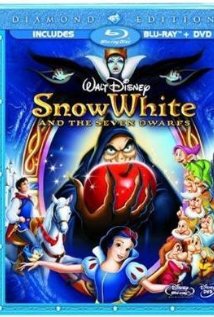
| Director(s) | William Cottrell, David Hand, Wilfred Jackson, Larry Morey, Perce Pearce, Ben Sharpsteen |
| Producer(s) | Walt Disney (uncredited) |
| Featured Cast | Roy Atwell, Stuart Buchanan, Adriana Caselotti, Pinto Colvig, Billy Gilbert |
| Total Facts | 52 |
"Lux Radio Theater" broadcast a 60 minute radio adaptation of the movie on
December 26, 1938 with many of the Walt Disney voice artists reprising their film roles.
"The Screen Guild Theater" broadcast a 30 minute radio adaptation of the Walt Disney version on April 24, 1944 with Billy Gilbert reprising his film role.
Pinto Colvig, who voiced Sleepy and Grumpy, was the voice of Goofy.
Mel Blanc was considered for the voice of Dopey.
Marge Champion served as a movement model for Snow White; some of this animation was later reworked for Maid Marion in Disney's Robin Hood.
Sterling Holloway, who later appeared in many Disney films, was considered for the role of Sleepy.
Walt Disney came up with the idea for Snow White and the Seven Dwarfs when he was only 15, working as a newsboy in Kansas City. He saw a major presentation of a silent film version of the tale starring Marguerite Clark. The screening was held at the city's Convention Hall in February, 1917, and the film was projected onto a four-sided screen using four separate projectors. The movie made a tremendous impression on the young viewer because he was sitting where he could see two sides of the screen at once, and they were not quite in sync.
Deanna Durbin auditioned for the voice of Snow White, but was not chosen because Walt Disney felt her voice was too mature.
Ward Kimball nearly quit after his two main sequences (the dwarfs eating soup and building a bed for Snow White, respectively) were cut. Walt Disney convinced him to stay by giving him the character of Jiminy Cricket in the next feature, Pinocchio.
Snow White and the Seven Dwarfs became the first release in Disney's new Platinum Edition DVD series, hitting stores on October 5, 2001. On its first day, more than 1 million copies were sold.
Sergei M. Eisenstein, director of Bronenosets Potyomkin, called it the "Greatest film ever made."
25 songs were written for the movie but only eight were used
As it's widely known, every country where the movie has been translated has its own set of seven names for the Dwarfs, including Germany, home of the original fairy tale. However, in the original tale (by brothers Jacob Grimm & Wilhelm Grimm) the dwarfs have no individual names at all.
At a recording session, Lucille La Verne, the voice of the Wicked Queen, was told by Walt Disney's animators that they needed an older, raspier version of the Queen's voice for the Old Witch. Ms. Laverne stepped out of the recording booth, returned a few minutes later, and gave a perfect "Old Hag's voice" that stunned the animators. When asked how she did it, she replied, "Oh, I just took my teeth out."
Because Walt Disney Pictures did not have its own music publishing company when the earlier animated films were produced, all the rights to publish the music and songs from this film are actually still controlled by the Bourne Co. In later years, the Studio was able to acquire back the rights to the music from all of the other films, except this one. Prior to Snow White and the Seven Dwarfs, a movie soundtrack recording was unheard of and with little value to a movie studio.
Convinced that it would fail, the Hollywood film industry labeled the film "Walt Disney's Folly".
Dancer Marge Champion, whose movements as a dancer were rotoscoped to be used as guide for Snow White, married and divorced one of the Disney animators on the film, Art Babbitt. She later married, danced and acted on film and stage with famed choreographer and director Gower Champion.
Disney Studios in Burbank was built with the profits from Snow White and the Seven Dwarfs.
Dopey initially was to be a talking dwarf, but was made mute when a suitable voice was not found.
During the scene where the Dwarfs wash before eating Dopey swallows a bar of soap. A sequence showing how they got the soap back out of him was filmed as a pencil test but was not included in the film. It was later shown on the "Disneyland" TV show along with pencil test segment for the song "The Music In Your Soup".
Fifty ideas for the dwarfs' names and personalities were listed in the film's proposal; the list included all of the names finally included except Dopey and Doc (Dopey being the last to be developed). Some of the dwarfs were: Awful ("He steals and drinks and is very dirty"), Biggy-Wiggy or Biggo-Ego, Blabby, Deefy, Dirty, Gabby, Gaspy, Gloomy, Hoppy-Jumpy, Hotsy, Jaunty, Nifty, and Shifty. Sneezy was a last-minute replacement for Deefy.
For the scene where the dwarfs are sent off to wash, animator Frank Thomas had Dopey do a hitch step to catch up to the others, as suggested in the storyboard. Walt Disney liked it so much he had the step added to other scenes - much to the chagrin of the other animators, who blamed Thomas for the extra work they had to do.
Held the title of highest grossing film ever for exactly one year, after which it was knocked out of the top spot by Gone with the Wind.
In the original fairy tale, the Queen dies when she is forced to dance in burning metal shoes.
It took animator Wolfgang Reitherman nine tries to get the animation of the Slave in the Magic Mirror just right. He achieved it by folding the paper in half, drawing one half of the face, then turning the paper over and tracing the other half. He was then dismayed when his hard work was obscured by fire, smoke and distortion glass for the film.
June 2008 Ranked #1 on the American Film Institute's list of the 10 greatest films in the genre "Animation".
Of the film's human characters, the Prince is the only one never named.
One of only two personally produced Walt Disney feature-length animated films not to carry the screen credit "Walt Disney Presents". Instead, the first credit reads "A Walt Disney Feature Production" (since it was Disney's first feature-length film). The other personally-produced Disney film not to say "Walt Disney Presents" was "Fantasia", which, in its roadshow release, contained no written credits at all except for the intermission card, and in its general release, contained only the title "Fantasia" in its opening credits.
One of the first films to have related merchandise available at the time of premiere.
Publicity material relates that production employed 32 animators, 102 assistant, 167 "in-betweeners", 20 layout artists, 25 artists doing water color backgrounds, 65 effects animators, and 158 female inkers and painters. 2,000,000 illustrations were made using 1500 shades of paint.
Scenes planned, but never fully animated:
- The queen holds the prince in the dungeon and uses her magic to make skeletons dance for his amusement.
- Fantasy sequence accompanying "Some Day My Prince Will Come" in which Snow White imagines herself dancing with her prince in the clouds beneath a sea of stars
- Dwarfs building Snow White a bed with help from woodland creatures.
- The song "Music in Your Soup" where the dwarfs sing about the soup that Snow White had just made them.
- A musical number, "You're Never Too Old to Be Young", featuring the dwarfs. It was pre-recorded, but never animated.
Some animators were opposed to the name Dopey, claiming that it was too modern a word to use in a timeless fairy tale. Walt Disney made the argument that William Shakespeare used the word in one of his plays. This managed to convince everyone, although any reference to the term "dopey" is yet to be found in any of Shakespeare's work.
Spoonerizing comedian Joe Twerp was earlier considered for the role of Doc, according to the DVD supplementary material. The part went to Roy Atwell instead, but Twerp did perform as the voice of Doc on the radio.
Storyboards for a sequel to this movie were discovered in the Disney Company vault titled "Snow White Returns". Upon examining the length of the script and storyboards it seem like it was meant to be a short film than a full length movie. It was also meant to include revised versions of the "Soup" & "Bed Bulding" scenes that were excluded from the movie itself. The real reason for why this sequel never went further than preproduction is anyone's guess. It's unknown if Walt Disney really wanted this to be made in the first place. The whole storyboard to this unmade short is viewable on the Snow White Blu-ray.
The "special" Academy Award granted to the picture consisted of one regular sized award and seven smaller sized awards.
The British Board of Film Censors (now, the British Board of Film Classification) gave the film an A-certificate upon its original release. This resulted in a nationwide controversy as to whether the enchanted forest and the witch were too frightening for younger audiences. Nevertheless, most local authorities simply overrode the censor's decision and gave the film a U-certificate.
The film came third in the UK's Ultimate Film, in which films were placed in order of how many seats they sold at cinemas
The film was a particular favorite of Dutch painter Piet Mondrian.
The first animated feature in adjusted dollars.
The first animated feature to be selected for the National Film Registry.
The first full-length animated feature film to come out of the United States. (The first ever were El apóstol and Sin dejar rastros by Quirino Cristiani but both films are considered lost. The oldest full-length animated feature film that can still be seen today is Die Abenteuer des Prinzen Achmed, which clocks in at 65 minutes, and was animated entirely in silhouette.)
The movie was to start with scenes involving Snow White's mother, but they had to be cut to avoid the wrath of the censor.
The Prince was originally a much more major character, but the difficulty found in animating him convincingly forced the animators to reduce his part significantly.
There are only 11 human characters in the film - Snow White, the Dwarfs, the Queen, the Prince, and the Huntsman.
To give Snow White a more natural look, some of the ink and paint artists started applying their own rouge on her cheeks. When Walt Disney asked one how they would apply the rouge correctly for each cel, she responded, "What do you think we've been doing all our lives?"
To keep the animators' minds working, Walt Disney instituted his "Five Dollars a Gag" policy. One notable example of this policy is when Ward Kimball suggested that the dwarfs' noses should pop one by one over the foot boards while they were peeking at Snow White.
Was the first film to ever have a soundtrack recording album released for it.
Was the first of many Disney films to have its premiere engagement at New York City's Radio City Music Hall. At the end of the film's initial engagement there, all the velvet seat upholstery had to be replaced. It seems that young children were so frightened by the sequence of Snow White lost in the forest that they wet their pants, and consequently the seats, at each and every showing of the film.
When comedian Billy Gilbert found out that one of the dwarfs' names was Sneezy he called up Walt Disney and gave him his famous sneezing gag and got the part.
When Snow White is wakened by the Prince's kiss, she kisses six of the Dwarfs goodbye. The only one she does not kiss is Sleepy.