Facts > Films > Marie Antoinette
Marie Antoinette (1938) Facts
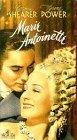
| Director(s) | W.S. Van Dyke, Julien Duvivier (uncredited) |
| Producer(s) | Hunt Stromberg, Irving Thalberg (uncredited) |
| Featured Cast | Norma Shearer, Tyrone Power, John Barrymore, Robert Morley, Anita Louise |
| Total Facts | 25 |
William Randolph Hearst campaigned heavily for Marion Davies (Hearst's mistress) to star as Marie Antoinette. Davies didn't get the role and ended her contract at MGM and went to Warner Bros. along with Hearst.
Irving Thalberg originally planned for Charles Laughton to play the role of Louis XVI. Laughton, after lengthy deliberations, finally declined.
Anita Louise, who acts the role of the Princesse de Lamballe, portrayed Marie Antionette in the film Madame Du Barry.
Gladys George (who plays du Barry) and the real Jeanne Bécu, comtesse du Barry, share the same death day. George died from a cerebral hemorrhage on Dec. 8, 1954, while the comtesse was a victim of the Reign of Terror during the French Revolution and was guillotined on Dec. 8, 1793 - less than two months after Marie Antionette's own execution.
According to TCM's website, in early December 1937, Peter Lorre was announced as the first choice for the role, but by the time filming began, Robert Morley had been awarded the part.
According to Wikipedia, the movie had thousands of costumes and lavish set designs. Adrian visited France and Austria in 1937 researching the period. He studied the paintings of Marie Antoinette, even using a microscope on them so that the embroidery and fabric could be identical. Fabrics were specially woven and embroidered with stitches sometimes too fine to be seen with the naked eye. The attention to detail was extreme, from the framework to hair. Some gowns became extremely heavy due to the embroidery, flounces and precious stones used. Norma Shearer's gowns alone had a combined weight of over 1,768 lb., the heaviest being the wedding dress.
During principal photography, portions of the film were shot on location at the recently completed Hollywood Park Racetrack in Inglewood, CA. The racetrack's facade was decorated to stand-in for the exterior of the Palace at Versailles.
Film debut of Robert Morley.
From its initial inception up until right before the cameras started to roll, the film was designed to be shot in Technicolor. All of the sets and costumes were designed with color in mind. MGM went as far as to send the fox cape that Norma Shearer wears (to see Henry Stephenson on the night she becomes Queen) to New York to be specially dyed to match the blue of her eyes. Fearing that the addition of Technicolor would swell the already mammoth (for the time) $1.8-million budget, the production went before black-and-white cameras instead.
Marie Antoinette's famously-high coiffure is shown adorned with a miniature diamond-studded bird cage complete with a canary that tweeted when she pulled a hidden string. This adornment was in fact worn by the Grand Duchess of Russia at a 1782 party that Marie Antoinette hosted at Trianon. The Duchess's bird not only chirped, but it's wings also flapped with the tug of a thin gold chain.
MGM's recreation of the ballroom at Versailles was twice as large as the original.
Originally to be directed by Sidney Franklin, but given to W.S. Van Dyke.
The few lines of Swedish spoken by the Swedish count Axel von Fersen are genuine, although Tyrone Power speaks them with a very thick accent.
The film became the favorite movie of Eva Perón, who so admired Norma Shearer style that she later dyed her hair blonde.
The film credits Louis XI as uttering the famous quip,"After me, the deluge" referring to the upcoming chaos of the French Revolution. However, it is his most celebrated mistress Madame de Pompadour who is historically credited to have made this comment to Louis XI. France played a disastrous role in the Seven Years' War, which among other loses, included losing Canadian territory to the much hated British. But it was after the humiliating Prussian defeat in the Battle of Rossbach that caused Pompadour to comfort the king by saying to him,"After us, the deluge" as France emerged from the war diminished and virtually bankrupt and greatly reduced the king's popularity.
The gown and wig Norma Shearer wears in the scene where the people throw stones at her carriage is later worn by Lucille Ball in Du Barry Was a Lady and by Jean Hagen in Singin' in the Rain.
The Los Angeles premiere was held at the legendary Carthay Circle Theatre, where the landscaping was specially decorated for the event.
The role of Marie Antoinette was reportedly Norma Shearer's favorite of her roles.
The sound director, Douglas Shearer, is the brother of Norma Shearer and had served as such in many other films of this era.
This film features only two of Marie Antionette and Louis XVI's two children. They in fact had four children. Their first son, Louis-Joseph, died at the age of eight of TB. In 1785 Dauphin County, Pennsylvania was named for him as a thank you to France for helping America win its independence. Their last child, Sophie Helene Beatrice, died before her first birthday.
This was Irving Thalberg's last project while head of production at MGM. At the time of his death in 1936, the film was in the planning stages, but his widow, Norma Shearer, took special interest in the film and stuck with it to its completion in 1938.
This was reported to have been the first time a film crew was allowed to film on the grounds of the Palace of Versailles.
As for the charming little town of Bedford Falls (the home town of Jimmy Stewart and Donna Reed), in "It's a Wonderful Life", alas, it was a temporary town set built for the movie in the San Fernando Valley. The area was part of RKO's movie ranch at the time. The "Bedford Falls" set was torn down soon after the filming ended in 1946, and the area was sold to developers in the early 1950's and built in with nondescript track homes. The land is in the city of Encino, just west of the San Diego (405) Freeway, on Burbank Blvd, between Louise Avenue and the Balboa Sports Center park. But all you'll find there now are modern residential homes.
There is a key scene in that film where Jimmy Stewart and Donna Reed are dancing the Charleston at the "Bedford Falls High School" prom, when suddenly the gym floor slides open, plunging the dancers into a swimming pool. (Later, when walking home, wearing a bathrobe, Donna gets stuck in the bushes without any clothes on.) That dance scene was filmed using an actual covered swimming pool in the gym at Beverly Hills High School (241 Moreno Drive) near Century City. The gym is located on the south side of the campus, near the high school's track.
You'll remember from the classic film, that George Bailey (Jimmy Stewart) defies the man who owns most of Bedford Falls (the dastardly 'Mr. Potter') and uses his father's savings & loan to help build affordable housing for working families. The bright new neighborhood is called Bailey Park, in honor of George's late father. In the movie, we see Mr. Martini's family move into the first model home, with much celebrating. Later, during George's world-changing angelic encounter, Bailey Park ceases to exist, because he wasn't there to build it. (The neighborhood returns when Clarence restores his past.) Well, that model home was just that - a real model home - but it was far away from the rest of "Bedford Falls" (see above). Frank Capra, in an interview year later, couldn't even remember where he filmed the scene, only that it was out in the middle of nowhere at the time. Well, today it's actually in the city of La Cañada Flintridge, CA (the home of Descanso Gardens), just northwest of