Facts > Films > In Which We Serve
In Which We Serve (1942) Facts
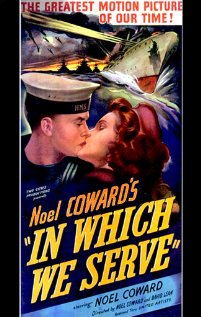
| Director(s) | Noel Coward, David Lean |
| Producer(s) | Noel Coward, Herbert Smith (uncredited), Anthony Havelock-Allan |
| Featured Cast | Ballard Berkeley, James Donald, Bernard Miles, John Mills, John Boxer |
| Total Facts | 29 |
Michael Anderson, who plays Albert Fosdike (billed as "Mickey Anderson"), was the First Assistant Director, but "won" the part when the original actor, William Hartnell, turned up late for his first day of shooting. Noel Coward berated Hartnell in front of cast and crew for his unprofessionalism and then fired him. Anderson, who'd filled in for Hartnell while they'd rehearsed, got his moment of glory (once a false moustache had been found).
John Mills claimed that Noel Coward wrote the part of Shorty Blake specifically for him in order "to give him a job".
Celia Johnson's screen debut.
Noel Coward vetoed the casting of James Mason in a key role because of his stance on the war.
Noel Coward was a friend of Lord Louis Mountbatten, who was Captain of the Royal Navy destroyer HMS Kelly from the outbreak of the Second World War until Kelly was sunk by enemy action in May, 1941. Coward wrote the screenplay for this movie based on Mountbatten's experiences on HMS Kelly. Coward's character in the film, Captain E. V. Kinross R.N. / Captain 'D', was also based on Mountbatten's experiences.
A full-size replica of a destroyer was built to represent HMS Torrin in the Denham Studios outside London.
After about three weeks of shooting, Coward realized that (a) Lean knew a lot more about the film-making process than he did and (b) he didn't care much for the long hours. So Coward effectively handed the entire directorial reins over to his partner at that point.
At 42:05, the echoed "What's your name?" can be heard sampled towards the end of Morrissey's 'Lifeguard Sleeping, Girl Drowning' from the album 'Vauxhall and I'.
Before accepting the assignment, David Lean asked Coward how the credits would read. Coward suggested that they would say "helped by David Lean" but Lean insisted that they read "Directed by Noel Coward and David Lean". It was his only request and one that Coward readily agreed to.
Celia Johnson's lengthy scene in which she makes a moving toast to her rival - her husband's ship - was done in one take.
During filming, stories would continually appear in the Daily Express, ridiculing the production. The paper's proprietor, Lord Beaverbrook, couldn't understand how an effete actor like Noel Coward could possibly portray a Mountbatten-type character. Coward got his own back by including a shot of one of the paper's more infamous headlines from 1939, proclaiming "No War This Year".
First film directed by David Lean.
Lord Mountbatten's contribution cannot be discounted - even in the middle of a war, he was able to procure real sailors to play extras.
Noel Coward was nervous at the prospect of directing and asked his friend John Mills if he could recommend someone to help him. Mills suggested "the best editor in the country", David Lean.
Noel Coward's first draft screenplay ran for four hours.
Several scenes of Torrin underway are of K-class destroyer HMS Kashmir (F12). The scene of Torrin under tow includes 1940 newsreel footage of Lord Mountbatten's heavily-damaged K-class destroyer HMS Kelly. Both ships were sunk by German dive bombers on 23 May 1941 during operations off Crete.
Shorty Blake's (John Mills) baby, born in the air raid that kills Walter Hardy's (Bernard Miles) wife and mother-in-law, is played by one-year-old Juliet Mills.
The actors hated the scenes where they were hanging onto the life raft: a combination of weeks spent in cold oil-slicked water, under hot lights in soaked clothing meant that it was a particularly smelly experience.
The entire royal family, including Princess (and later Queen) Elizabeth, came to visit the set one day.
The film utilized actual real war combat footage.
The film was shown to all new Royal Navy recruits after it was released to give them an idea and an impression of what life in the Navy was like.
The Hays office tried to delete the words "God", "hell", "damn", and "bastard" from the American release. Uproar from England forced the office to back down on everything except "bastard".
The idea for the film sprang out of Noel Coward's friendship with Winston Churchill (the two often painted together) and his desire to do something more substantial than urbane comedies to help the war effort for his friend. Coward acutely felt that with the coming of war, the world of which he wrote - bright young things scampering around drawing rooms - was a world that no longer existed.
The role of Lavinia Kinross was originally intended for 5 year old Anna Massey, as her brother Daniel Massey had been cast as her film brother Bobby Kinross. According to her memoirs however she screamed so much at the audition that the role had to be recast.
There was a tragedy during the shooting of the film, during a relatively straightforward special effects scene of an explosion in a gun turret. After the first take, Lean (Coward wasn't present) was dissatisfied. Chief electrician Jock Dymore, keen to get the scene wrapped before lunch, climbed onto the set with a bottle full of the flash-powder used for the explosive effect. The containers they were using were still white hot from the first take, and the resulting blast killed Dymore and seriously injured two others.
This film's dedication states: "This film is dedicated to the Royal Navy whereupon under the good providence of God, the wealth, safety and strength of the kingdom chiefly depend."
This was Richard Attenborough's first screen role (he had been recommended for his small but important part by director turned agent Albert Parker). He is uncredited purely because of an oversight.
When dive bombers fire on the survivors clinging to a life raft, the effect of the strafing fire hitting the water was achieved by blowing gusts of air into submerged condoms. These would then float to surface after the director had shouted cut.
When the film opened in September 1942, the Admiralty praised it for its authentic portrayal of navy life.