Facts > Films > Guess Who's Coming to Dinner
Guess Who's Coming to Dinner (1967) Facts
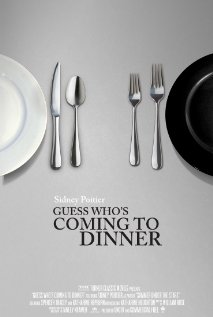
| Director(s) | Stanley Kramer |
| Producer(s) | Stanley Kramer, George Glass |
| Featured Cast | Spencer Tracy, Sidney Poitier, Katharine Hepburn, Katharine Houghton, Cecil Kellaway |
| Total Facts | 22 |
Katharine Houghton's feature film debut.
Spencer Tracy died 17 days after filming was completed.
Spencer Tracy received a posthumous Best Actor Academy Award nomination for his film Guess Who's Coming to Dinner. His widow Louise attended the ceremony in the event that he would win. However, the award went instead to Rod Steiger for In the Heat of the Night.
Spencer Tracy's glasses have no lenses throughout the film.
Sidney Poitier, born February 20, 1927; was only 13 years younger than the actor portraying his father, Roy Glenn, born June 3, 1914, and only 7 years younger than the actress portraying his mother, Beah Richards, born July 12, 1920. However, Katharine Houghton, born March 10, 1945 was appropriately age spaced with the actors portraying her parents, Spencer Tracy, born April 5, 1900 (45 years older), and Katharine Hepburn, born May 12, 1907 (38 years older).
Katharine Hepburn had to use her salary as backing in order to make this movie because Spencer Tracy was so ill that the studio didn't think that he would make to the end of the picture
Katharine Hepburn is the only movie star to win four Academy Awards (2009) for her leading roles in Morning Glory, Guess Who's Coming to Dinner, The Lion in Winter, and On Golden Pond.
Katharine Hepburn never saw the completed movie. She said the memories of Tracy were too painful.
Katharine Hepburn's character's daughter is played by Hepburn's actual niece Katharine Houghton
A theatrical play version of "Guess Who's Coming to Dinner" is being developed, directed by Kenny Leon and adapted for the stage by Todd Kreidler. The producers anticipate the Broadway production will open in the fall of 2008.
According to the time the movie was made (in the 60s) and the place where the couple have met (Hawaii), Sidney Poitier's line: "your daughter is optimistic, she thinks our child will be President of the United States" (as well as Spencer Tracy's answer) has gained a greater importance since Obama's election.
Due to Spencer Tracy's health, the cast was always working from two shooting scripts, one with Tracy, one without. Typically, Katharine Hepburn brought Tracy in the morning, they worked until she decided he was too tired, then Tracy and Hepburn left. Sidney Poitier, who already had received a Best Actor Oscar for Lilies of the Field, was intimidated by working with two legends, and preferred to perform to empty high backed chairs.
In some shots you can clearly see Katharine Hepburn's head and hands trembling because of her hereditary shake, e.g., when she is pouring a drink for the Reverend right after his second arrival.
In the scene near the end where Spencer Tracy gives his memorable soliloquy, Katharine Hepburn can be seen crying in the background. This was not acting: she knew how gravely ill her longtime lover was and was moved by his remarks about how true love endures through the years.
Like Katharine Hepburn, the film's producer and director Stanley Kramer also put his salary in escrow as backing in order to placate the studio who was nervous about having Spencer Tracy star due to his poor health.
Mr Prentice (Roy Glenn) says to his son John (Sidney Poitier) "In 16 or 17 states you'll be breaking the law. You'll be criminals." By the time people saw the movie this was no longer true. On June 12th, 1967, the US Supreme Court in the case Loving v Virginia declared anti-miscegenation laws unconstitutional.
The film debut of Isabel Sanford, who later gained fame as Louise on The Jeffersons. In 1981, she became the first African American woman to win an Emmy Award for Outstanding Lead Actress in a Comedy Series.
The three-inch bronze sculpture of Spencer Tracy featured in the film was created by Katharine Hepburn herself and was one of the items that were included in her estate auction in 2004. The bust was the most sought-after item and fetched the most money - it sold for $316,000, whereas pre-auction estimates were in the neighborhood of $3,000-$5,000.
This film was instrumental in largely ending the marketing consideration of how films featuring African-American characters and themes were assumed to be likely rejected by mainstream audiences in the Southern States of the USA. In that regard, the film was such a major widespread success throughout the entire USA, including the South, that the marketing factor would never again be considered a major problem for any major film release.
This movie was still showing in theaters at the time Martin Luther King was assassinated. Originally, there was a line in the movie where Joey (Katharine Houghton) tells the maid another person is coming to dinner, to which Tillie (Isabel Sanford), the maid guesses, "The Reverend Martin Luther King?" When King was murdered, the studio immediately called the theaters showing the film and gave instructions to cut that scene from the movie.
When the movie was conceived and launched by producer-director Stanley Kramer, one of Hollywood's greatest liberal movie-makers, intermarriage between African Americans and Caucasians was still illegal in 14 states. Towards the end of production, the U.S. Supreme Court handed down its decision in Loving v. Virginia. The Loving decision was made on June 12, 1967, two days after the death of star Spencer Tracy, who had played a "phony" white liberal who grudgingly accepts his daughter's marriage to a black man. In Loving, the High Court unanimously ruled that anti-miscegenation marriage laws were unconstitutional. In his opinion, Chief Justice Earl Warren wrote, "Marriage is one of the 'basic civil rights of man,' fundamental to our very existence and survival. To deny this fundamental freedom on so unsupportable a basis as the racial classifications embodied in these statutes, classifications so directly subversive of the principle of equality at the heart of the Fourteenth Amendment, is surely to deprive all the State's citizens of liberty without due process of law. The Fourteenth Amendment requires that the freedom of choice to marry not be restricted by invidious racial discriminations. Under our Constitution, the freedom to marry, or not marry, a person
Sidney Poitier's Salary for Guess Who's Coming to Dinner (1967) was $200,000 and % of the gross profits; In the Heat of the Night (1967) $200,000 + 20% of the gross profits